
Samsung Patents a Network Device That Picks Its Own Least-Busy Path
Most network devices just send data back the same way it arrived. Samsung's patent describes a device that checks which of its available ports is less jammed before it replies, and routes its response accordingly.
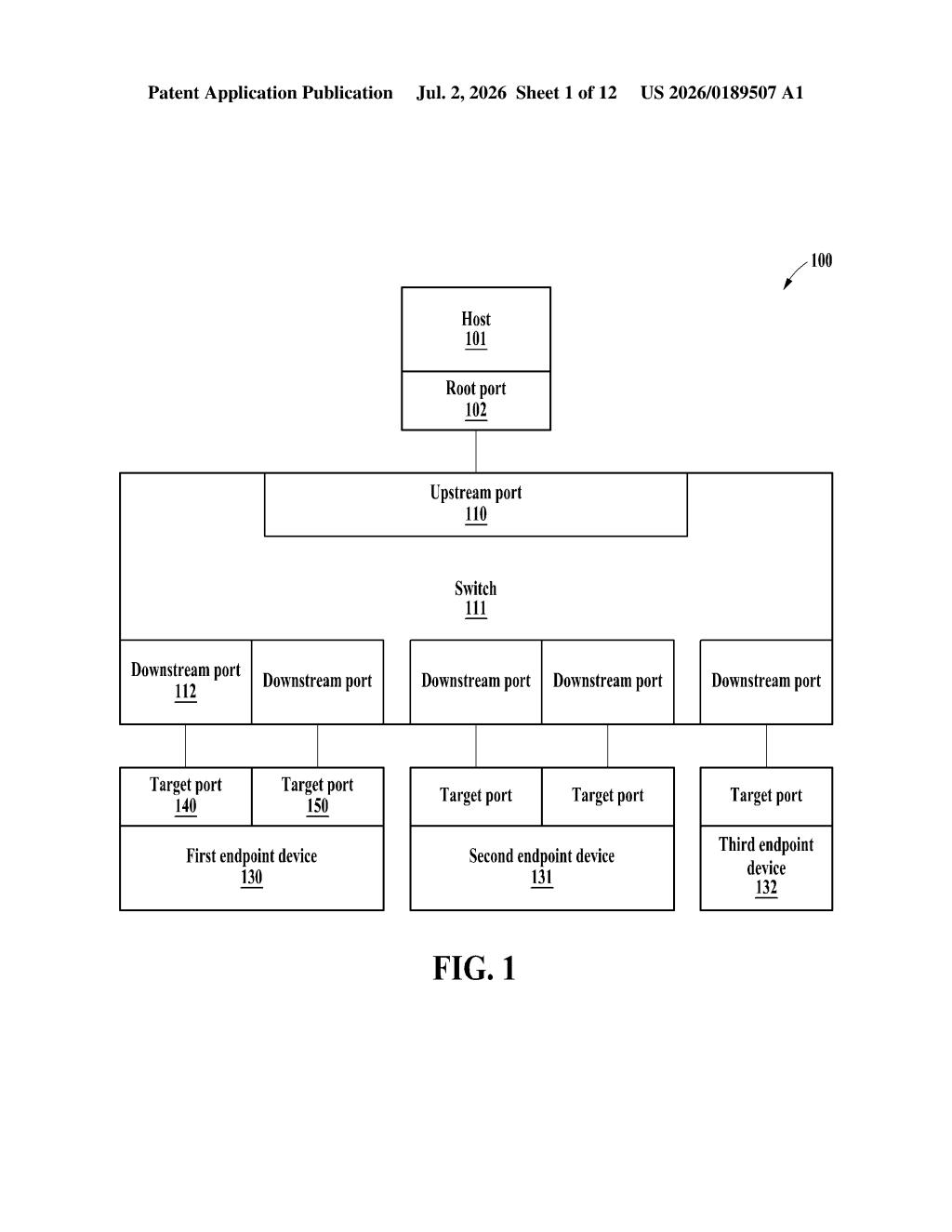
What Samsung's self-routing network device actually does
Imagine you're at an airport with two boarding gates leading to the same plane. Instead of automatically lining up at the gate your ticket says, a system checks which line is shorter and sends you there. Samsung's patent applies that idea to computer networks.
Inside a data center, storage or compute devices often have multiple physical connections to the same network switch. When one of those devices gets a request, it normally replies through the same connection the request came in on, even if that connection is jammed with traffic. This patent describes a device that, before replying, quickly checks how busy each of its connections is and sends the response through whichever one has more breathing room.
The result is that the network spreads traffic more evenly across available paths without a separate load-balancing appliance making those decisions. The device handles it internally.
How the controller measures and compares port congestion
The patent describes a setup with three main pieces: a host computer, a switch with multiple downstream ports, and a group of endpoint devices (think NVMe storage drives or compute accelerators) each plugged into more than one of those ports.
The key behavior lives in the endpoint device's internal controller. When the device receives a request packet through one of its ports, it does the following before replying:
- Generates the response packet as normal.
- Measures a congestion level on the port the request arrived through.
- Measures a congestion level on its other available port.
- Compares the two and transmits the response through whichever port is less congested.
This is happening over a PCIe-style fabric (the high-speed bus technology used to connect SSDs and GPUs inside servers), where the switch connects endpoint devices to the host. Two endpoint devices can talk to each other peer-to-peer through the switch, not just up to the host.
By letting the endpoint itself choose its output path based on live congestion data, the system avoids creating hot spots on a single switch port without requiring the host or the switch to manage the balancing logic.
What this means for data center storage bottlenecks
In dense server racks where dozens of storage devices or accelerators share a fabric switch, a single overloaded link can slow down everything waiting behind it. Offloading the path-selection decision to each endpoint device means the system can react faster, because the device making the response is also the one with the most direct view of its own port conditions.
For Samsung, this is relevant to its compute express link (CXL) and NVMe-over-fabric product lines, where high-bandwidth, low-latency connections between storage and compute are a competitive priority. A device that self-balances traffic without leaning on the host CPU or a dedicated load balancer could be attractive to hyperscale cloud buyers building out AI infrastructure.
This is a focused, practical networking patent with a clear use case in high-density server environments. It's not flashy work, but the idea of pushing traffic-balancing intelligence down into individual endpoint devices rather than centralizing it is a legitimate architectural direction in CXL and NVMe fabric design. Worth a closer look if you follow Samsung's data center hardware strategy.
There are more where this came from
We read every patent application Big Tech publishes and send you the ones worth knowing. Plain English, free, every week.
Want this weekly breakdown for a company we don't cover? Patentlyze Pro →
Be the first to weigh in