
Samsung Patents an AI System That Spots Defects in Chip Factory Rail Tracks
Inside Samsung's chip factories, small robotic carriers shuttle wafers along ceiling-mounted rail tracks for hours on end. A new patent describes an AI system that watches those rails for defects, using footage the robots themselves capture while they ride.
What Samsung's overhead rail inspection system actually does
Picture a network of ceiling-mounted rail tracks running through a semiconductor factory, with little robot cars gliding along them constantly to carry silicon wafers from one machine to the next. If a section of rail develops a crack or a loose joint, you could end up with a dropped wafer, a crashed robot, or a production line shutdown.
Samsung's patent describes a way to catch those problems before they cause trouble. Cameras on the robot cars record video of the track as they travel. That footage is fed into a deep learning model (an AI trained to recognize what a healthy rail looks like versus a damaged one), which then flags any defective components it spots.
The clever part is that the robots are already moving along the rails constantly, so the inspection happens continuously and automatically, without sending a human up a ladder. The same trained AI model can also inspect other rail sections it hasn't seen before, making the system scalable across a large factory.
How the deep learning model learns to flag rail defects
The system centers on overhead hoist transport (OHT) networks, the ceiling-rail systems that move semiconductor wafers around fab floors. Transport devices (the robotic carriers) are already riding those rails all day, so Samsung's idea is to mount cameras on them and capture video of the rail surface as they go.
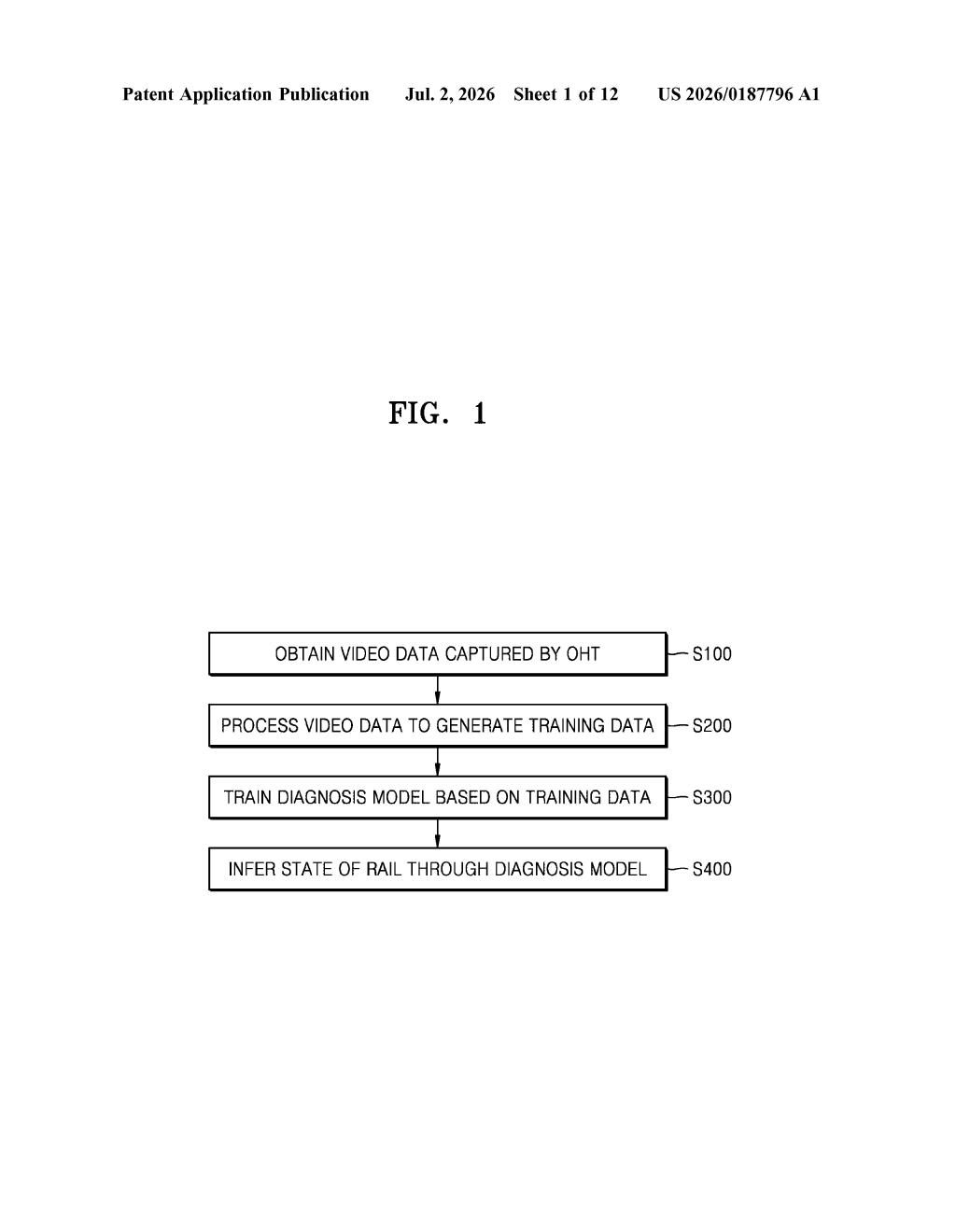
That video is processed to create training data, meaning labeled examples the AI can learn from. A deep learning-based diagnosis model (a neural network trained on images of good and bad rail sections) is then built from that data.
Once trained, the model takes in new video footage from the same rail or from entirely different rail segments and produces an inference result: essentially a verdict on whether a defective component is present. The patent distinguishes between "first video data" used to train the model and "second video data" used for live inspection, which means the model can generalize beyond the exact track sections it trained on.
Key steps in the pipeline:
- Robots record rail video during normal transport runs
- Video frames are processed and labeled to build a training dataset
- A neural network is trained to classify rail condition
- The trained model inspects new footage and flags defects
What this means for semiconductor factory reliability
Semiconductor fabs run 24 hours a day, and a single rail failure can halt an entire production zone. Traditional inspection means stopping operations and sending technicians to physically examine the tracks. Samsung's approach turns inspection into a background task that runs continuously without interrupting production, which matters a lot when each hour of downtime can cost millions of dollars.
This also fits into a broader industry push to make chip factories more autonomous. If your factory's robots are already your inspection crew, you reduce the need for scheduled maintenance windows and can catch problems while they're still small. For Samsung's foundry business, where competing on yield and uptime is as important as the chips themselves, that's a meaningful operational edge.
This is quiet but practical factory-automation work. It won't make headlines the way a consumer gadget patent does, but for anyone who cares about how chips actually get made, automating rail inspection with onboard cameras is a sensible improvement over periodic manual checks. The real test will be whether the AI generalizes well enough in a real fab environment, where lighting, vibration, and rail geometry vary constantly.
Get our take in your Top Stories
Liked this breakdown? Add Patentlyze as a preferred source on Google, and our plain-English take shows up more often in your Top Stories the next time Samsung patent news breaks.
There are more where this came from
We read every patent application Big Tech publishes and send you the ones worth knowing. Plain English, free, every week.
Want this weekly breakdown for a company we don't cover? Patentlyze Pro →