
IBM's New Patent Lets You Question a Meeting You Missed
What if missing a meeting meant you could still ask the meeting itself questions afterward? IBM is patenting exactly that: an AI that learns from a call's recordings and documents, then fields follow-up questions from attendees long after everyone has hung up.
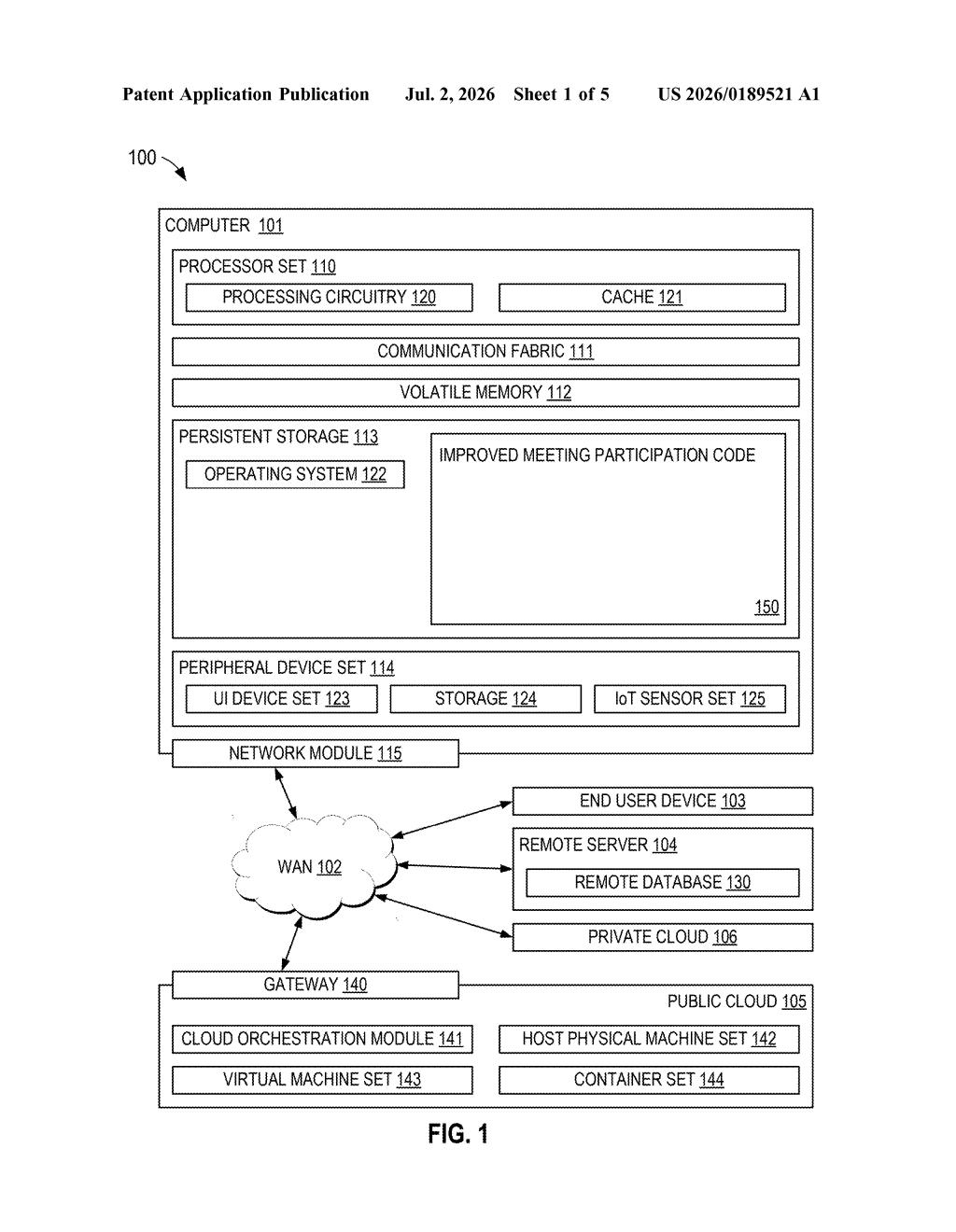
How IBM's post-meeting AI actually works for attendees
Imagine your company holds a two-hour product review. You were in back-to-back calls and caught only the last ten minutes. Right now, your options are: watch the full recording, ping a colleague, or just stay confused. IBM's patent describes a different setup.
After the meeting ends, the system takes the recording and any documents that were referenced during the call, uses them to train a small AI, and then gives everyone a chat interface where they can ask questions. You could type "What did the team decide about the budget?" and get a direct answer drawn from what was actually said.
The clever part is that the AI keeps learning. Every question you or another attendee asks during this follow-up window gets fed back into the model, so it gets better at answering as more people interact with it. IBM is calling the whole thing an extended meeting session, treating the post-call Q&A as a formal part of the meeting itself.
How the AI trains on recordings, then re-trains on follow-up questions
The system works in two distinct phases.
Phase one (during and immediately after the meeting): The system captures video and audio from the live call, plus any documents, slides, or meeting records that participants referenced. All of that material is used to train an AI model specifically on the contents of that one meeting. The model learns the context, the decisions made, and the documents discussed.
Phase two (the supplemental submission period): The trained model gets embedded into one or more conversational interfaces (think: a chat window that looks a bit like ChatGPT but knows only about your specific meeting). These interfaces are then shared with the intended participants, who can ask questions during a defined follow-up window.
The key technical wrinkle is continuous re-training. When participants submit questions or inputs during the follow-up period, those interactions are used to update the model again. This means the AI isn't static; it adapts based on what attendees actually wanted to know, potentially getting better at surfacing relevant context as the follow-up period goes on.
The patent covers the full pipeline: ingestion, training, integration into a chat interface, distribution to participants, and iterative re-training.
What this means for remote meetings and async work culture
For large organizations where attendance at any given meeting is spotty, and where key decisions get buried in hour-long recordings, a system like this could genuinely change how information flows after a call. Instead of a recording that almost nobody watches, you get an interactive summary that answers your specific question in seconds. That is a meaningfully different experience for remote or async workers.
IBM is positioning this squarely in the enterprise collaboration space, competing with Microsoft Teams, Zoom, and Google Meet, all of which have their own AI meeting-summary features. The differentiator here is the re-training loop: most meeting AI today gives you a static summary; this patent describes a model that evolves based on what participants actually ask.
This is a genuinely useful idea that addresses a real and persistent problem in distributed work: the information that lives in meetings is largely inaccessible to anyone who wasn't fully present. The continuous re-training angle is what makes it interesting beyond standard AI meeting-summary tools, though the practical challenge of doing per-meeting fine-tuning at scale without enormous compute costs is a real engineering hurdle IBM will need to clear.
Get our take in your Top Stories
Liked this breakdown? Add Patentlyze as a preferred source on Google, and our plain-English take shows up more often in your Top Stories the next time IBM patent news breaks.
There are more where this came from
We read every patent application Big Tech publishes and send you the ones worth knowing. Plain English, free, every week.
Want this weekly breakdown for a company we don't cover? Patentlyze Pro →