
IBM Patent Determines If Additional Training Data Improves AI Models
Retraining an AI model with bad or redundant data can make it worse, not better. IBM has patented a way to mathematically check whether new training data actually changes things enough to be worth the effort.
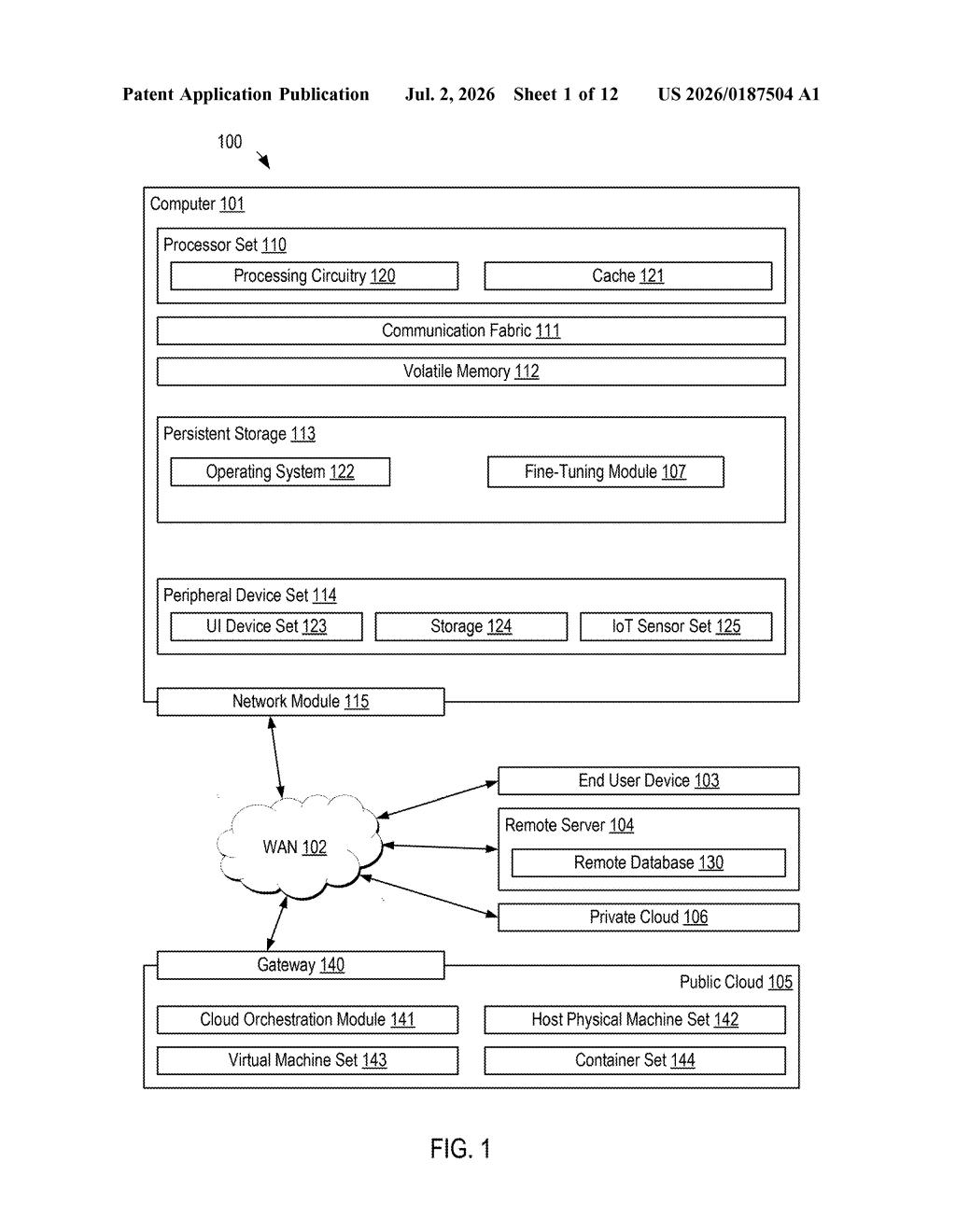
How IBM decides when to retrain an AI model
Imagine you're teaching someone a new skill, but all the new examples you're giving them are nearly identical to what they already know. You're wasting time, and you might even confuse them. AI models face the same problem when companies try to update them with new data.
IBM's patent describes a system that takes a "snapshot" of what an AI model's current training data looks like, mathematically speaking, then takes another snapshot after new data is added. If the two snapshots look almost the same, the new data probably isn't adding much, and the system can skip the expensive retraining step. If they look meaningfully different, the model gets updated.
The practical benefit is that companies running AI systems don't have to blindly retrain every time new data arrives. The system does the legwork of figuring out whether the update is actually worth doing, which saves computing cost and helps avoid accidentally degrading a model that was already working well.
How the Gaussian mixture model comparison works
The patent centers on a statistical tool called a Gaussian mixture model (GMM), which is essentially a mathematical recipe for describing the shape of a dataset. Think of it like a topographic map: it captures where data clusters together and how spread out those clusters are.
Here's the process the system follows:
- It converts the existing training data into vector embeddings (numerical representations that encode meaning or patterns) and builds a GMM from them.
- When new training data arrives, it combines the old and new embeddings and builds a second GMM.
- It compares specific parameters of the two GMMs, such as the weights, means, and covariances of each cluster, to measure how much the data distribution has shifted.
- Based on that comparison, it decides whether to proceed with fine-tuning (updating the model on the new data) or skip it.
The key insight is that not all new data changes the statistical profile of what a model knows. By comparing the before-and-after "shape" of the training data, the system can make a principled, automatic decision about whether retraining is worthwhile rather than relying on a fixed schedule or human judgment.
What this means for companies running AI in production
For companies that deploy AI models in real-world settings, retraining on bad or redundant data is a genuine operational problem. It wastes GPU compute time, can introduce regressions (where a previously working behavior breaks), and slows down the cycle of keeping models current. A systematic way to pre-screen new data before committing to a retraining run addresses a real cost center.
This is particularly relevant in enterprise AI, where IBM's consulting and cloud businesses often help large organizations manage AI model lifecycles. A tool that automates the "should we retrain?" decision fits naturally into that workflow and could become part of IBM's existing AI operations tooling.
This is a focused, practical patent aimed squarely at the unglamorous but genuinely painful problem of AI model maintenance. It's not trying to make models more capable; it's trying to make the process of keeping them current less wasteful. That's a real problem worth solving, and the approach is technically sound, even if it reads more like infrastructure plumbing than a headline innovation.
Get our take in your Top Stories
Liked this breakdown? Add Patentlyze as a preferred source on Google, and our plain-English take shows up more often in your Top Stories the next time IBM patent news breaks.
There are more where this came from
We read every patent application Big Tech publishes and send you the ones worth knowing. Plain English, free, every week.
Want this weekly breakdown for a company we don't cover? Patentlyze Pro →