
IBM Patents an AI That Decides Which Server Logs to Switch On Before Things Break
Server logs are like security cameras — you only wish you'd turned them on after something goes wrong. IBM's new patent tries to fix that by training an AI to predict which logs you'll need before a problem even starts.
What IBM's log-activation AI actually does
Imagine your company's servers crash and the IT team scrambles to figure out what happened — only to discover that the specific diagnostic logs that would have captured the problem were never turned on. That's an extremely common and frustrating scenario in enterprise computing.
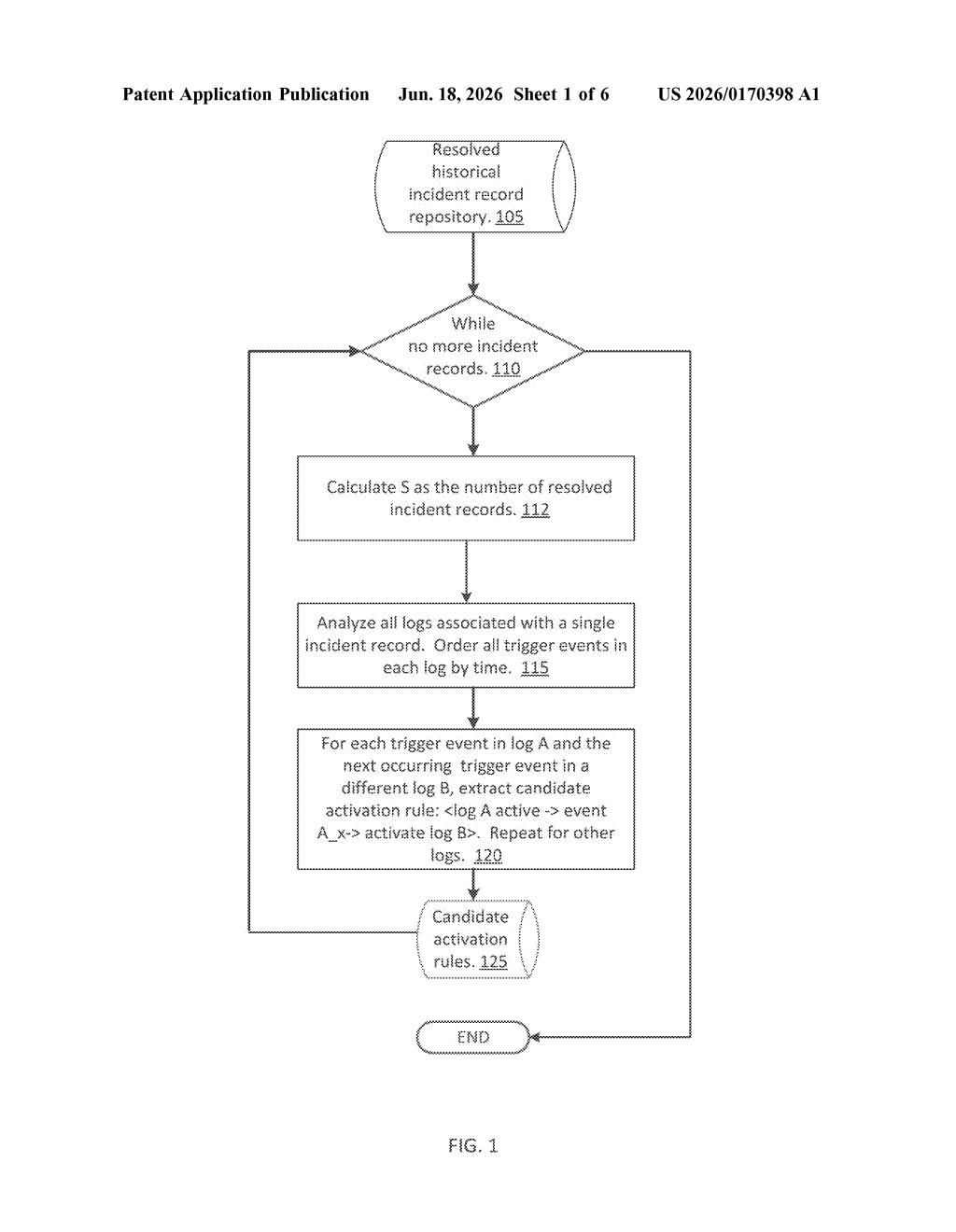
IBM's patent describes an AI trained on past incidents — cases where problems were eventually solved and the full log trail existed. The AI studies which log messages tended to show up just before a known warning sign, then learns to spot that pattern in real time and activate the right logs proactively.
The system uses a technique called reinforcement learning, which is roughly how AI learns to play chess: it tries strategies, gets rewarded when they work, and keeps refining until performance stops improving. In this case, the 'game' is figuring out the right moment to switch on a log so engineers capture everything they need.
How the reinforcement learning model picks the right logs
The patent describes a method that starts by ingesting two things: solved historical records (past incidents where the root cause was eventually found, complete with full log data) and trigger event rules (known warning signs — specific log messages that signal a problem is underway).
For each historical incident, the system identifies a critical pattern: the exact log message that appeared immediately before a trigger event showed up for the first time. This 'message entry sequence' is the early-warning fingerprint. IBM's system calculates what percentage of past incidents featured each such sequence, building a statistical map of which log messages reliably precede trouble.
Those percentages, the historical records, and the trigger rules are assembled into a reinforcement learning simulation environment — essentially a training arena where the AI can replay past incidents and experiment with different log-activation decisions. The AI earns a reward when its choices would have captured the information needed to diagnose a problem, and the training loop runs until performance stops improving.
Once trained, the deployed model watches live log streams and activates additional logging at the moment it detects a familiar early-warning sequence — before the actual failure event arrives.
What this means for IT teams chasing system failures
For large organizations running complex infrastructure — banks, airlines, cloud providers — the gap between 'something went wrong' and 'we have enough data to fix it' can cost hours or days. Turning on every possible log all the time creates so much data it becomes its own problem, slowing systems down and burying engineers in noise. IBM's approach is a middle path: activate only the logs that are statistically likely to matter, only when the signals suggest they're about to be needed.
This is squarely an enterprise IT play, and IBM's existing client base in large-scale infrastructure makes it a natural fit for products like IBM Instana or IBM Watson AIOps. If it works as described, it could meaningfully shorten incident response times — which translates directly into reduced downtime costs.
This is unglamorous infrastructure work, and IBM knows it — there's no consumer angle here whatsoever. But the problem it's solving is genuinely painful for enterprise IT, and applying reinforcement learning to log management is a more thoughtful approach than the brute-force 'log everything' strategy most teams default to. If IBM can validate the accuracy of the early-warning pattern detection, this has a real shot at becoming a standard feature in its AIOps tooling.
There are more where this came from
We read every patent application Big Tech publishes and send you the ones worth knowing. Plain English, free, every week.
Want this weekly breakdown for a company we don't cover? Patentlyze Pro →