
IBM Patent Teaches AI to Learn Cloud Behavior for Smarter Conversations
Managing a cloud system with dozens of moving parts from different vendors is exhausting. IBM is patenting a way to let an AI watch all of that activity and train itself to answer questions about it automatically.
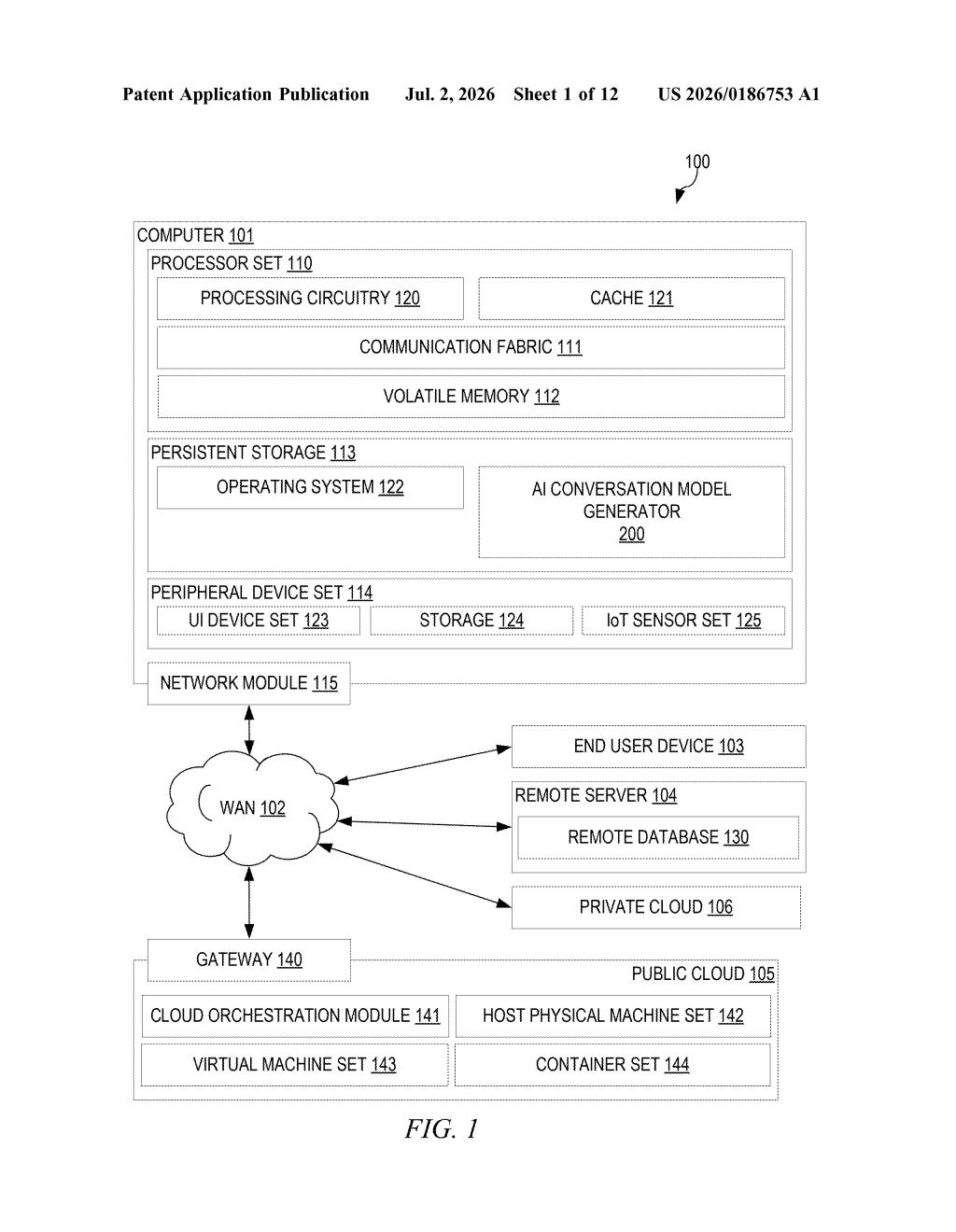
How IBM turns cloud chaos into an AI troubleshooter
Imagine your company runs software that depends on services from Amazon, Microsoft, and several other providers, all talking to each other at once. When something breaks, your IT team has to dig through logs from all of those different systems to figure out what happened and why. That's slow, painful, and easy to get wrong.
IBM's patent describes a system that watches how all those cloud pieces interact with each other, collecting records of what happened (events) and what the system did in response (actions). It then figures out which of those details actually matter and maps out the relationships between them.
From those maps, it builds an AI assistant that already understands your specific setup. So instead of starting from scratch, the AI has absorbed the history of your system and can answer questions or help diagnose problems in plain conversation.
How the ACE mapping converts events into conversation paths
The patent describes a pipeline with several distinct steps:
- Dependency graph generation: The system first creates a map (called a dependency graph) of all the software components and how they connect to each other across different providers. Think of this like a wiring diagram for your cloud.
- Event and action collection: It then collects two types of data: events (things that happened, like a server restart or a failed request) and actions (things the system or an operator did in response).
- Key field identification: Not every detail in a log file is useful. The system automatically picks out which fields (specific data points inside each event record) actually carry meaningful information.
- ACE relationship mapping: It builds what IBM calls Action-Component-Event (ACE) mappings, structured records of which actions, components, and events relate to each other and how.
- Conversation path compilation: Those mappings are converted into conversation paths, essentially pre-built threads of logic that an AI chatbot can follow when a user asks a question about the system.
The result is an AI conversation model tailored to that specific cloud environment, trained on its real operational history rather than generic data.
What this means for enterprise IT operations
Enterprise IT teams spend enormous amounts of time on what is called incident response: figuring out why something broke and how to fix it. Today, that work mostly means reading logs manually or querying separate monitoring tools. An AI assistant pre-trained on your system's actual behavior could cut that time significantly by already knowing the relationships between components.
For IBM, this fits squarely into its push to sell AI operations tools to large enterprises running complex, multi-vendor cloud setups. Companies that already use IBM's cloud management products would be the most obvious customers for something like this.
This is a genuine pain-point patent. Multi-vendor cloud environments are genuinely hard to debug, and the idea of auto-generating an AI assistant from operational history rather than manually training one is practical and well-motivated. The approach is not flashy, but the problem it targets is real and expensive for large organizations.
Get our take in your Top Stories
Liked this breakdown? Add Patentlyze as a preferred source on Google, and our plain-English take shows up more often in your Top Stories the next time IBM patent news breaks.
There are more where this came from
We read every patent application Big Tech publishes and send you the ones worth knowing. Plain English, free, every week.
Want this weekly breakdown for a company we don't cover? Patentlyze Pro →