
Google Patents an AI That Catches When Ad Landing Pages Don't Match Your Search
You search for 'red running shoes size 10' and click an ad that drops you on a generic homepage for a shoe brand. Google's new patent describes an AI built specifically to catch that kind of mismatch at scale.
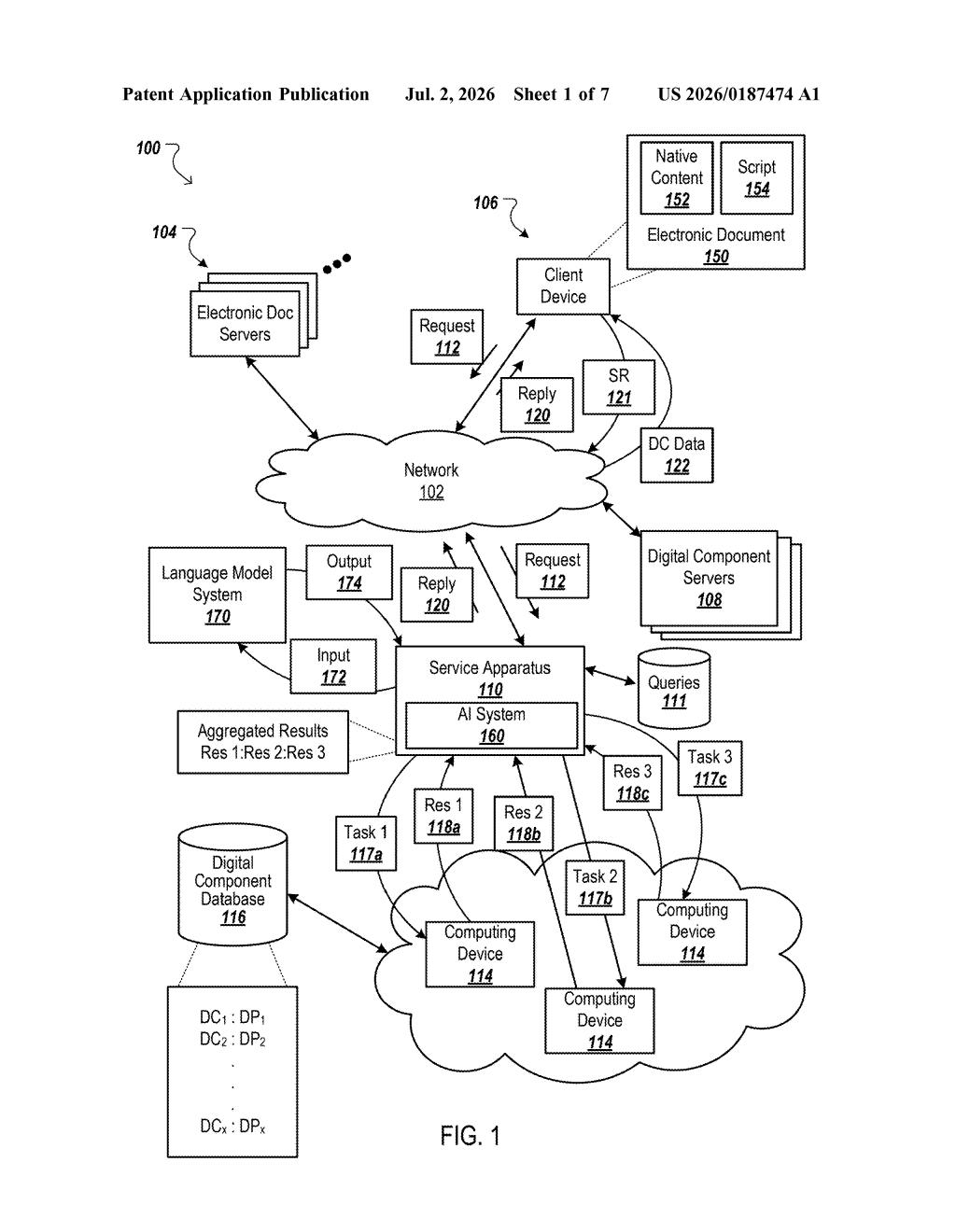
How Google's system spots bait-and-switch ad pages
Imagine searching for something specific, clicking a sponsored result, and landing on a page that has almost nothing to do with what you typed. That gap between your search and the page you land on is what Google calls specificity drift, and this patent is about training AI to measure it automatically.
The way it works is a two-step teaching process. First, a large AI model (think the kind that powers chatbots) reads both your search query and the landing page, compares them to other high-ranking search results, and produces a score capturing how far the landing page has drifted from what you actually wanted. That scored data is then used to train a smaller, faster model that can make the same judgment on its own.
The end goal is a lean AI that can evaluate, in real time, whether an advertiser's landing page genuinely matches the search it's being shown for, without needing to run a full live search every single time.
How the teacher-student model measures specificity drift
The patent describes a pipeline with two AI models trained in sequence: a teacher model and a student model.
For the teacher model's training data, Google uses a large language model (LLM) to compare a landing page against the top-ranked organic search results for a given query. For each pair of pages, the LLM generates label probabilities (confidence scores across a set of relevance categories) in a single inference call, producing a document-to-document score that captures how specific or general the landing page is compared to a known-good result. Those scores are then averaged or aggregated into a query-to-document score, a single number representing how much the landing page has drifted from the user's actual intent.
Those scored training examples are fed to the teacher model. Once trained, the teacher model can assign those same drift scores to new query-and-landing-page pairs without needing to look up live search results at all.
Finally, the teacher's labeled data trains the student model, which is then ensemble trained (combined with other training signals that don't directly measure specificity drift) to predict overall ad performance for a given landing page. The student model is the lightweight, production-ready system that would actually run during ad auctions.
What this means for ad quality and search relevance
For advertisers, a system like this raises the bar on what counts as a relevant ad. If Google can automatically score how well your landing page matches a user's search, it can factor that score into ad rankings or quality scores, meaning pages that technically match a keyword but lead to generic or off-topic content could be penalized.
For users, the practical effect would be fewer instances of clicking an ad and landing somewhere that feels like a bait-and-switch. Google already uses various quality signals in its ad auction, and a reliable specificity drift score would give it a much more precise tool for filtering out pages that game keyword targeting without delivering genuine relevance.
This is a well-constructed piece of ad-quality infrastructure, and it matters precisely because it's hard to game. By anchoring the scoring to top organic results as a benchmark, Google is essentially asking 'does this ad page live up to what the best non-paid results already provide?' That's a high bar, and it's exactly the kind of signal that makes click-bait landing pages harder to hide behind a well-chosen keyword.
Get our take in your Top Stories
Liked this breakdown? Add Patentlyze as a preferred source on Google, and our plain-English take shows up more often in your Top Stories the next time Google patent news breaks.
There are more where this came from
We read every patent application Big Tech publishes and send you the ones worth knowing. Plain English, free, every week.
Want this weekly breakdown for a company we don't cover? Patentlyze Pro →