
Qualcomm Patents a Map-Assisted System for Spotting Static Objects on Camera
What if your car's camera could cheat a little, by checking a stored map of the world before deciding what it's looking at? That's essentially what Qualcomm is patenting here.
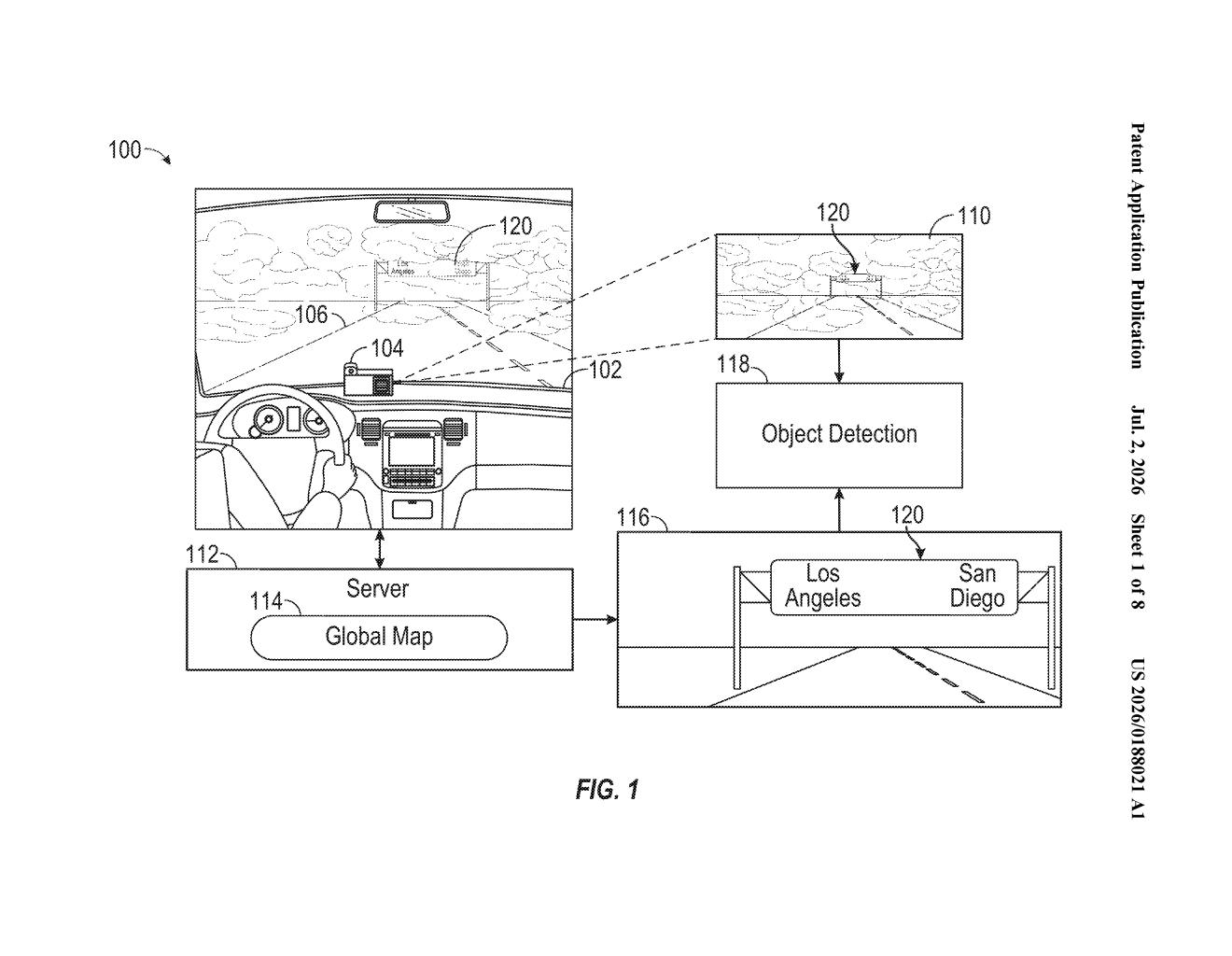
How Qualcomm's global map helps cameras see better
Imagine you're driving past a stop sign on a foggy morning. Your car's camera captures a blurry frame and isn't quite sure what it sees. Now imagine the car could cross-reference that blurry image against a detailed pre-built map of that exact street corner to confirm: yes, there's a stop sign right there. That's the core idea behind this Qualcomm patent.
Qualcomm's system works with sensors like cameras. When a sensor captures a frame of a scene, the system also looks up what it knows about that location from a large stored map. It then generates a second frame drawn from that map data, matched to the same angle and position the sensor is currently at. That synthesized frame acts as a reference to help the system recognize what static objects, things like road signs, buildings, or barriers, are actually present.
The key word is static. This approach targets objects that don't move, which are predictable enough to map in advance. Moving things like other cars or pedestrians are a separate problem. By handling static objects with map-backed confirmation, detection systems can become more confident even when live camera data is imperfect.
How the sub-map query and frame generation work together
The patent describes a pipeline with four main steps:
- Capture: A sensor (camera or similar) grabs a frame of a scene from a specific position and viewing angle at a given moment.
- Query: The system looks up a global map, a large stored data structure built from prior observations of the world, and finds the sub-map (a localized tile of that larger map) that matches the sensor's current location.
- Generate: Using the sub-map, the sensor's known position, and its viewing angle, the system constructs a second frame, essentially a synthesized snapshot of what the static objects in that area should look like from that exact vantage point.
- Output: That second frame is fed into an object detection system alongside or instead of the raw sensor data, giving the detector a cleaner or more complete view of static elements in the scene.
The global map is organized into sub-maps to make lookups fast. Rather than searching an entire world model every time a frame is captured, the system narrows the search to the relevant geographic tile based on the sensor's location, something like how a navigation app loads only the map tiles near you rather than the entire world at once.
The system is specifically scoped to static objects (things that don't move, like traffic signs, lane markings, curbs, and buildings), which makes the pre-built map reliable because those objects stay put between map updates.
What this means for self-driving and robotics perception
For autonomous vehicles and robotics, detecting static objects reliably in bad lighting, bad weather, or with low-resolution sensors is a persistent problem. A map-backed second frame could let a detection system fill in gaps that raw sensor data leaves open, which means safer and more consistent performance without requiring better hardware.
This also plays into Qualcomm's core business. The company supplies the chips that power perception systems in cars, drones, and robots. A patented technique for combining live sensor data with stored map knowledge could end up baked into future versions of the Snapdragon Ride platform or similar automotive-grade chipsets, giving Qualcomm a software-level edge on top of its silicon.
This is a genuinely useful idea for the autonomous driving space, even if the patent itself reads as fairly incremental. Using a pre-built map to generate a synthetic reference frame is a smart way to get more mileage out of existing sensor hardware. The real question is how well the global map stays current in the real world, where construction zones and signage change constantly.
Get our take in your Top Stories
Liked this breakdown? Add Patentlyze as a preferred source on Google, and our plain-English take shows up more often in your Top Stories the next time Qualcomm patent news breaks.
There are more where this came from
We read every patent application Big Tech publishes and send you the ones worth knowing. Plain English, free, every week.
Want this weekly breakdown for a company we don't cover? Patentlyze Pro →