
Sony Patent Links Visual Feature Data Directly to 3D Point Cloud Maps
Sony's semiconductor division is patenting a way to combine two things that usually live in separate systems: a 3D map of a physical space and a camera's analysis of what's actually inside it.
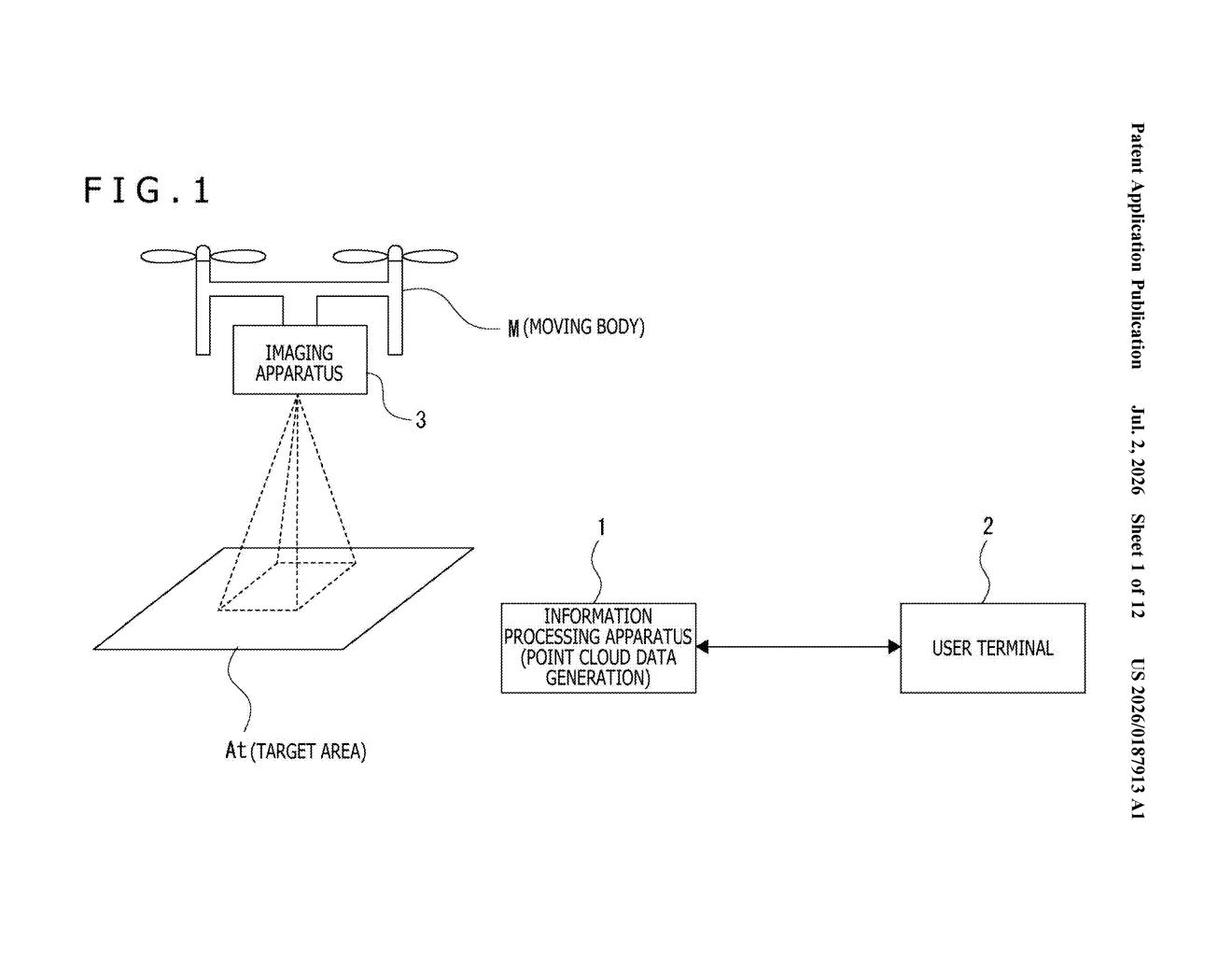
What Sony's combined 3D-and-image scanning system does
Imagine a security camera that doesn't just record video but also builds a 3D model of the room it's watching, then labels every person or object in that model with information about what the camera "sees." That's the basic idea here.
Sony's patent describes a system that takes depth-sensing data (the kind of data that produces a point cloud, which is basically a three-dimensional dot-map of a space) and pairs it with analysis from a regular camera image. The analysis might describe a person's posture, an object's appearance, or some other observable feature. Those analysis results get attached directly to the 3D map data.
The combined package is then sent to an external device or system, so whatever receives it gets both the spatial layout and the image-derived context in one go. Instead of handling two separate data streams that have to be matched up later, a receiving system gets them already linked.
How the sensor data and image analysis get linked together
The patent describes four core components working in sequence:
- Point cloud generation: Sensor data (likely from a depth camera or LiDAR) is processed into a point cloud, which is a 3D structure made of millions of individual coordinate points representing the physical layout of a space.
- Feature evaluation: A separate analysis pipeline processes a conventional camera image of the same area and extracts "features" of subjects in the frame. The patent doesn't lock this to one use case, but features could include things like body pose, shape, or other visually derived attributes.
- Association: The feature analysis results are tagged onto the point cloud data, so each evaluated subject in the image has its descriptors linked to its corresponding location in 3D space.
- Output: The merged data package is transmitted to an external apparatus, which receives spatial and contextual information together rather than as separate streams.
The key design choice is the association step: instead of leaving it to downstream systems to reconcile 2D image analysis with 3D spatial data, this patent bakes the linkage into the output format itself. That makes the data immediately usable without additional merging work on the receiving end.
What this means for cameras, robots, and smart sensors
For any system that needs to understand both where things are and what those things are, having that information pre-packaged is a meaningful efficiency gain. Robotics, autonomous vehicles, smart surveillance, and retail analytics all involve exactly that combination, and today those systems often stitch together separate data feeds with extra processing steps.
Sony Semiconductor makes image sensors used in a huge range of devices, from smartphones to industrial cameras. A patent like this suggests the company is thinking about how its sensor hardware can produce richer, more immediately useful data outputs, rather than raw streams that other systems have to interpret entirely on their own. That positions Sony's sensors as capable of doing more of the analytical "work" before the data even leaves the device.
This is a foundational data-format patent more than a flashy product announcement. The interesting angle is that Sony Semiconductor, not Sony's consumer electronics division, filed it, which points toward industrial or infrastructure applications rather than a new camera feature. Whether this ends up inside a robot, a traffic sensor, or a retail analytics device, the underlying idea of pre-associating 3D structure with image analysis is genuinely useful plumbing.
Get our take in your Top Stories
Liked this breakdown? Add Patentlyze as a preferred source on Google, and our plain-English take shows up more often in your Top Stories the next time Sony patent news breaks.
There are more where this came from
We read every patent application Big Tech publishes and send you the ones worth knowing. Plain English, free, every week.
Want this weekly breakdown for a company we don't cover? Patentlyze Pro →