
Intel Files Patent for Robots Controlled by Plain-English Voice Commands
What if you could tell a robot to 'move smoothly to the left and slow down near the edge' and it actually understood you, the same way it understands a physical demonstration? Intel is filing a patent to make that possible.
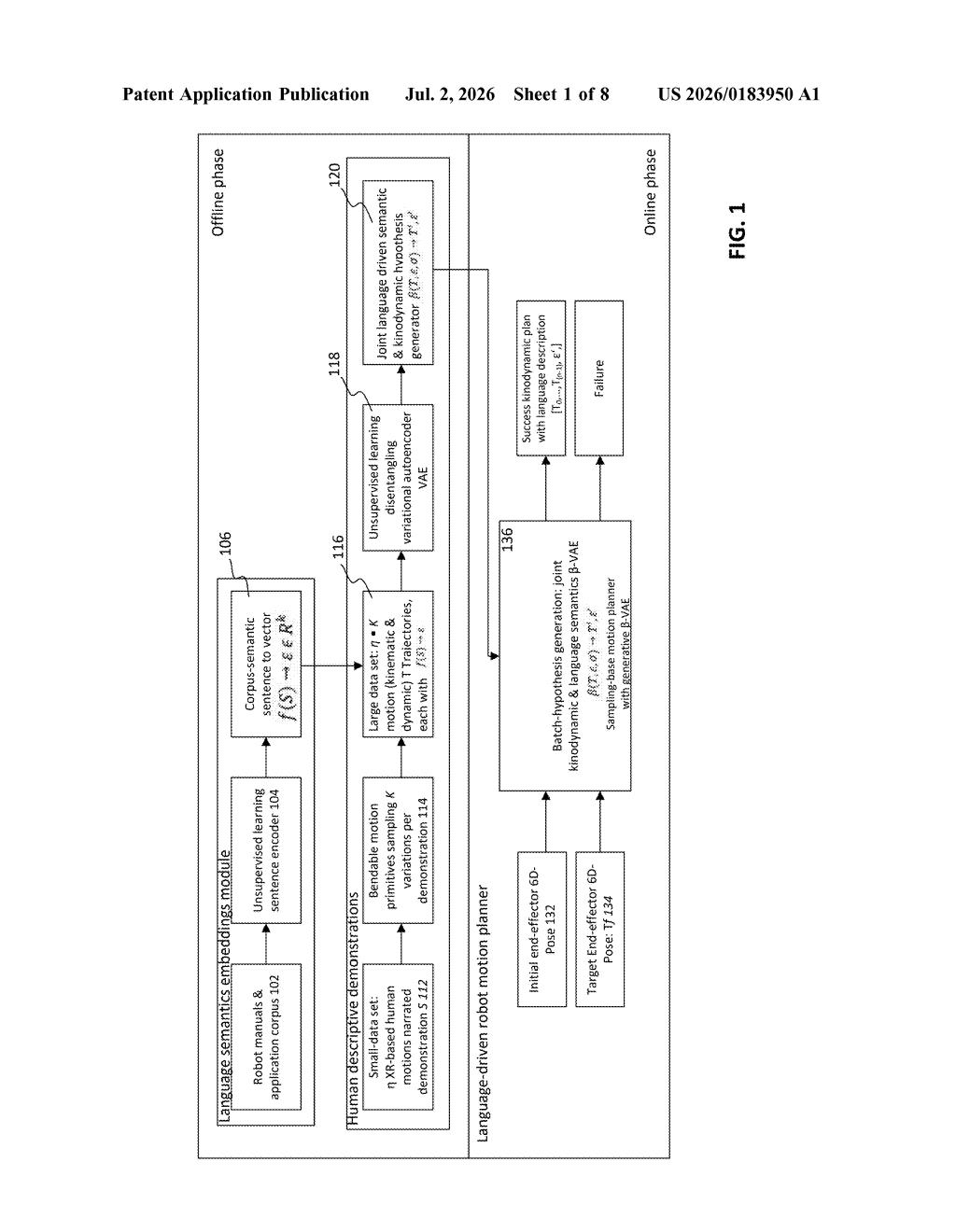
How Intel links words to robot movements
Imagine you're training a new warehouse worker. You could hand them a rulebook full of numbers, or you could just show them what to do and describe it as you go: 'Pick it up gently, swing left, set it down slow.' Intel's patent is essentially building that same system for robots.
The idea is to record a robot being physically guided through a series of movements by a human, and at the same time attach plain-English labels to each of those movements. The robot's system then learns to connect the words to the physics, creating a library of named motion 'building blocks.'
Once that library exists, you could theoretically instruct the robot using natural language rather than writing code. That's a big deal for factories, hospitals, or anywhere robots need to be reprogrammed often by people who aren't software engineers.
How the system pairs motion data with language
The patent describes an apparatus with two data sets stored in memory that work together. The first data set contains kinodynamic data (measurements of how a robot physically moves, including forces, velocities, and trajectories) recorded while a human physically guides the robot through a series of actions.
The second data set contains linguistic descriptors, plain-language labels attached to those same movements, things like 'fast sweep' or 'slow careful approach.' A processor then combines these two data sets to produce a third: a library of motion primitives, reusable movement building blocks that each carry both a physical definition and a language tag.
The result is a motion planner that can accept natural-language commands and translate them into physical robot behavior by looking up or composing the right primitives. The system essentially bridges the gap between how humans talk about movement and how robots execute it.
Key components in the system include:
- A memory that stores recorded human-guided robot movements and their verbal descriptions
- A processor that fuses those two data types into named motion primitives
- A planning layer that uses the primitive library to interpret language-based instructions at runtime
What this means for industrial and home robotics
Right now, reprogramming a robot for a new task typically requires a specialist writing precise motion code, which is expensive and slow. If Intel's system works as described, a factory supervisor could teach a robot a new routine by guiding it through the motion once and narrating what they're doing, no coding required. That dramatically lowers the barrier to deploying flexible robotics in real workplaces.
Intel's broader chip and edge-computing business has a direct interest in this: smarter on-device robot brains mean more demand for Intel's industrial processors. This patent suggests Intel is positioning itself not just as a hardware supplier but as a platform for the AI layer that makes physical robots easier to operate and redeploy.
This is a genuinely interesting research direction, and Intel's team of ten inventors suggests real engineering weight behind it. The concept of pairing human demonstration with language labels to build a reusable motion library is a practical and well-grounded approach to one of robotics' most persistent problems: making reprogramming accessible to non-engineers. Whether Intel turns this into a shipping product or licenses it to robotics makers is the real open question.
Get our take in your Top Stories
Liked this breakdown? Add Patentlyze as a preferred source on Google, and our plain-English take shows up more often in your Top Stories the next time Intel patent news breaks.
There are more where this came from
We read every patent application Big Tech publishes and send you the ones worth knowing. Plain English, free, every week.
Want this weekly breakdown for a company we don't cover? Patentlyze Pro →