
Intel's New Patent Lets Old Games Look Like They Were Made Today
Intel is patenting a way to make a graphics card automatically replace a game's old, blocky visuals with modern-looking ones in real time, no remaster required. The game's code stays untouched; only what you see on screen changes.
How Intel's AI game-remastering system actually works
Imagine playing a 25-year-old game that still has the chunky, pixelated look of the era it was made in, but your graphics card redraws every object and character to look like it belongs in a 2025 title. That's the core idea in this Intel patent.
The system works at two levels. It can swap out individual pieces of a game (a character's texture, a weapon model) as they are being drawn, replacing each one with an AI-generated version that looks far more detailed. It can also take the finished image just before it hits your screen and upgrade the whole picture at once.
A feedback loop watches the output for weird visual glitches that AI often introduces, especially when things move, and corrects them before the next frame arrives. The goal is a consistent, stable picture that doesn't flicker or look wrong in motion.
How the GPU transforms assets frame by frame at render time
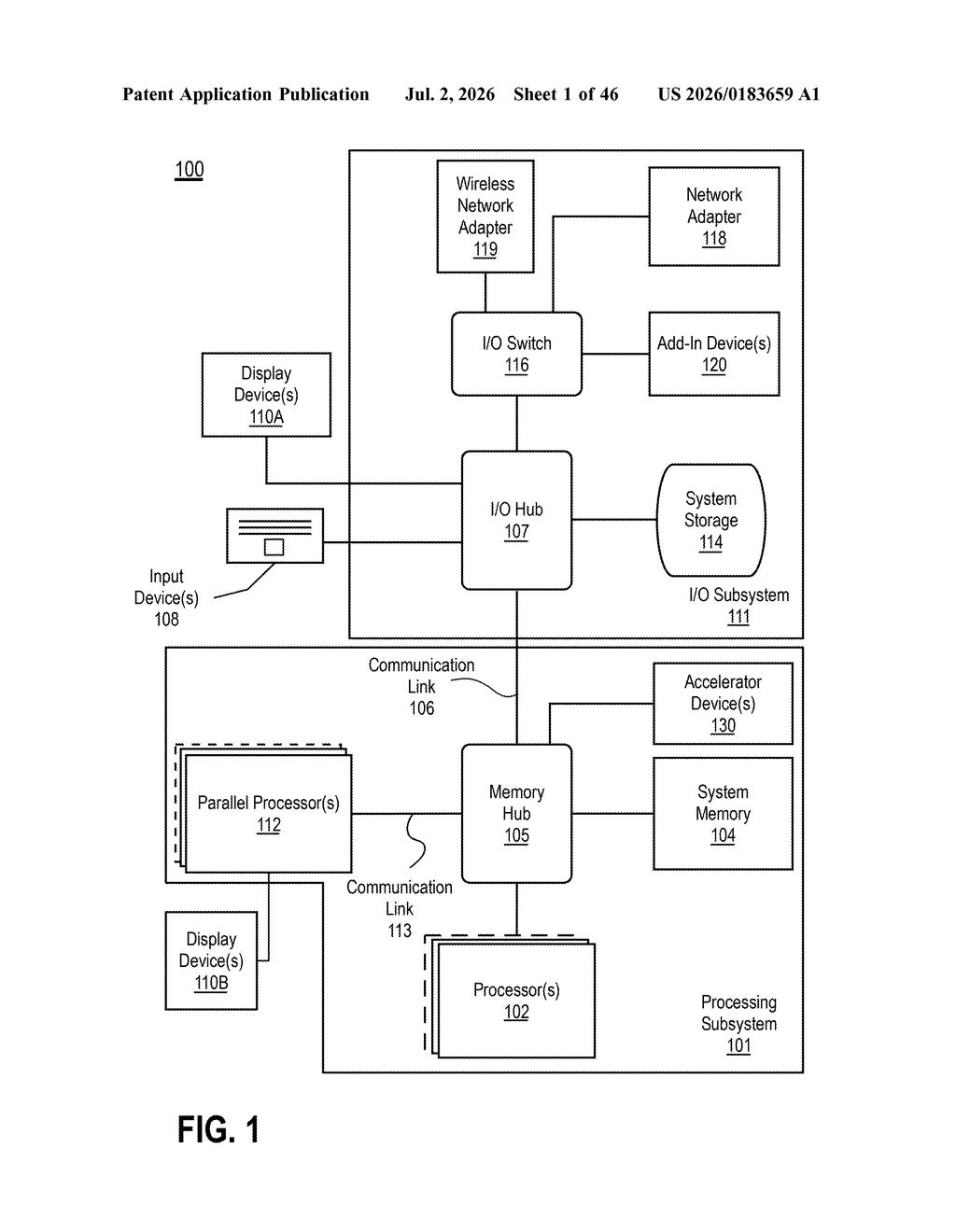
The patent describes a graphics processor cluster (a section of the GPU with multiple parallel computing units) that intercepts a game's normal rendering pipeline and inserts an AI transformation step.
When a game tells the GPU to draw a scene, it sends a command buffer (essentially a to-do list for the chip) that references all the visual building blocks, called assets, stored in memory. Instead of drawing those original assets directly, the GPU runs them through a diffusion-based generative model (the same family of AI behind image-generation tools like Stable Diffusion) to produce replacement assets that carry the visual style of a different, presumably newer, application.
The process operates at two layers:
- Asset-level generation: individual textures, meshes, or objects are transformed one at a time as they are fetched from memory, before the scene is composed.
- Screen-space generation: the fully rendered frame is processed as a whole image just before display, applying a broader visual overhaul.
A temporal consistency feedback mechanism (meaning the system compares the current frame to previous frames and looks for artifacts that pop or flicker) catches visual errors introduced by the AI and feeds corrections back into the next generation pass. This is important because generative models, left unchecked, often produce images that look fine as still photos but wobble or shimmer when animated.
What this means for retro gaming and modern hardware
For players, this could mean playing older games with a dramatically upgraded look without waiting years for a studio to release an official remaster, and without the game's developer having to change a single line of code. The transformation happens entirely inside the GPU driver layer.
For Intel, the timing is pointed. The company is competing with Nvidia and AMD in the discrete GPU market, where AI-assisted rendering features (Nvidia's DLSS, AMD's FSR) have become major selling points. A system that goes beyond resolution upscaling to full style transformation would be a meaningful differentiator, particularly as retro gaming and game preservation attract a growing audience. Whether this ever ships as a consumer feature is another matter, but the patent stakes Intel's claim on the underlying approach.
This is one of the more genuinely interesting GPU patents to come out of Intel in a while. Remastering is a real, recurring cost for the games industry, and a hardware-level AI shortcut that works without developer buy-in solves a real problem. The temporal consistency challenge is also well-understood and the patent is upfront about addressing it, which suggests the inventors have actually tried to build this rather than just describing a wish.
Get our take in your Top Stories
Liked this breakdown? Add Patentlyze as a preferred source on Google, and our plain-English take shows up more often in your Top Stories the next time Intel patent news breaks.
There are more where this came from
We read every patent application Big Tech publishes and send you the ones worth knowing. Plain English, free, every week.
Want this weekly breakdown for a company we don't cover? Patentlyze Pro →