
Apple Patents a Smarter 5G Beam-Pair Reporting System for iPhones
Your phone is constantly negotiating with cell towers to find the best signal path — Apple's new patent makes that negotiation smarter by letting a device evaluate two beams at once and report the best combo back to the network.
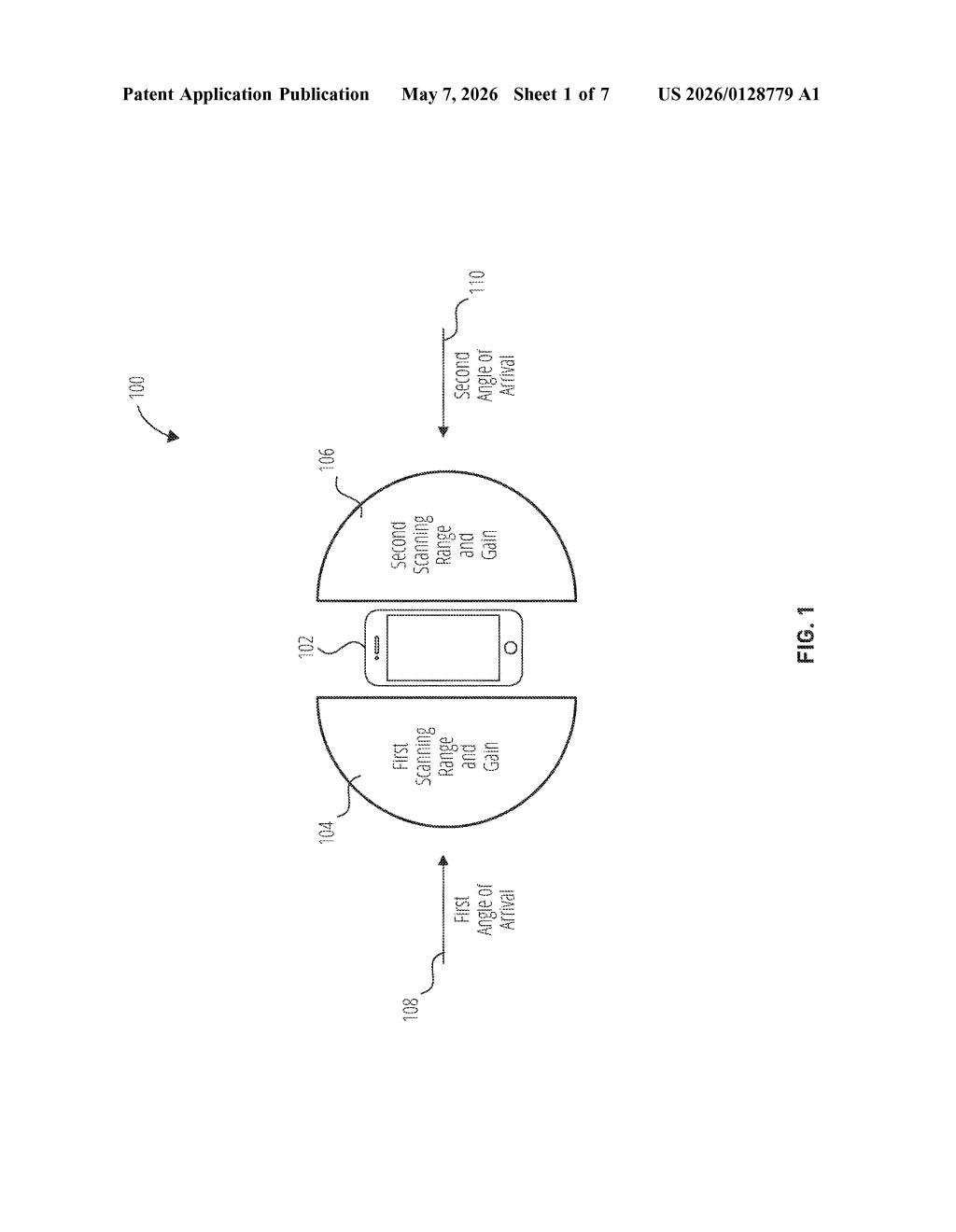
What Apple's dual-panel beam pairing actually does
Imagine you're inside a stadium trying to get a 5G signal. Your phone has antennas on different sides, and the cell tower is firing multiple narrow signal beams in your direction. Right now, your phone basically picks the strongest single beam and reports it. But what if two beams together — one hitting each side of your phone — could give you a more stable connection than either one alone?
That's the problem Apple's latest patent tackles. It describes a system where your phone evaluates two beams simultaneously, one received on each antenna panel, and decides whether they form a good enough pair to report to the network. The decision is based on measuring each beam's signal strength and comparing those readings against a threshold.
If the pair qualifies, your phone sends a special beam reporting message telling the network exactly which two beams to use — and even includes a timer so both sides know how long that pairing stays valid before it needs to be re-evaluated.
How the UE scores and reports qualified beam pairs
The patent describes a method running on a user equipment (UE) — industry shorthand for your phone or tablet — that handles what's called group-based beam reporting in 5G New Radio (NR) networks.
Here's the core process:
- The UE receives a first beam on one antenna panel, measuring its signal quality using a Reference Signal Received Power (RSRP) — basically a standardized reading of how strong that signal is.
- At the same time, it receives a second beam on a second antenna panel and measures its RSRP too.
- Both RSRP values are compared against a threshold value. If they both clear the bar (or their combined characteristics do), the pair is designated a qualified beam pair.
- The UE then sends a beam reporting message to the network that identifies both beams and includes both RSRP readings.
The patent also covers beam pair validity timers — a mechanism that tells both the device and the network how long a reported beam pair can be trusted before a fresh measurement is needed. It also addresses how the UE handles updates when a previously reported pair degrades or a better pair becomes available.
What this means for 5G reliability on future iPhones
Modern 5G mmWave and sub-6GHz networks rely heavily on precise beamforming — directing signal energy in tight beams rather than broadcasting in all directions. The more accurately a phone can tell the network which beams work best, the more efficient and stable the connection. Apple's approach of evaluating pairs of beams across multiple antenna panels is a meaningful step forward from single-beam reporting, especially in challenging environments like dense urban areas or large venues.
For you as a user, the practical upside would be fewer dropped connections and better throughput in crowded or obstructed environments. For Apple, building this kind of intelligent beam coordination into its modem stack — particularly as it continues developing its own in-house 5G modem — is important foundational work.
This is a focused, technically specific cellular standards patent — not a splashy consumer feature, but exactly the kind of modem-layer work Apple needs to do as it builds out its in-house 5G capabilities. The beam pair validity timer and multi-panel simultaneous measurement are real engineering improvements over naive single-beam reporting. It's worth attention if you're tracking Apple's modem ambitions.
There are more where this came from
We read every patent application Big Tech publishes and send you the ones worth knowing. Plain English, free, every week.
Want this weekly breakdown for a company we don't cover? Patentlyze Pro →