
Google's New Patent Gives Its Voice Recognition a Cheat Sheet Before It Listens
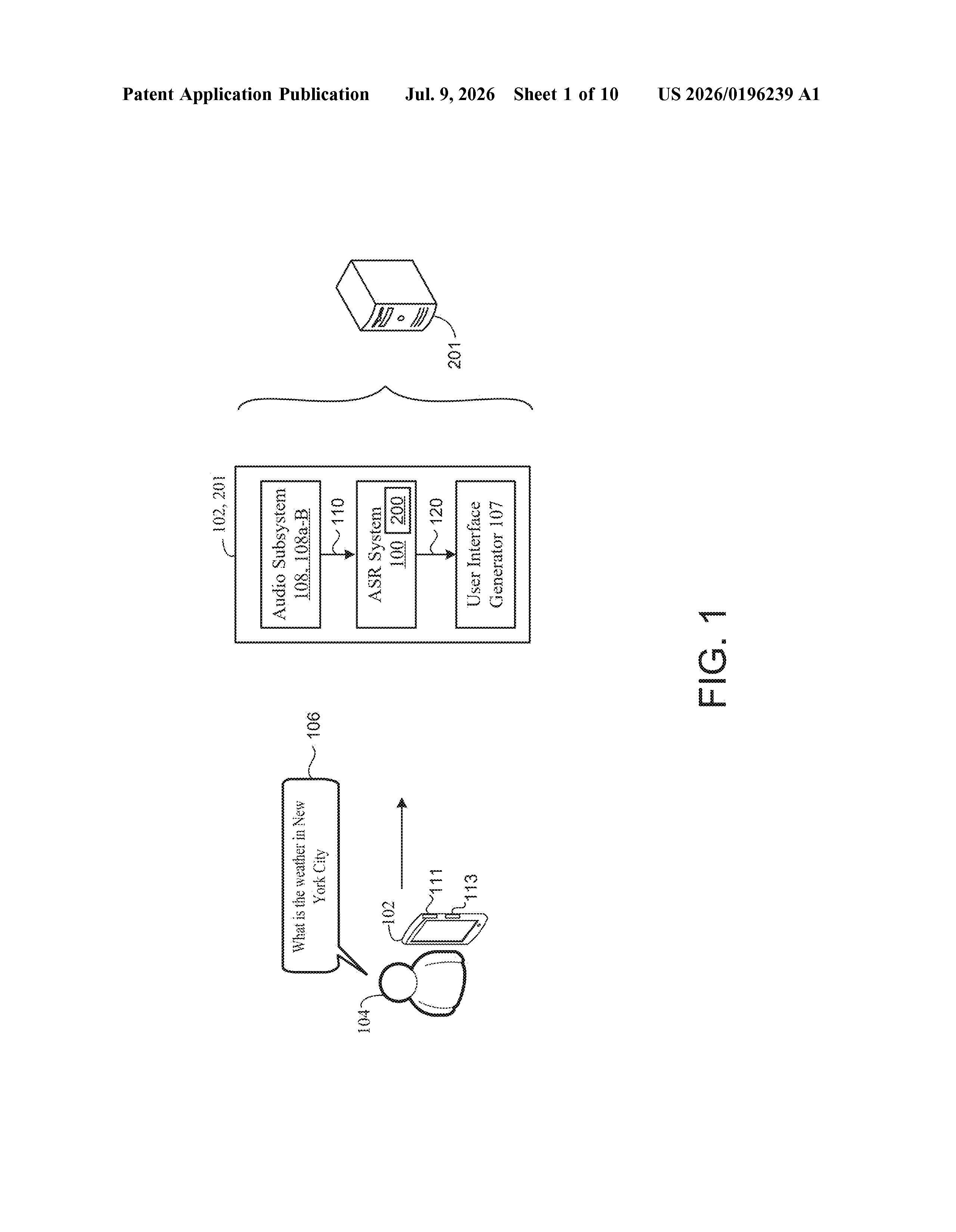
Google has filed a patent for a speech recognition system that doesn't just listen to what you say, it also checks a list of relevant phrases ahead of time to make sure it gets the words right.
How Google's voice recognition uses context to fill in the blanks
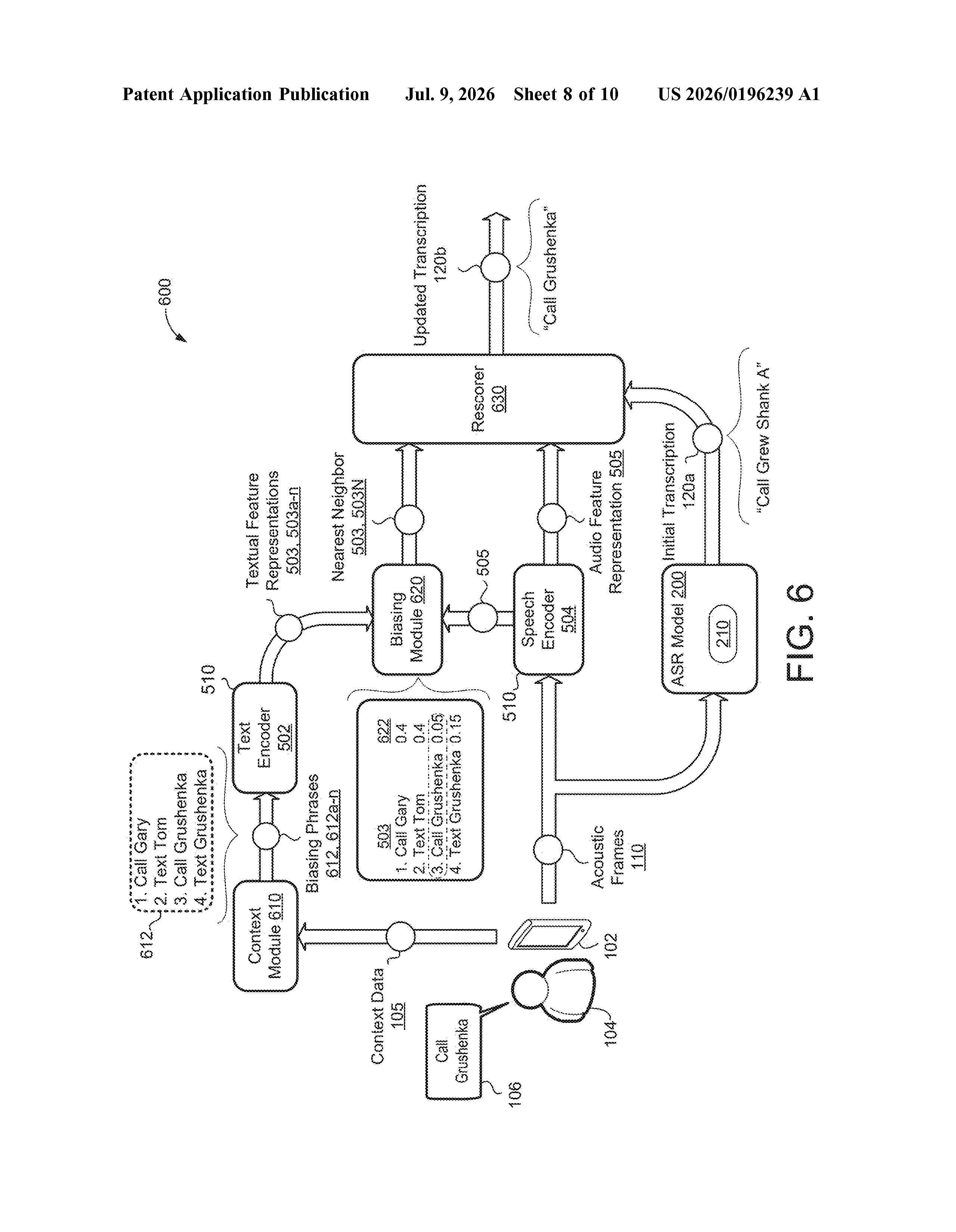
Imagine you're dictating a medical note and you say the name of an obscure drug. Most voice recognition software has never heard of it and guesses wrong. Google's patent describes a system that solves this by giving the speech recognizer a cheat sheet of words or phrases that are likely to come up, so it can match what it hears against that list instead of relying on general vocabulary alone.
The way it works is that both the audio you speak and the phrases on that cheat sheet are converted into a kind of shared numeric fingerprint. The system then looks for which phrase fingerprint best matches your audio fingerprint, and uses that match to produce the final transcription.
This is particularly useful in situations where the right words are predictable but unusual, like a doctor naming a procedure, a lawyer citing a case, or a developer calling out a product name. The system can be loaded with the right vocabulary before you even start speaking.
How the speech and text encoders find the best-matching phrase
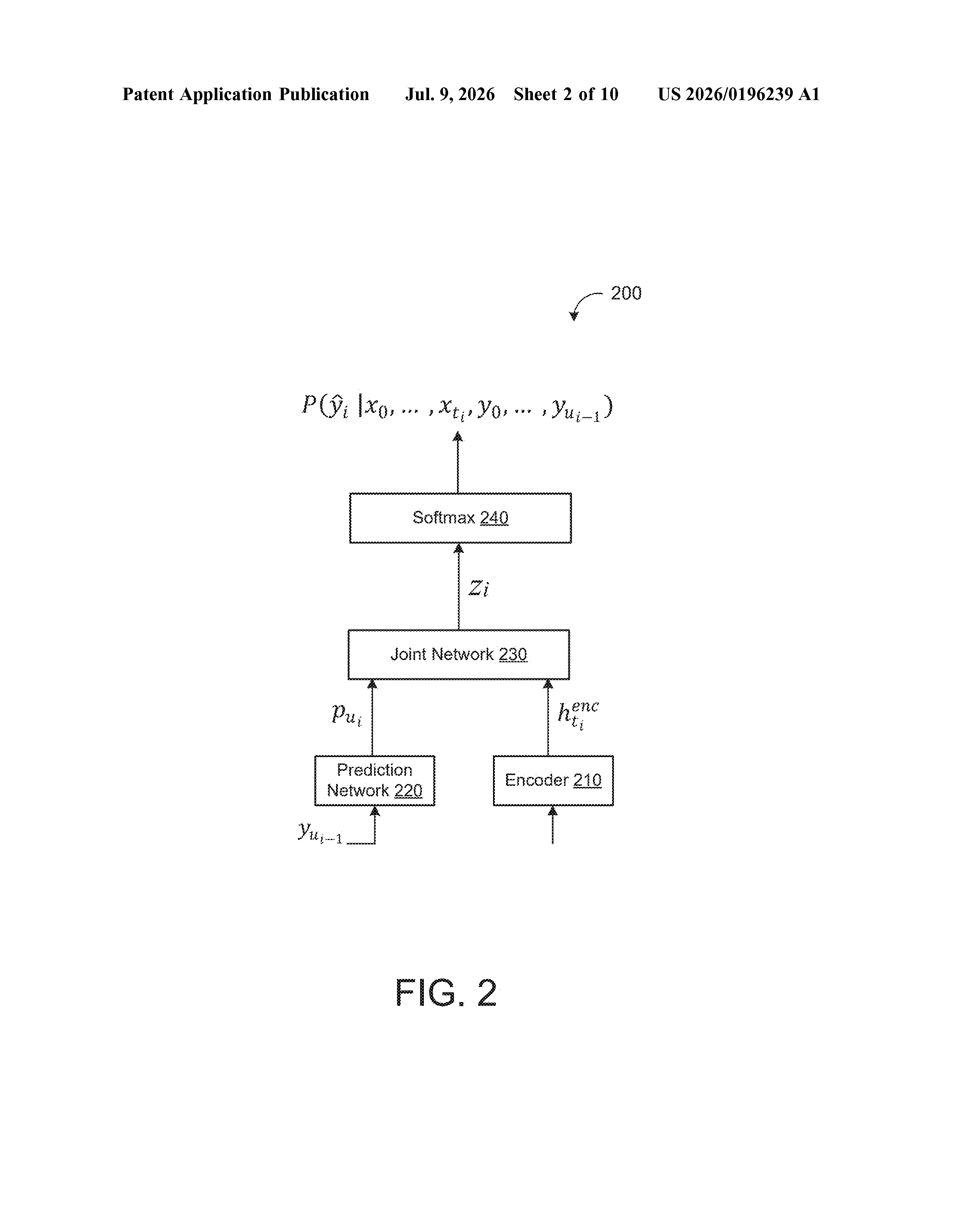
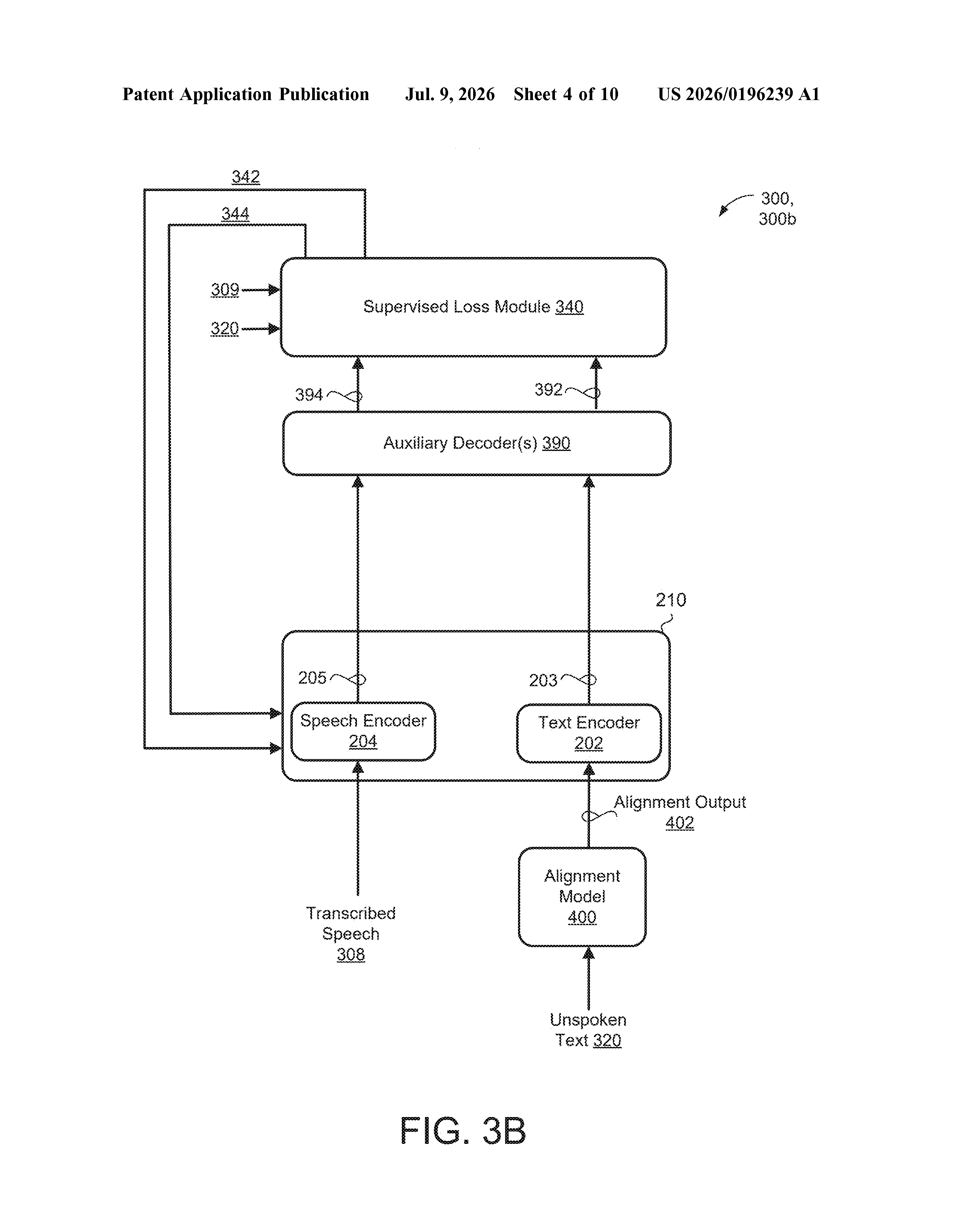
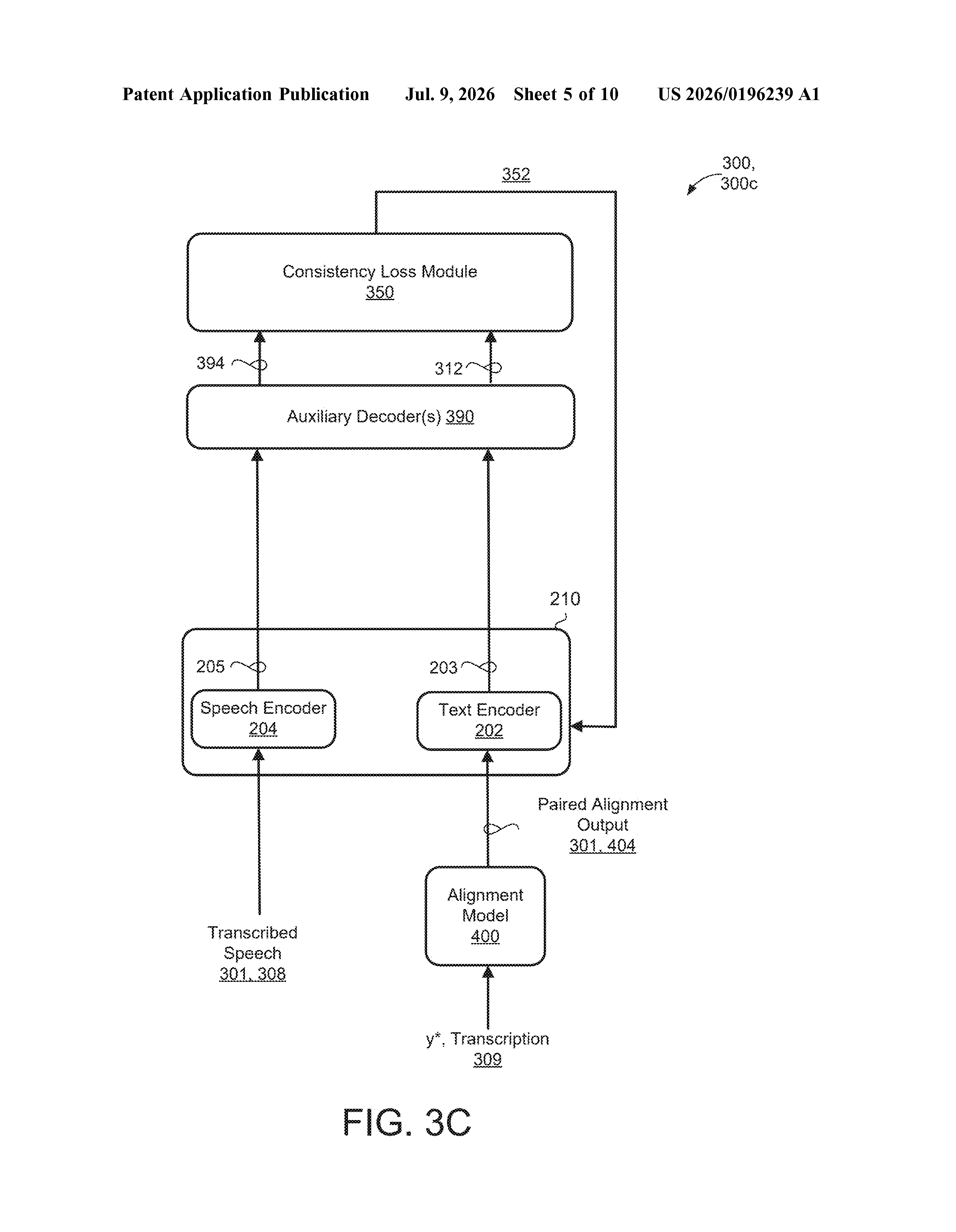
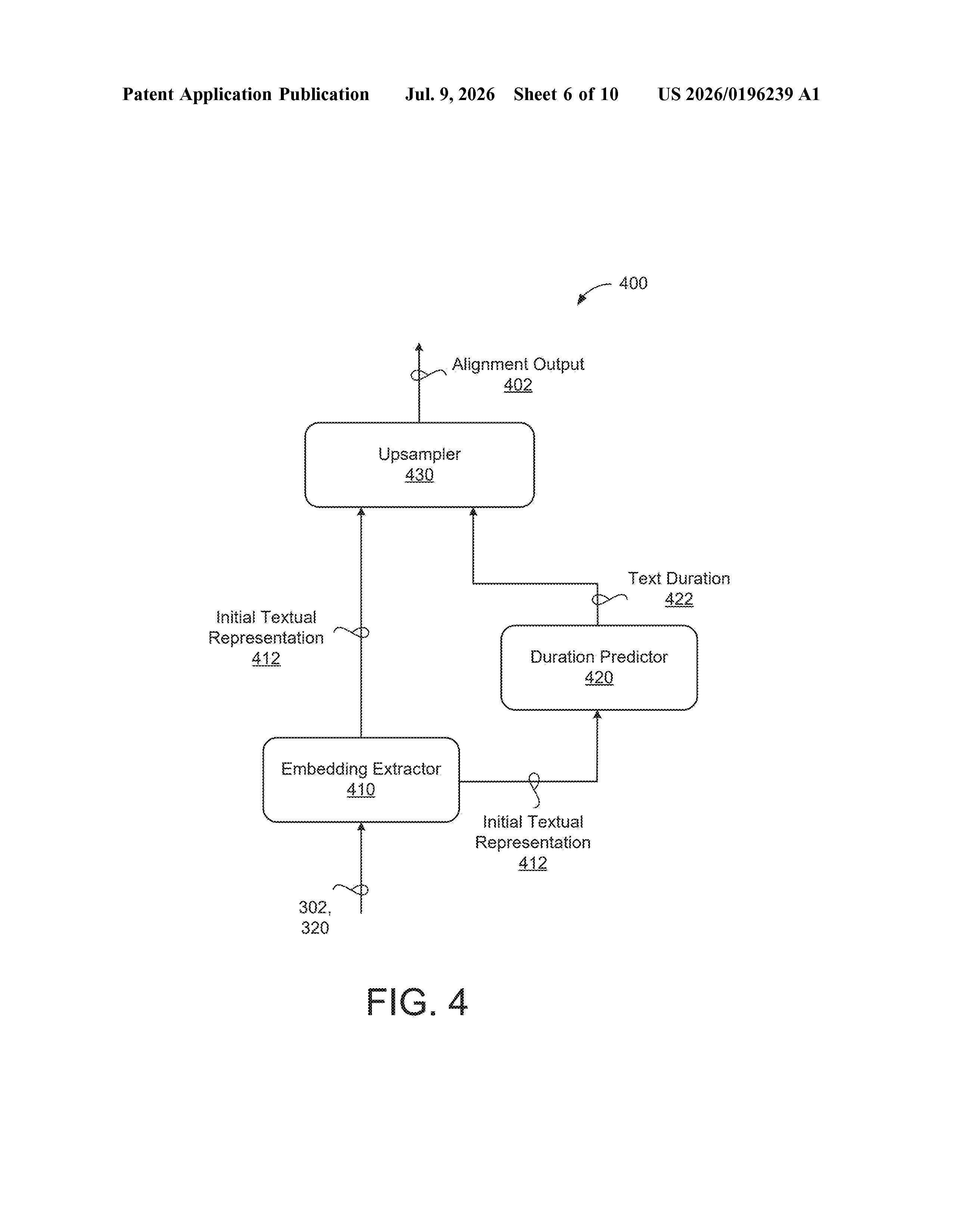
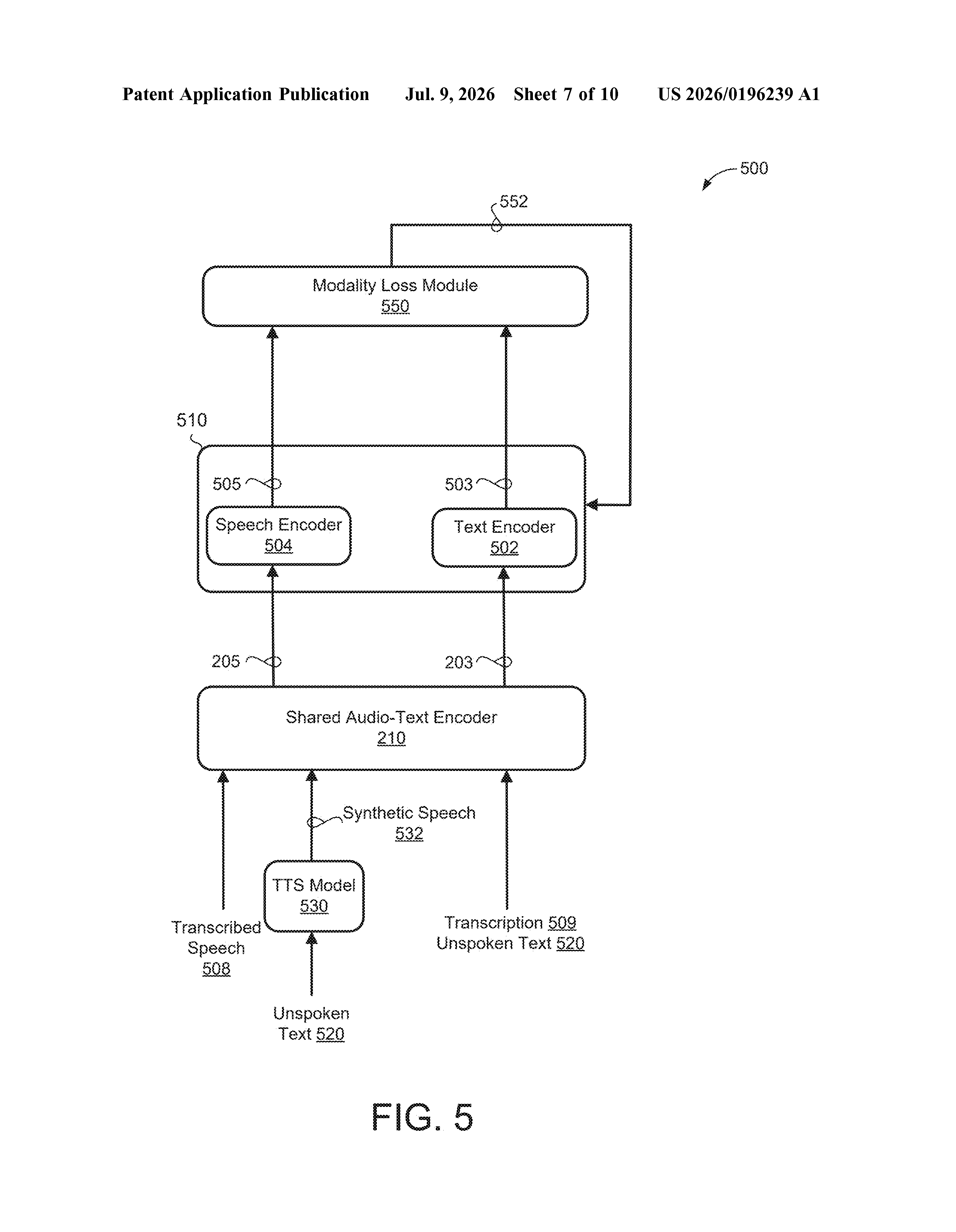
The patent describes a correction model with two components: a speech encoder and a text encoder. These are neural-network modules that each translate their respective input (audio or text) into a high-dimensional numeric vector, which is sometimes called an "embedding" or a "higher order feature representation." Think of it as a unique fingerprint that captures the meaning or sound of an input.
At inference time (when you're actually speaking), the system:
- Takes your spoken audio and generates an audio embedding via the speech encoder.
- Takes a pre-supplied list of contextually relevant phrases and generates a text embedding for each one via the text encoder.
- Compares the audio embedding against all the text embeddings to find the closest match.
- Uses that match to produce or correct the final transcription.
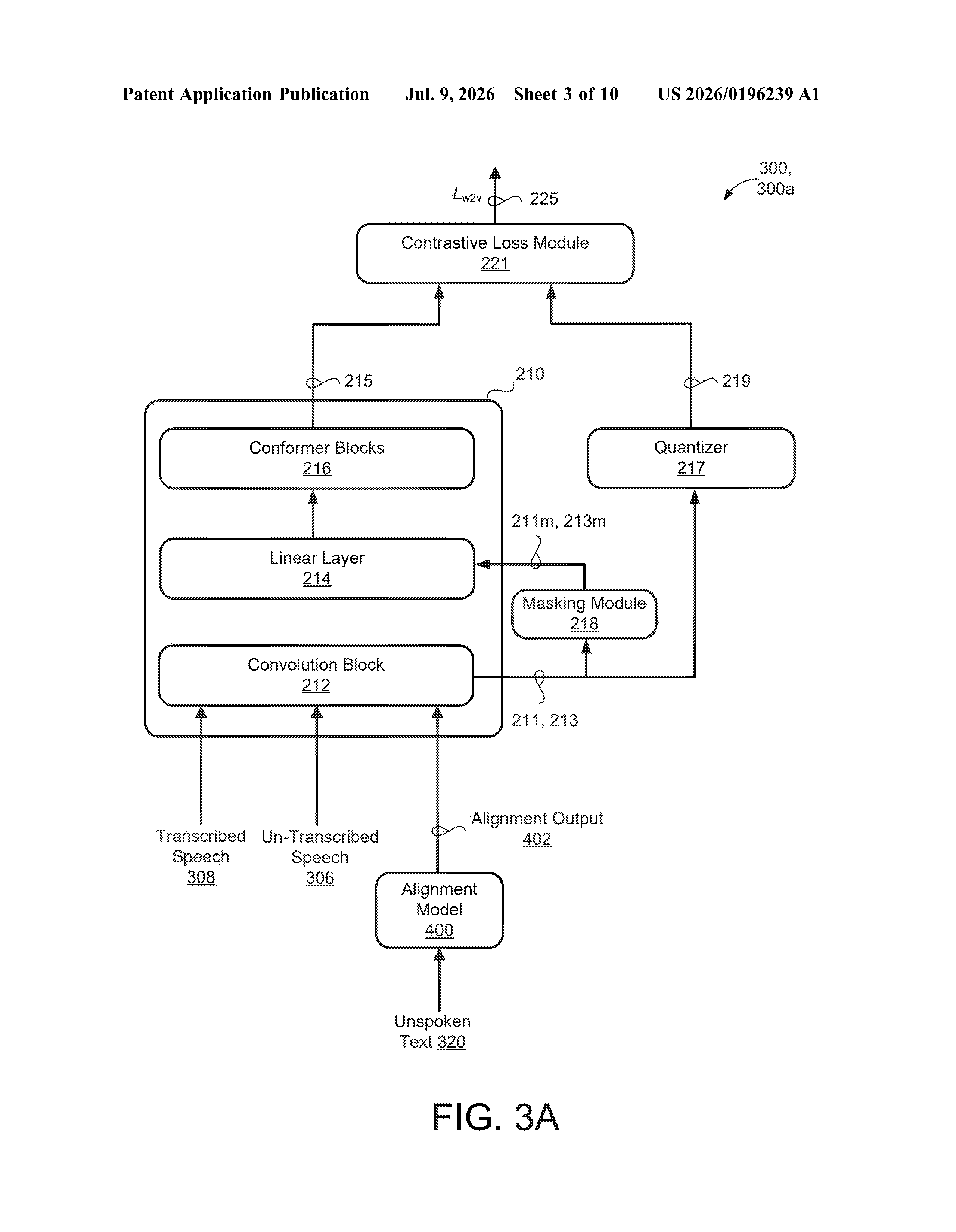
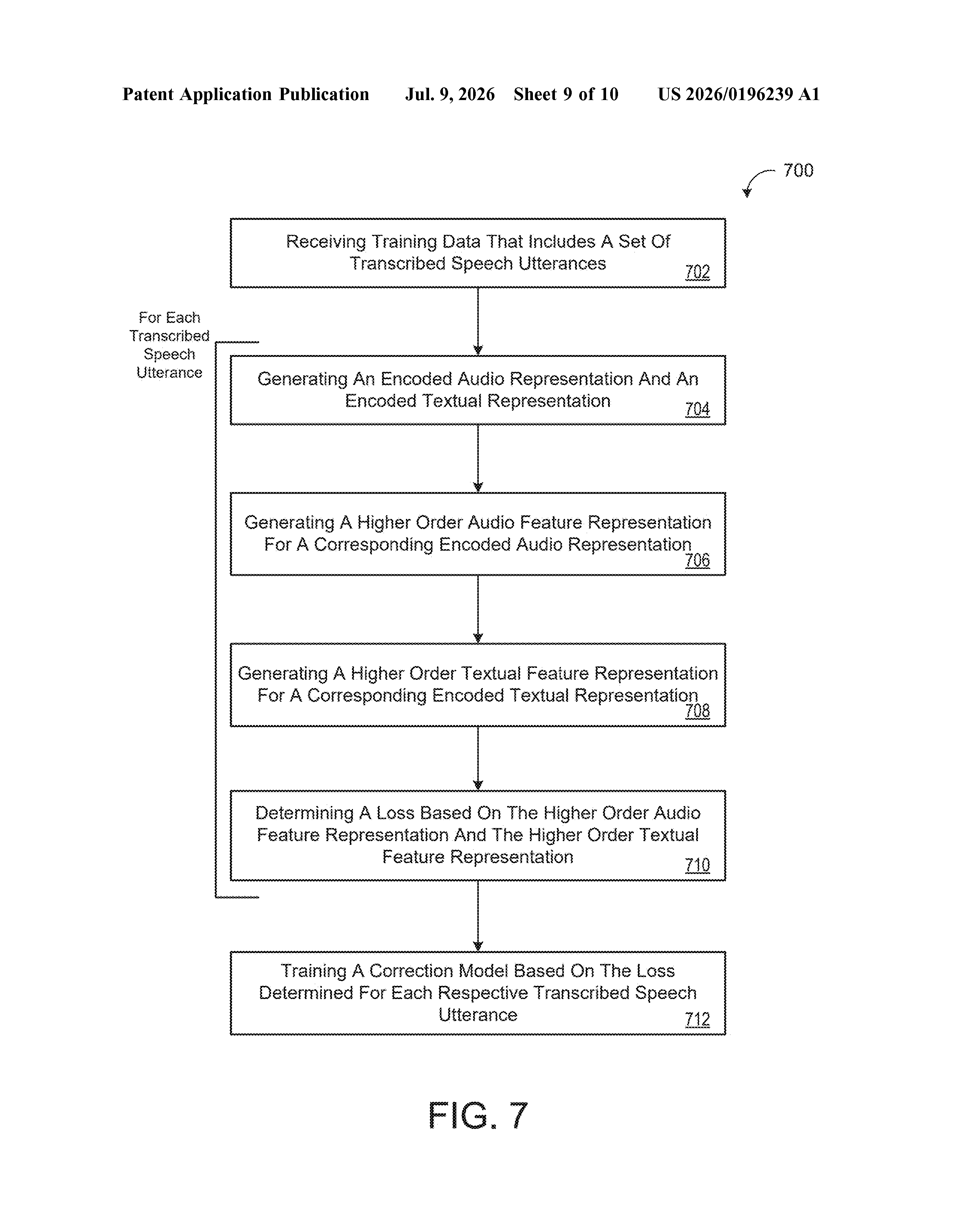
The encoders are trained jointly using a contrastive loss approach (a technique that teaches the model to push matching audio-text pairs close together and non-matching pairs apart in the embedding space). The training data is a set of transcribed speech utterances, each paired with its known correct text, which lets the model learn a shared audio-text space where similar meanings land near each other.
The key innovation is that the context list is dynamic. It doesn't have to be baked into the model at training time. It can be swapped out per session or per user.
What this means for voice assistants and transcription apps
Voice assistants and dictation tools make their most embarrassing mistakes on proper nouns, technical vocabulary, and uncommon names. Most current solutions require retraining the model or adding words to a fixed custom dictionary. This patent's approach is more flexible: you hand the running system a list of relevant terms and it adapts on the fly, without retraining.
For enterprise and professional applications (medical, legal, coding environments), this could mean far fewer corrections after the fact. For consumer products like Google Assistant or Pixel's dictation tools, it could mean better accuracy whenever the assistant already has context about what you're likely to say, such as the names of your contacts, your calendar events, or the app you're currently using.
This is a practical, well-scoped improvement to a real problem that annoys people every day. It won't make voice recognition perfect, but the idea of feeding a dynamic context list into the matching process at runtime (rather than retraining the whole model) is genuinely useful engineering. Google has a strong deployment track record for this kind of incremental improvement, so expect to see this in production-level products.
Get our take in your Top Stories
Liked this breakdown? Add Patentlyze as a preferred source on Google, and our plain-English take shows up more often in your Top Stories the next time Google patent news breaks.
There are more where this came from
We read every patent application Big Tech publishes and send you the ones worth knowing. Plain English, free, every week.
The drawings
10 drawing sheets from US 2026/0196239 A1 · click any drawing to enlarge
Show the other 2 sheets
Want this weekly breakdown for a company we don't cover? Patentlyze Pro →