
Qualcomm Patent Measures Object Velocity Using Reflected Wireless Signals
Qualcomm is patenting a way to measure how fast something is moving by bouncing wireless signals off programmable antenna panels, no dedicated radar hardware required. The trick is taking two separate signal bounces at different settings and cross-checking the results.
How Qualcomm bounces signals off panels to clock your speed
Imagine a network of small antenna panels mounted around a room or street. Instead of just relaying your phone's signal, these panels could also act as a kind of motion detector, clocking how fast people, vehicles, or other objects are moving nearby.
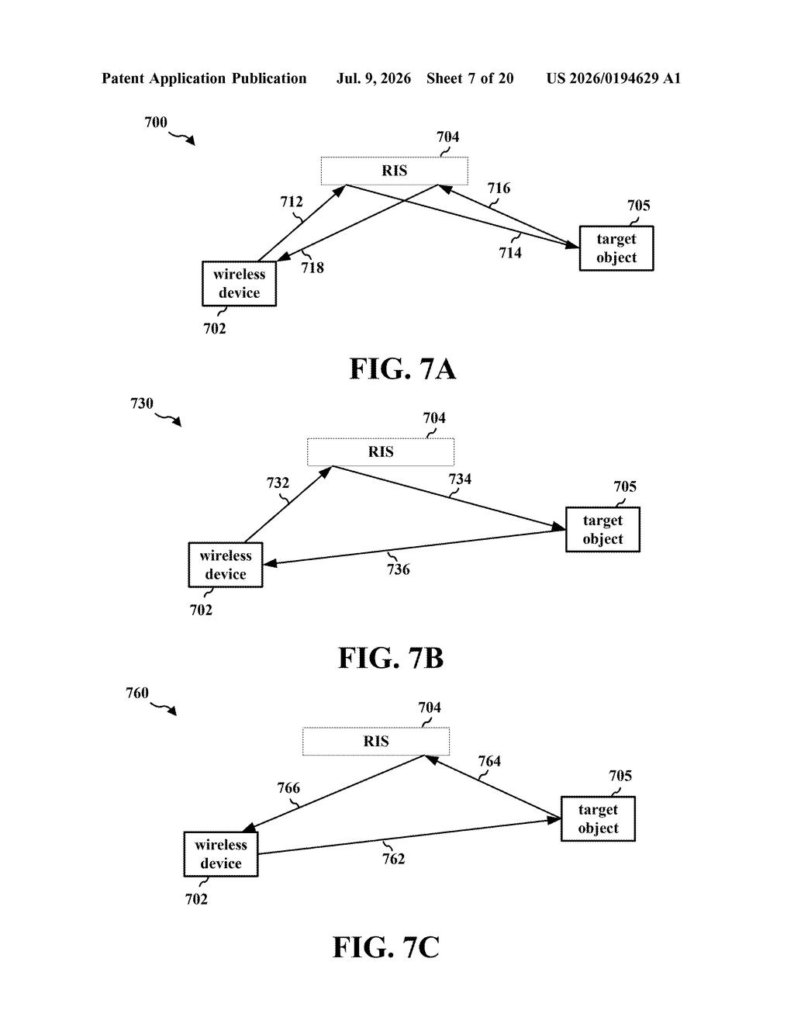
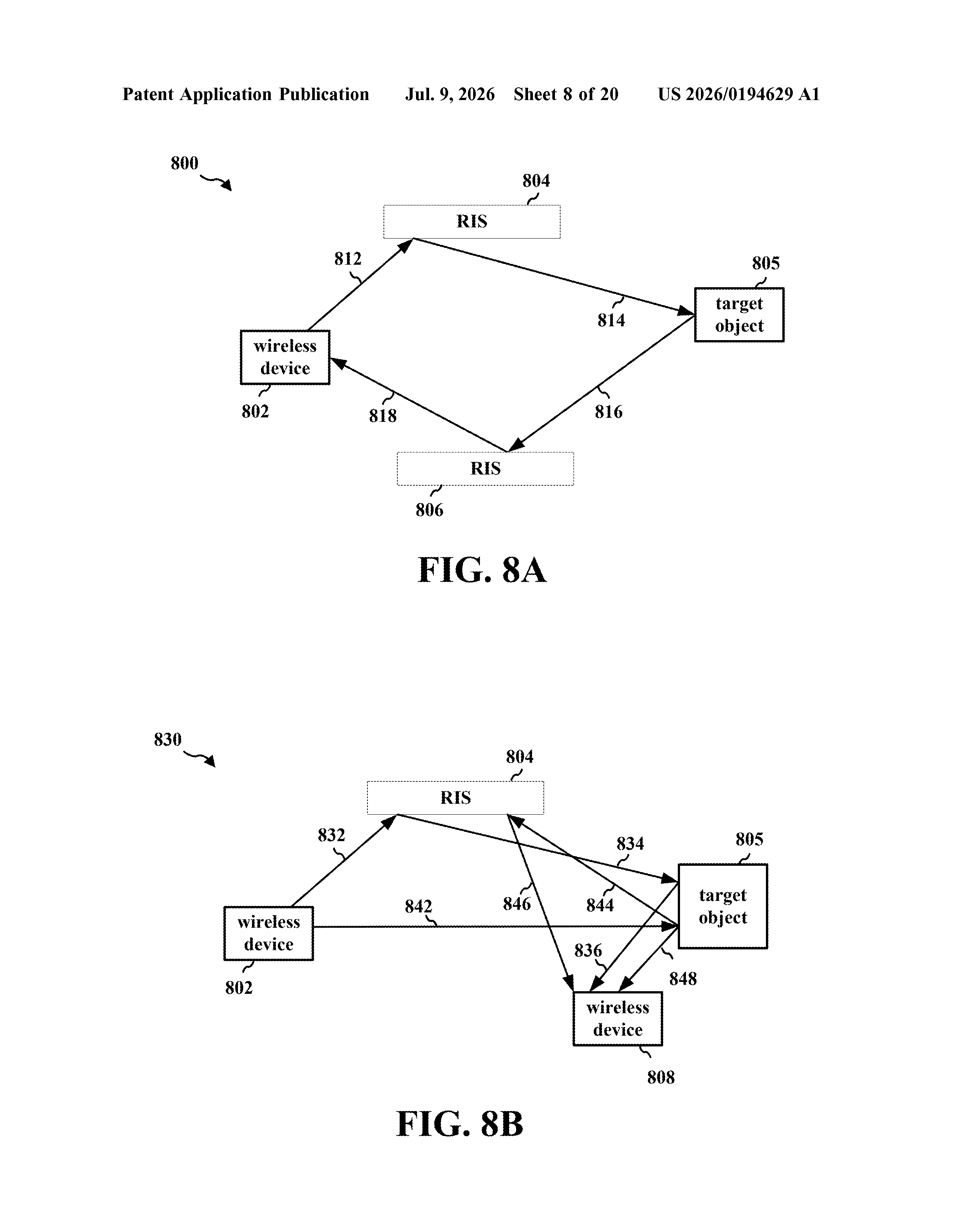
That's the idea behind this Qualcomm filing. The system sends wireless signals along two different bounce paths, each reflecting off one of these programmable panels. By comparing how each returned signal has shifted in frequency (a shift caused by a moving target, the same principle behind a police speed gun), the system calculates the object's velocity.
Using two different panel configurations instead of one helps resolve a measurement ambiguity: a single bounce can mistake the direction or exact speed of a target. Two measurements, taken with different signal settings, let the system cross-check and pin down a more accurate reading.
How two Doppler readings combine to resolve velocity ambiguity
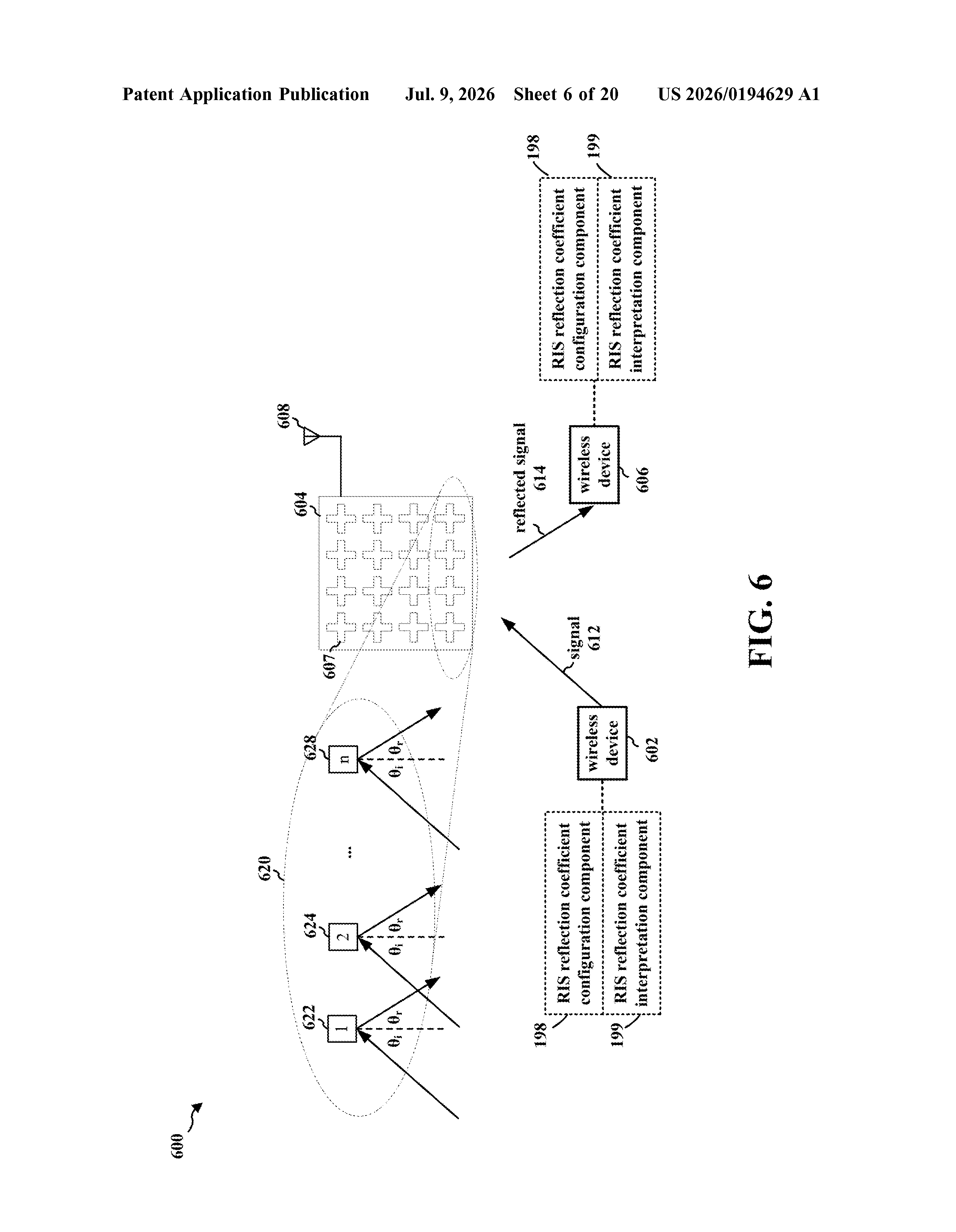
The patent centers on Reconfigurable Intelligent Surfaces (RIS), which are flat panels covered in tiny antenna elements that can be electronically tuned to steer and shape wireless signals. Think of them as programmable mirrors for radio waves.
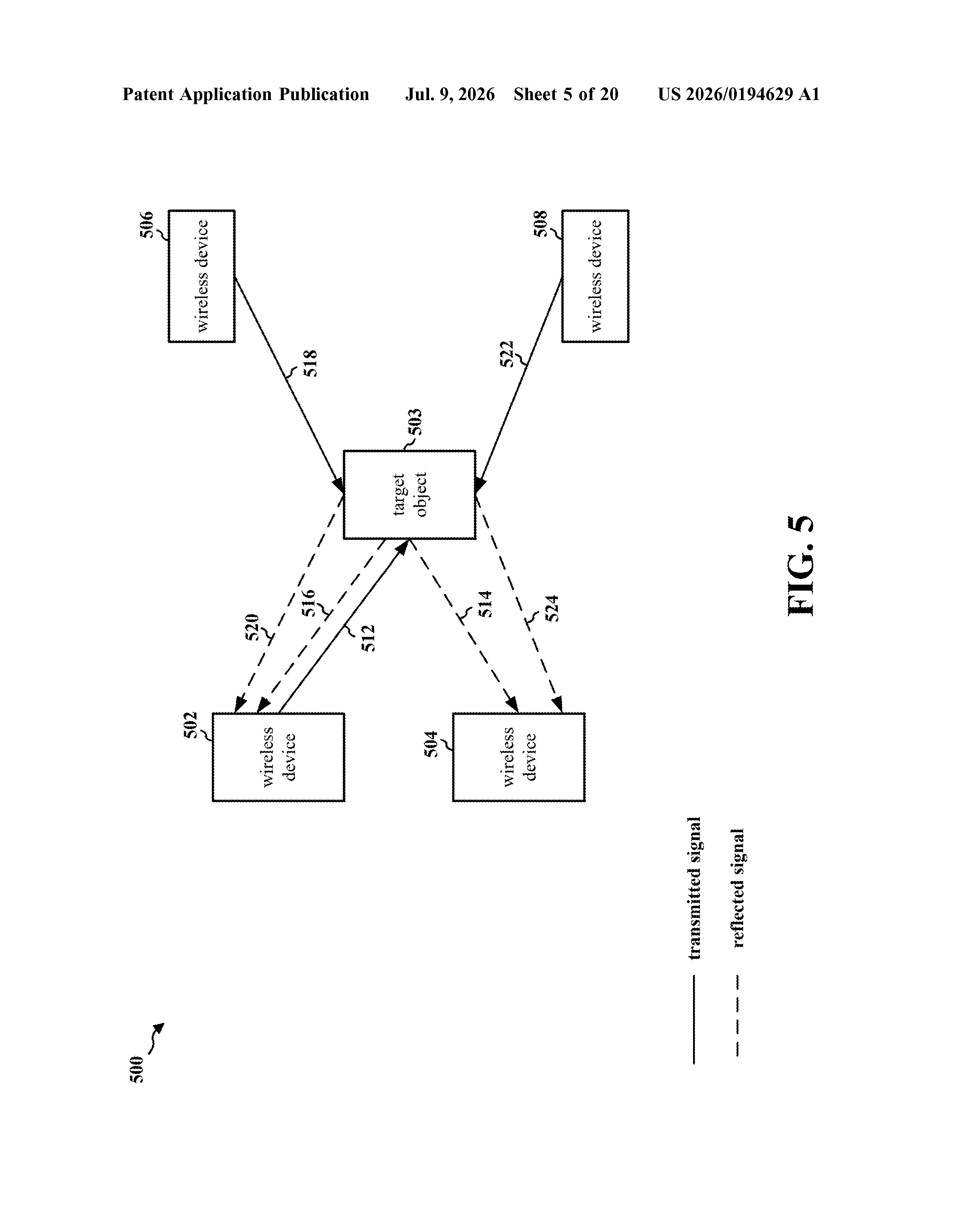
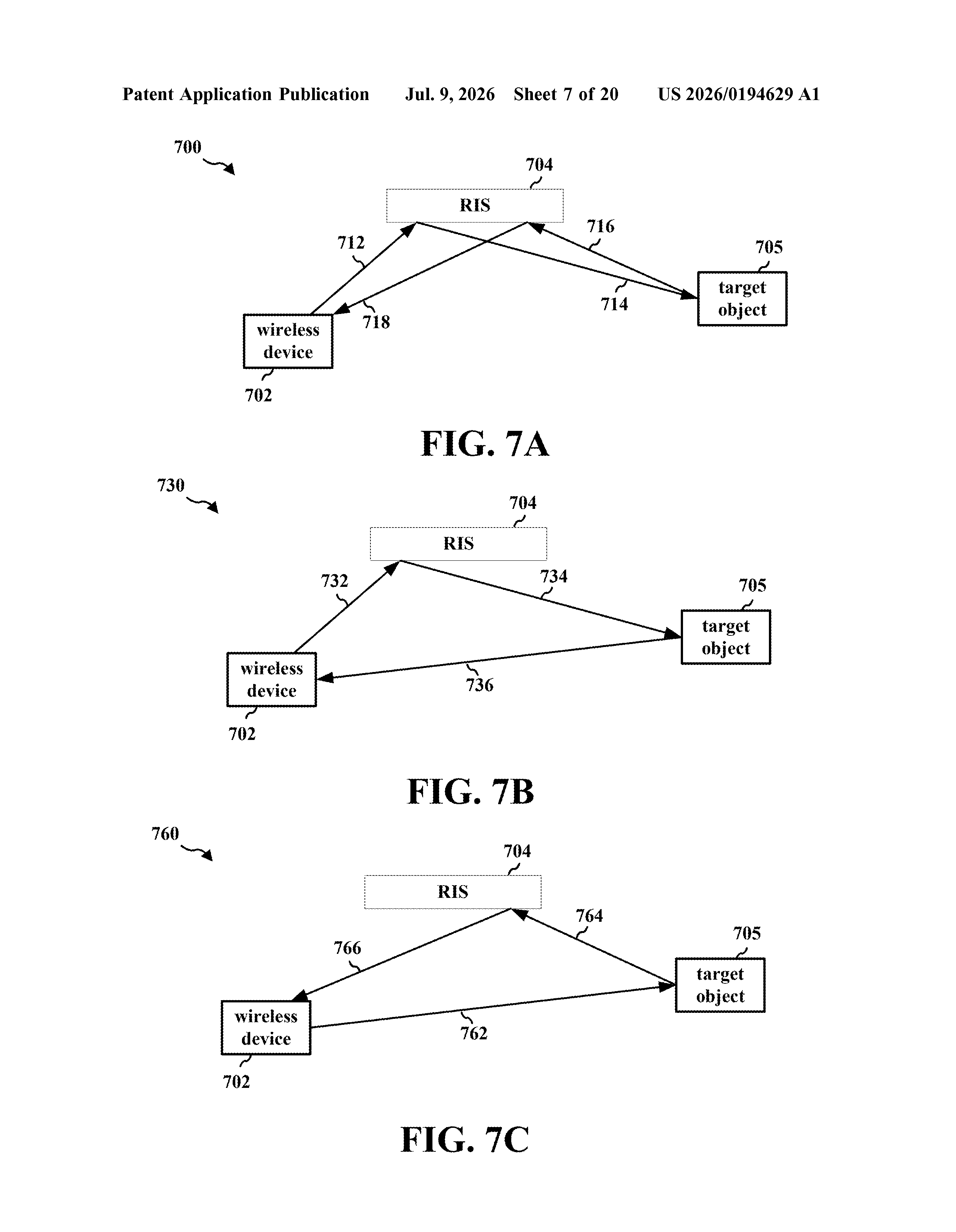
A wireless device (a base station, access point, or similar node) sends sensing signals along two distinct paths:
- A first reflection path that bounces off one RIS panel configured with a specific set of reflection parameters
- A second reflection path that bounces off the same or a different RIS panel, but with different reflection parameters
For each path, the device measures the Doppler frequency shift (the change in signal frequency caused by a moving object, the same effect that makes an ambulance siren sound higher as it approaches). Each path produces its own Doppler reading.
Because each path hits a moving target from a slightly different geometric angle (thanks to the different panel positions or configurations), the two Doppler readings are mathematically distinct. The device can then solve for the object's true velocity, including both speed and direction, without the ambiguity that plagues a single-path measurement. The patent also covers using two separate RIS panels to get those geometrically different vantage points.
What this means for wireless sensing and radar-free detection
Wireless sensing, using everyday communication signals to detect and track objects, is a growing focus for 5G and 6G networks. Qualcomm, as one of the dominant chipset suppliers for mobile base stations and devices, is positioning itself early in the standards race. This filing suggests the company sees RIS-assisted sensing as a path to adding radar-like capabilities to existing network infrastructure without dedicated sensors.
For you, the practical downstream applications could include smart traffic monitoring, building security systems, or in-car sensing, all running on the same wireless gear already handling data traffic. The catch is that RIS deployments are still rare and expensive, so this is more a long-range infrastructure bet than a near-term product.
This is a focused, technically specific filing that addresses a real problem in wireless sensing: a single-bounce Doppler measurement is often ambiguous about direction and speed. The two-path cross-check idea is a sensible engineering answer. It won't make headlines, but it's the kind of foundational patent that matters if RIS-based sensing ever lands in 6G standards.
There are more where this came from
We read every patent application Big Tech publishes and send you the ones worth knowing. Plain English, free, every week.
The drawings
20 drawing sheets from US 2026/0194629 A1 · click any drawing to enlarge
Want this weekly breakdown for a company we don't cover? Patentlyze Pro →
Be the first to weigh in