
Qualcomm Patents a Circuit That Kills the Click When Your Audio Chip Switches Power
That faint click or pop you sometimes hear through headphones when a device wakes up or changes volume isn't random noise, it's a known electrical side effect of audio chips switching power states. Qualcomm has filed a patent for a circuit designed to catch and cancel that glitch before it reaches your ears.
Why your headphones sometimes pop, and what Qualcomm is doing about it
Imagine plugging in your headphones and hearing a sharp pop the moment a song starts, or a click when your phone adjusts its audio power. That sound is a real electrical event, not a software bug. It happens when the audio chip inside your device switches between two different power levels to save battery or boost output.
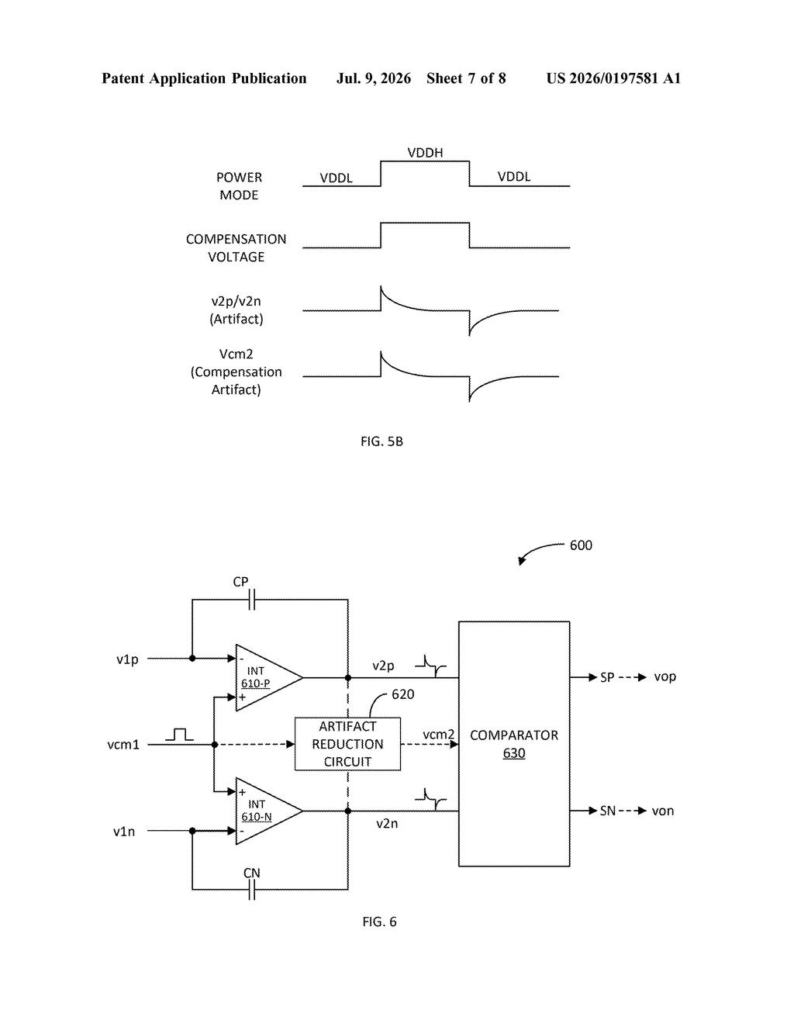
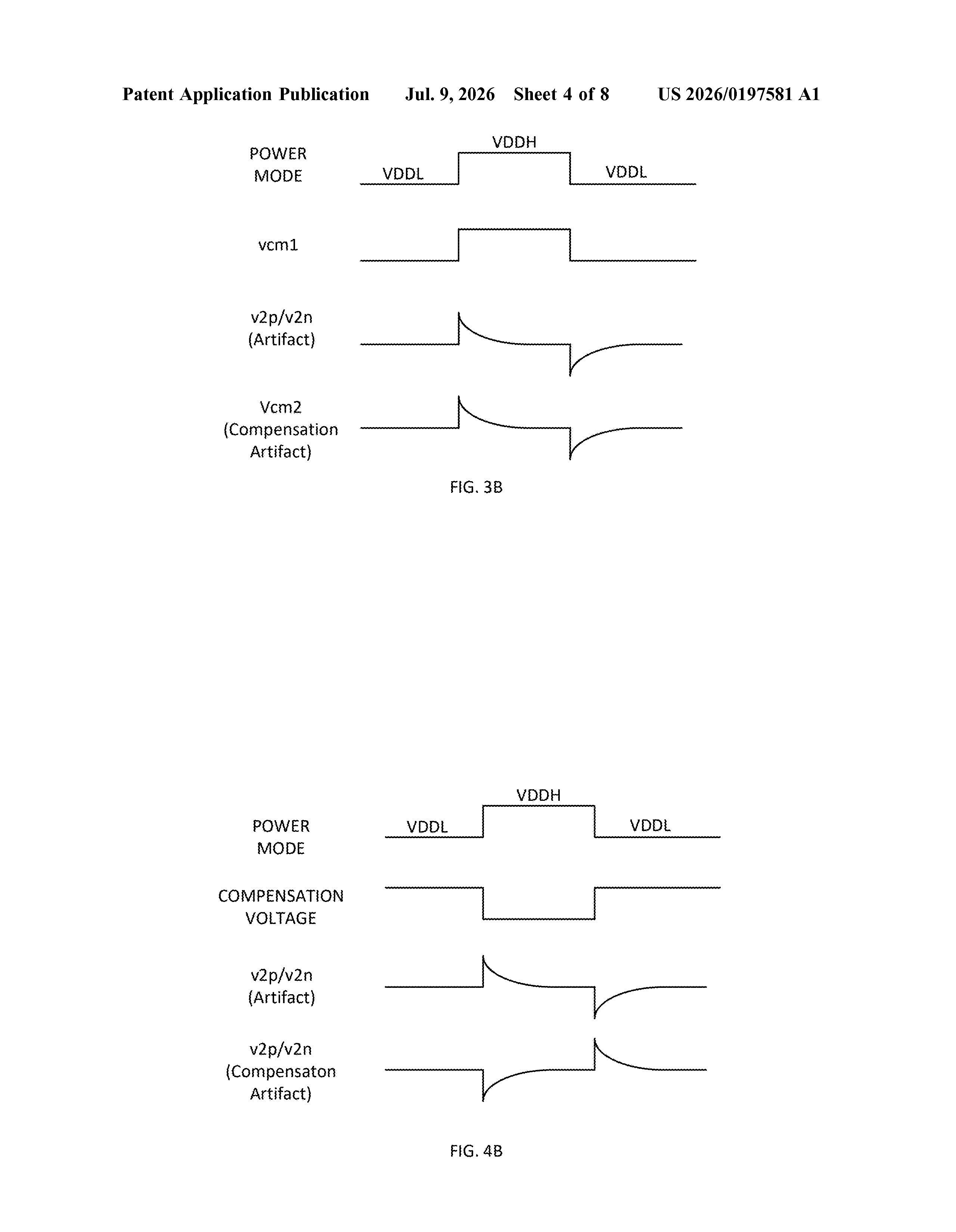
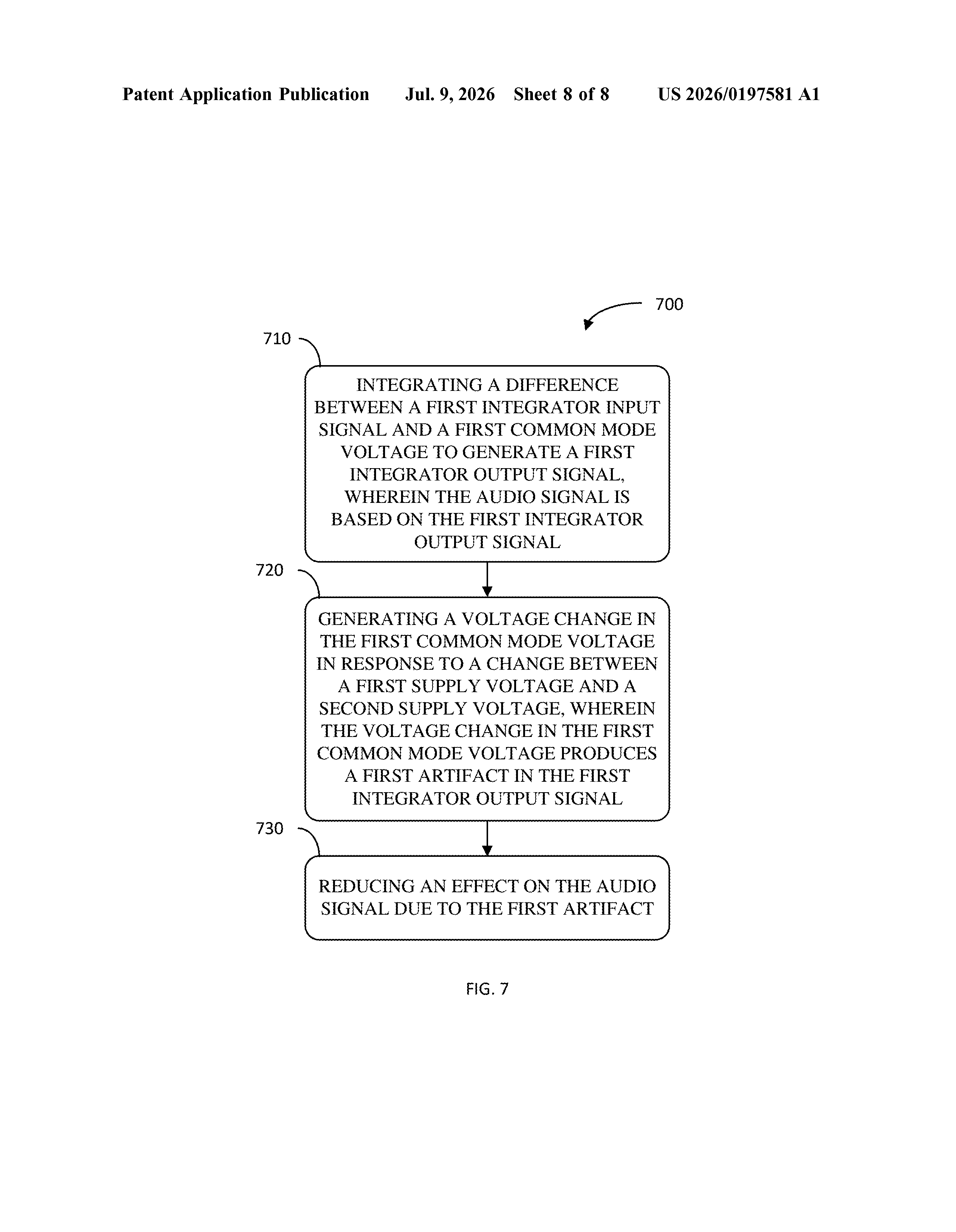
When the chip flips between those power levels, a reference voltage it relies on shifts slightly. That tiny shift gets amplified along with your music, and the result is an audible glitch. Qualcomm's patent describes a dedicated circuit that detects when that voltage shift is happening and actively reduces its effect on the outgoing audio signal, so the pop never reaches your ears.
This is fundamentally a power-management problem disguised as an audio quality problem. The more aggressively a chip manages power (which is good for battery life), the more opportunities there are for these transitions to create noise. Qualcomm's approach tries to let the chip keep doing its power-saving work without the annoying side effects.
How Qualcomm's artifact reduction circuit catches the voltage glitch
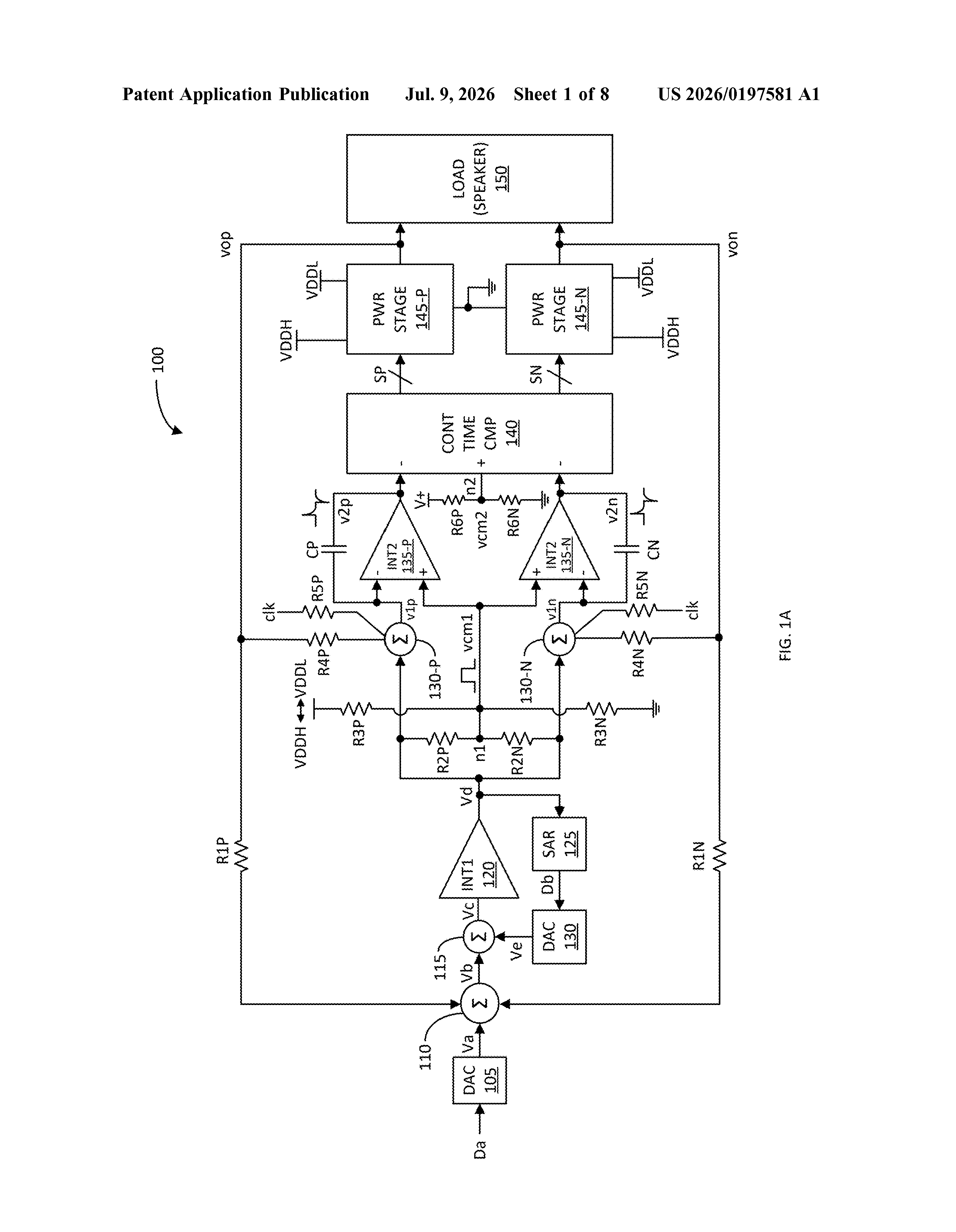
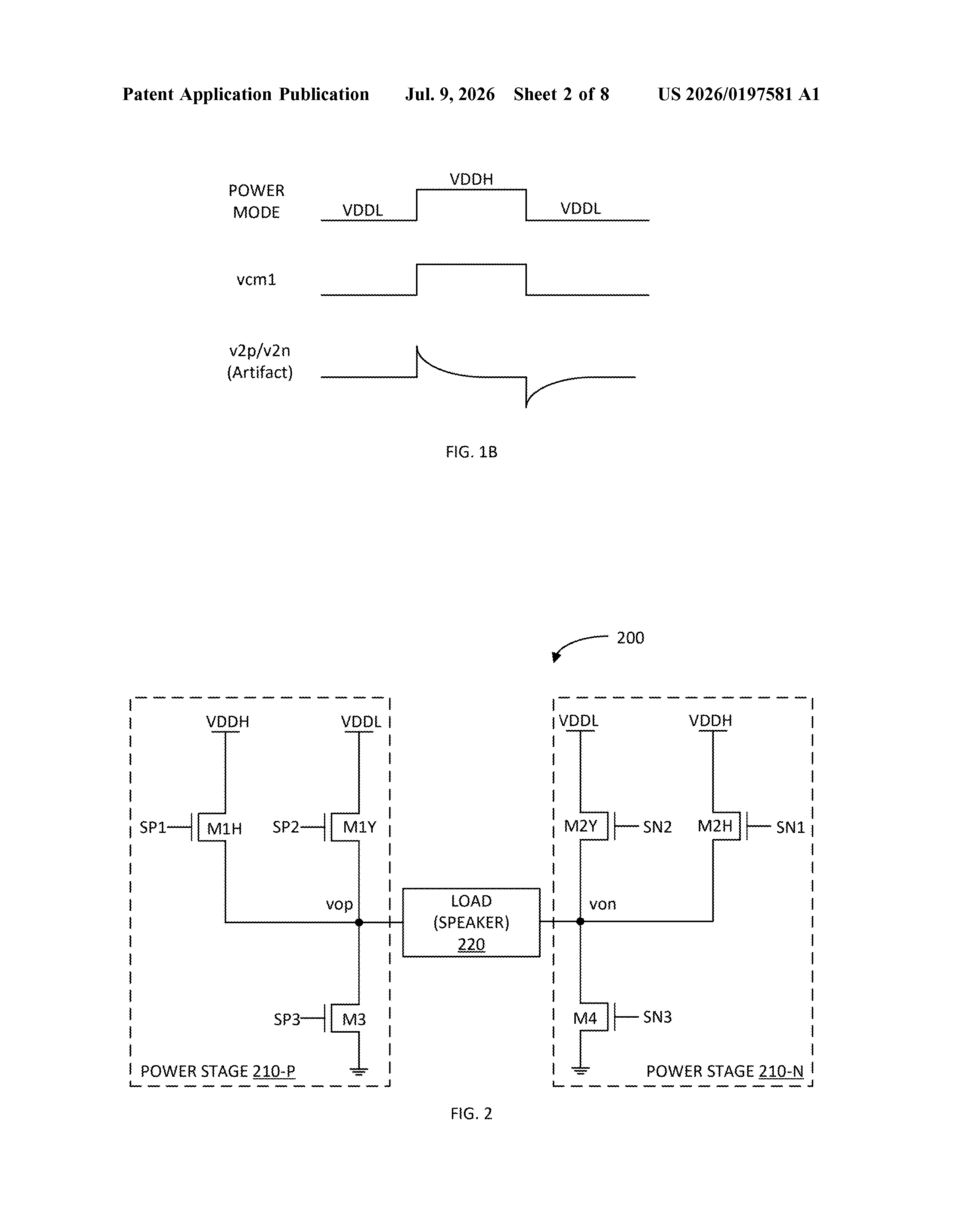
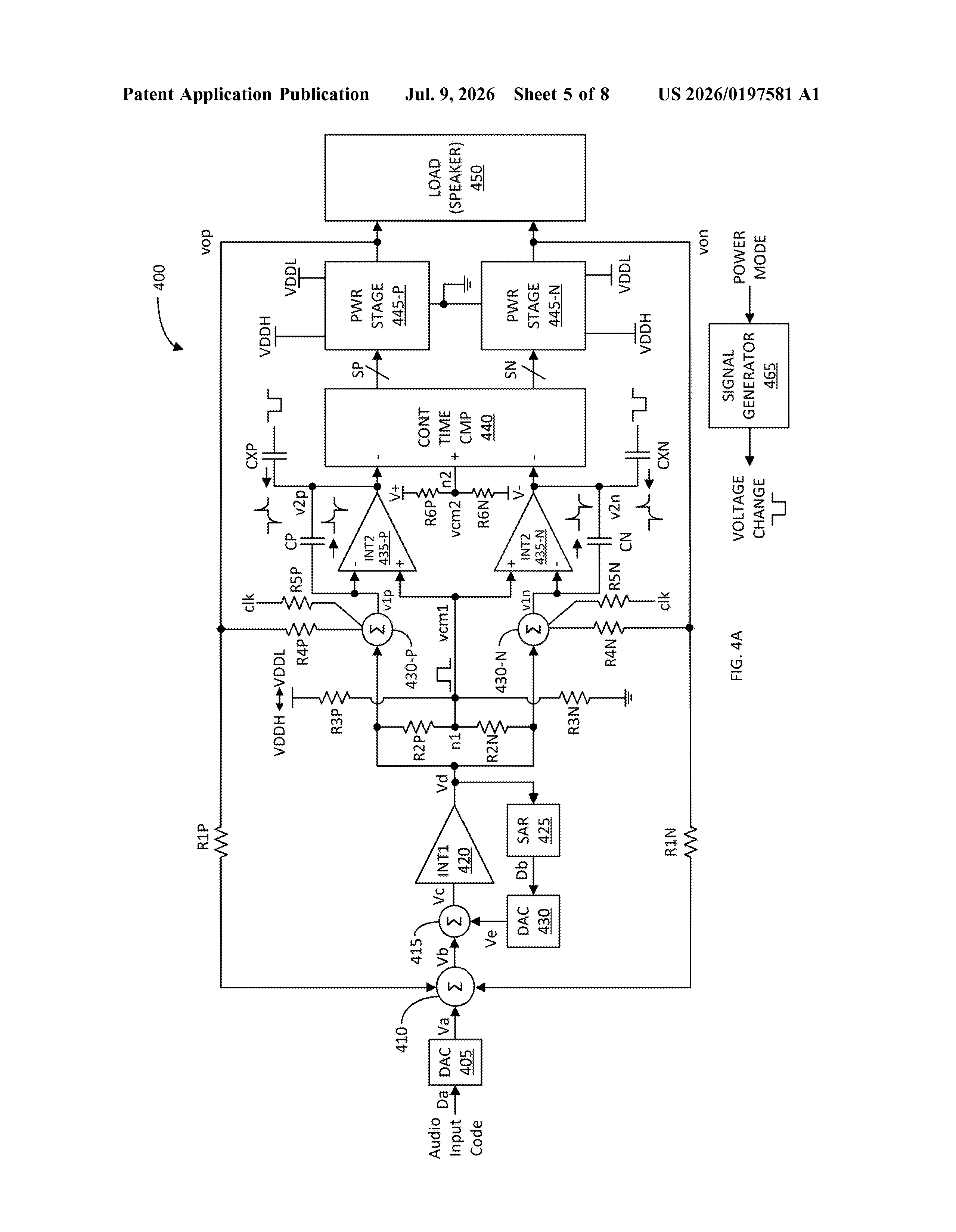
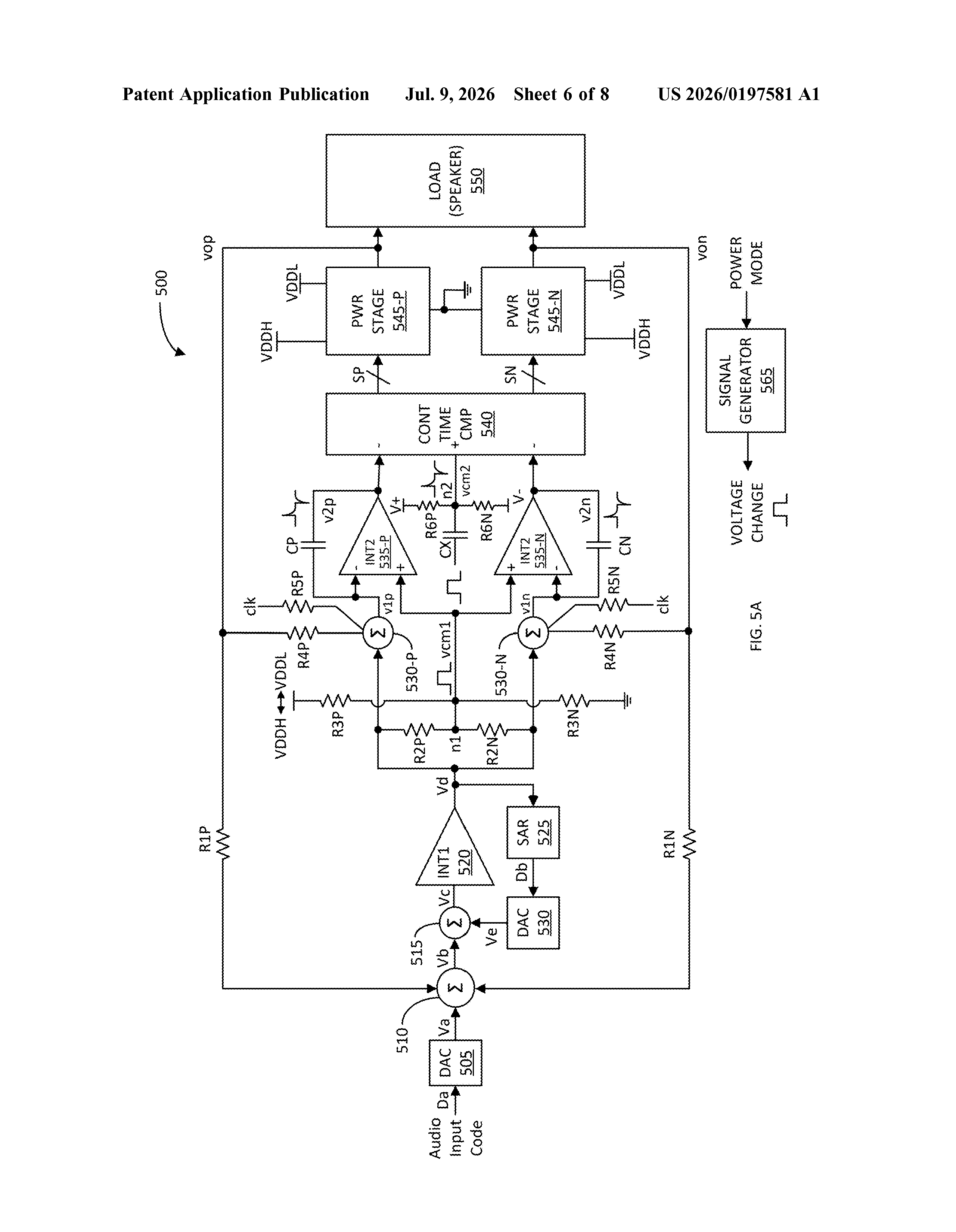
Audio chips often use an architecture called an H-bridge (or H-Y bridge), which can switch between a higher supply voltage and a lower one depending on how loud the audio needs to be. Switching between them is good for efficiency, but it causes a ripple in a reference signal called the common mode voltage, a baseline electrical level the chip uses to keep both sides of the audio signal balanced.
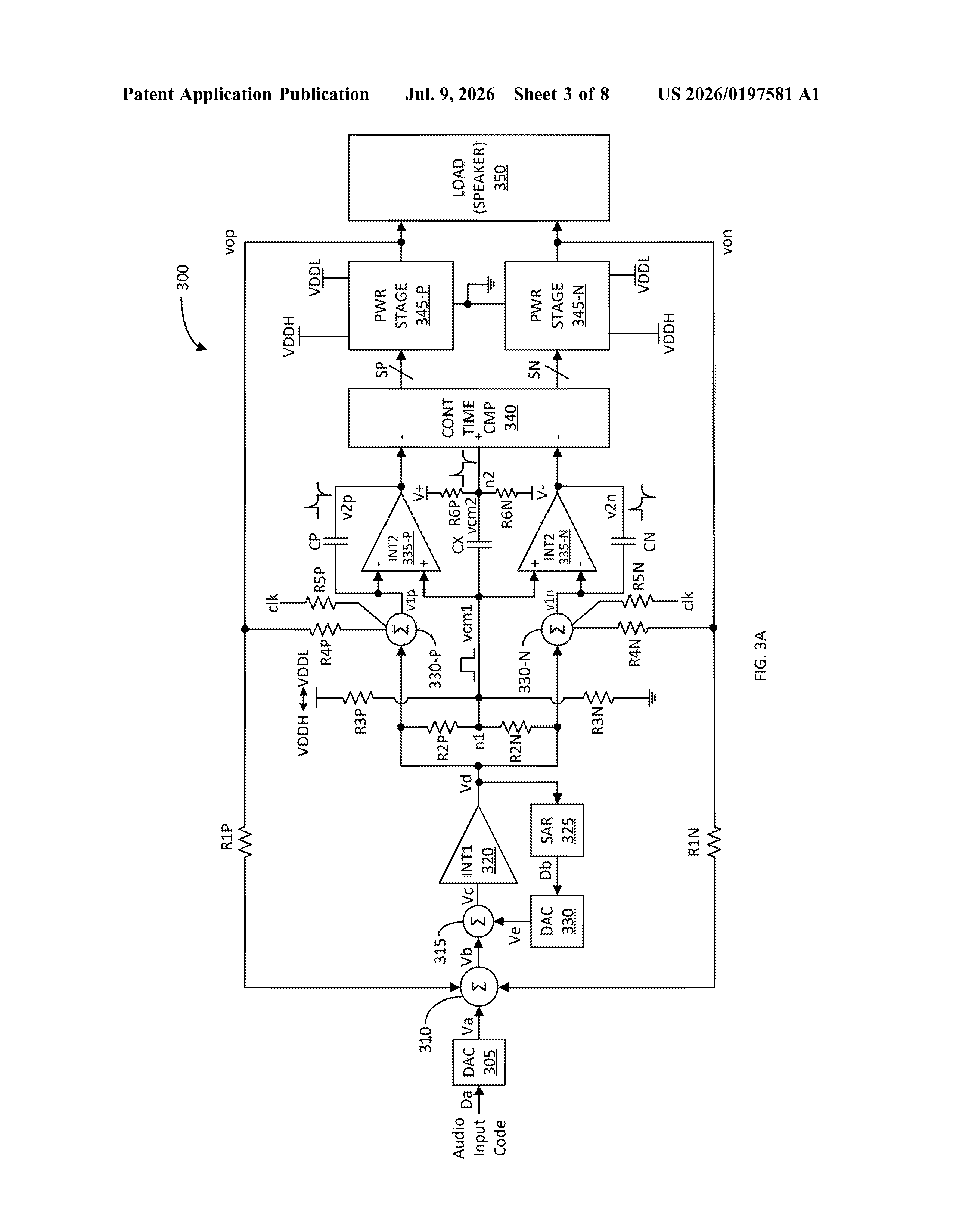
Inside the chip, an integrator (a circuit that accumulates the difference between an input signal and that reference level over time) is what shapes the final audio output. When the common mode voltage suddenly shifts during a power-supply switch, the integrator registers that shift as if it were real audio content. The result is a brief voltage spike in the output, the "artifact", which comes out of your speakers or headphones as a click or pop.
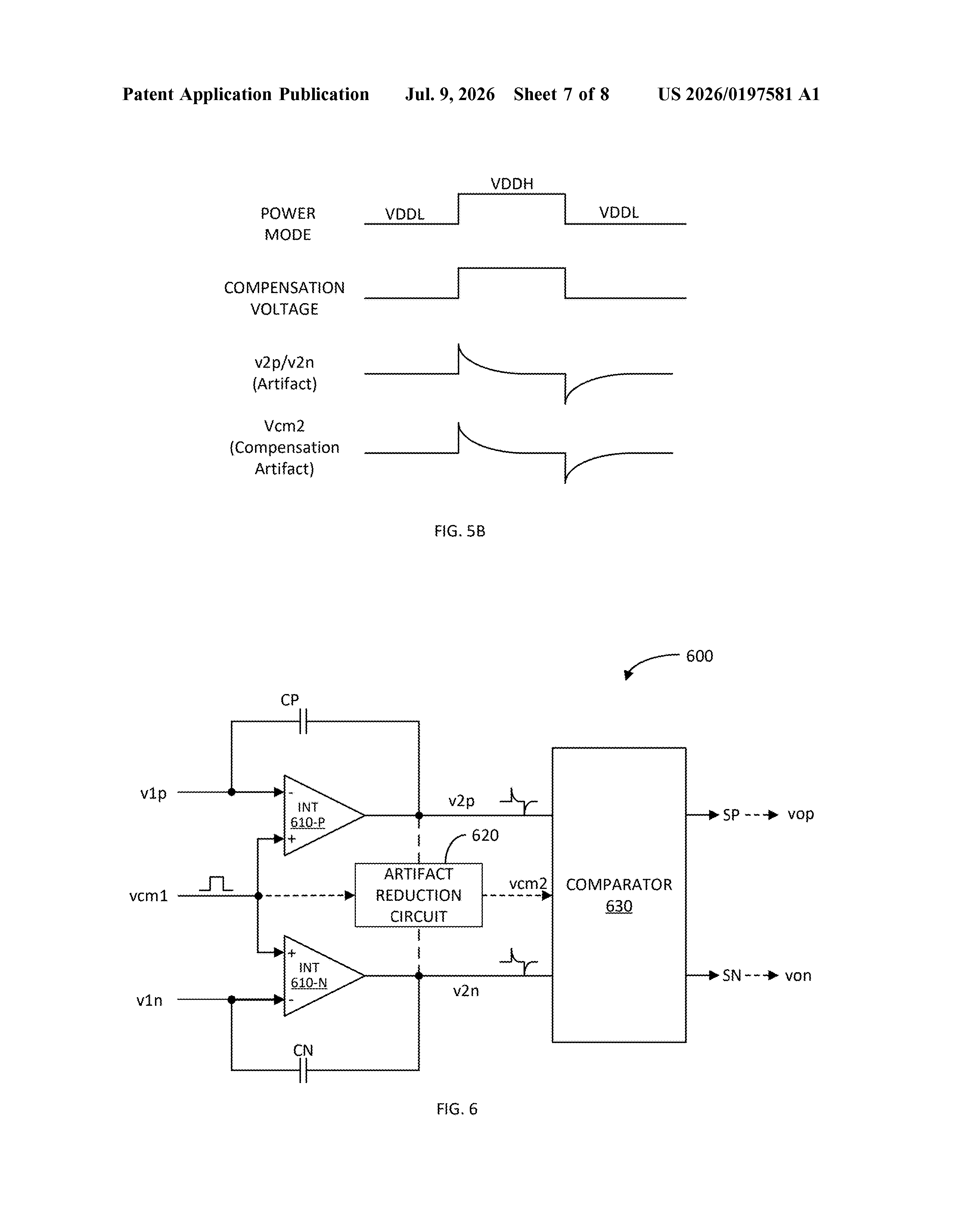
Qualcomm's patent introduces an artifact reduction circuit that sits alongside the integrator. Its job is to detect when a power-supply transition is happening and counteract the integrator's false response before it propagates into the audio signal. The patent covers both single-ended and differential audio output configurations.
- A common mode voltage circuit generates the reference, tied to whichever supply is currently selected
- The integrator shapes the audio signal but also picks up the voltage glitch
- The artifact reduction circuit identifies and damps that glitch in the output
What this means for headphones, earbuds, and phone audio quality
For most listeners, clicks and pops are a minor annoyance. But for audio engineers, audiophiles, and anyone using high-impedance headphones (which are more sensitive to electrical noise), they are a real quality problem. Qualcomm makes the audio chips inside a huge share of Android phones and wireless earbuds, so a fix at the silicon level would improve the experience for a lot of people without requiring any software update.
More broadly, this patent reflects a real tension in mobile audio design: better battery efficiency requires more frequent power-level switching, and every switch is a potential pop. As chips get more aggressive about power management, solving this problem in hardware becomes more important, not less.
This is a narrow, unglamorous patent, exactly the kind of low-level fix that never makes a product announcement but genuinely improves daily life. Qualcomm is the dominant audio chip supplier for Android devices, so a hardware-level click-and-pop fix shipping inside a Snapdragon SoC would affect hundreds of millions of headphone users. Worth noting, not because it's exciting, but because these details add up.
Get our take in your Top Stories
Liked this breakdown? Add Patentlyze as a preferred source on Google, and our plain-English take shows up more often in your Top Stories the next time Qualcomm patent news breaks.
There are more where this came from
We read every patent application Big Tech publishes and send you the ones worth knowing. Plain English, free, every week.
The drawings
8 drawing sheets from US 2026/0197581 A1 · click any drawing to enlarge
Want this weekly breakdown for a company we don't cover? Patentlyze Pro →