
Microsoft Patents a System That Automatically Traces Cloud Failures to Their Source
When a massive cloud workflow breaks, finding the actual culprit buried inside hundreds of interdependent processes can take engineers hours or days. Microsoft is patenting a system that does that detective work automatically.
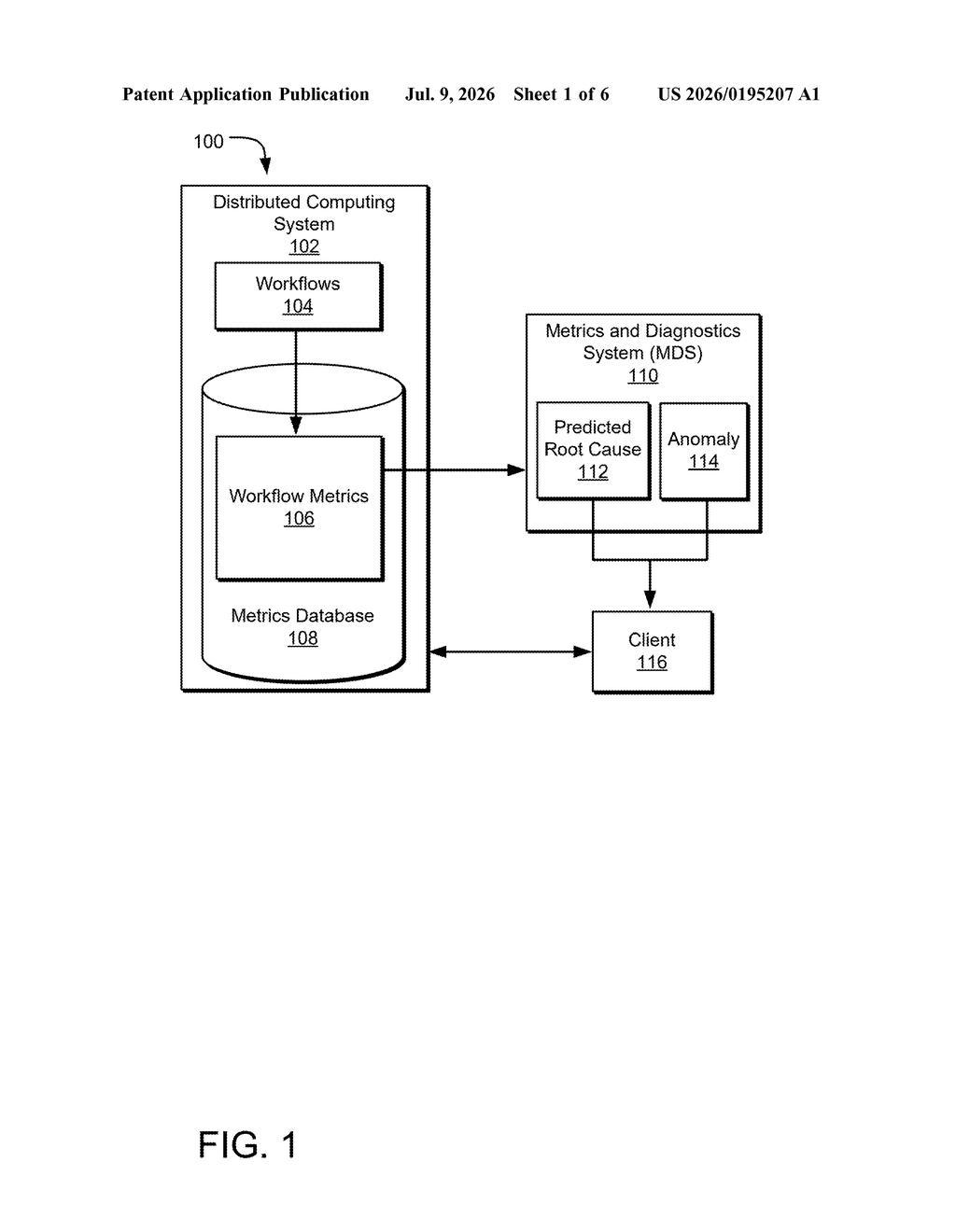
How Microsoft's fault-tracing system actually works
Imagine a factory assembly line where one broken machine causes five others to fail downstream. If you only look at the machines that stopped working, you might replace the wrong one. The real problem is the first machine that broke, not the ones it took down with it.
Cloud computing workflows work the same way. A slow database query might cause a job scheduler to time out, which causes a data pipeline to stall, which triggers an alert. Microsoft's patented system builds a map of all those cause-and-effect relationships, then works backward from the alert to find the original source of the problem.
The clever part is how it handles large, complicated maps. Instead of analyzing everything at once, it breaks the map into overlapping sections, scores each section, and then stitches those scores together. Engineers get a ranked list of suspects, with the most likely root cause at the top, rather than a wall of logs to sift through manually.
How the causal graph scores and propagates blame
The system starts by collecting computing metrics (things like CPU usage, memory consumption, job completion times) across a distributed workflow. It then builds a causal graph, which is essentially a flowchart where each node is a system feature and each arrow says "this thing directly causes that thing." The node representing the observed anomaly (say, a job failure) sits at the root of the graph.
Because large cloud workflows produce enormous graphs, the system divides them into overlapping causal subgraphs (smaller, manageable sections). For every node in each subgraph, it calculates an adjacent contribution score (how much this specific feature contributed to the next failure in the chain, based on live metrics).
The tricky part is connecting scores across subgraph boundaries. The patent solves this with a propagation step:
- Scores in the subgraph containing the root anomaly node are set as baseline scores.
- Where two subgraphs overlap at a shared feature, the scores of features unique to the second subgraph are adjusted using that shared feature's already-calculated score.
- This ripples outward through all connected subgraphs until every feature in the full graph has a non-adjacent contribution score representing its true distance-aware blame for the anomaly.
The feature with the highest score that crosses a defined threshold is flagged as the root cause.
What this means for cloud reliability and engineering teams
For engineering teams running large cloud services, diagnosing a production incident is often the most expensive and stressful part of the job. A system that narrows a field of hundreds of possible causes down to one ranked answer can cut incident response time from hours to minutes. That has real financial consequences for companies running services at scale.
For Microsoft specifically, this fits squarely into its Azure cloud operations story. The patent covers distributed computing workflows broadly, which means the same approach could apply to internal infrastructure, Azure customer workloads, or even monitoring built into tools like Azure Monitor or Microsoft Fabric. Whether it ships as a product feature or stays internal tooling, the underlying method is practical and directly tied to a problem every cloud team faces.
This is a genuinely useful engineering patent, not a moonshot. Root cause analysis in distributed systems is an unsolved annoyance that costs real money, and the subgraph-propagation approach is a clean solution to the scale problem. It's not flashy, but it's the kind of infrastructure work that ends up saving millions in on-call engineer hours.
There are more where this came from
We read every patent application Big Tech publishes and send you the ones worth knowing. Plain English, free, every week.
Want this weekly breakdown for a company we don't cover? Patentlyze Pro →
Be the first to weigh in