
Apple Patents a System for One Device to Coordinate Wireless Traffic Across a Group
Apple is patenting a way to let one device act as a mini traffic controller for a cluster of nearby devices borrowing and redistributing wireless airtime from a cell tower without every device needing to negotiate on its own.
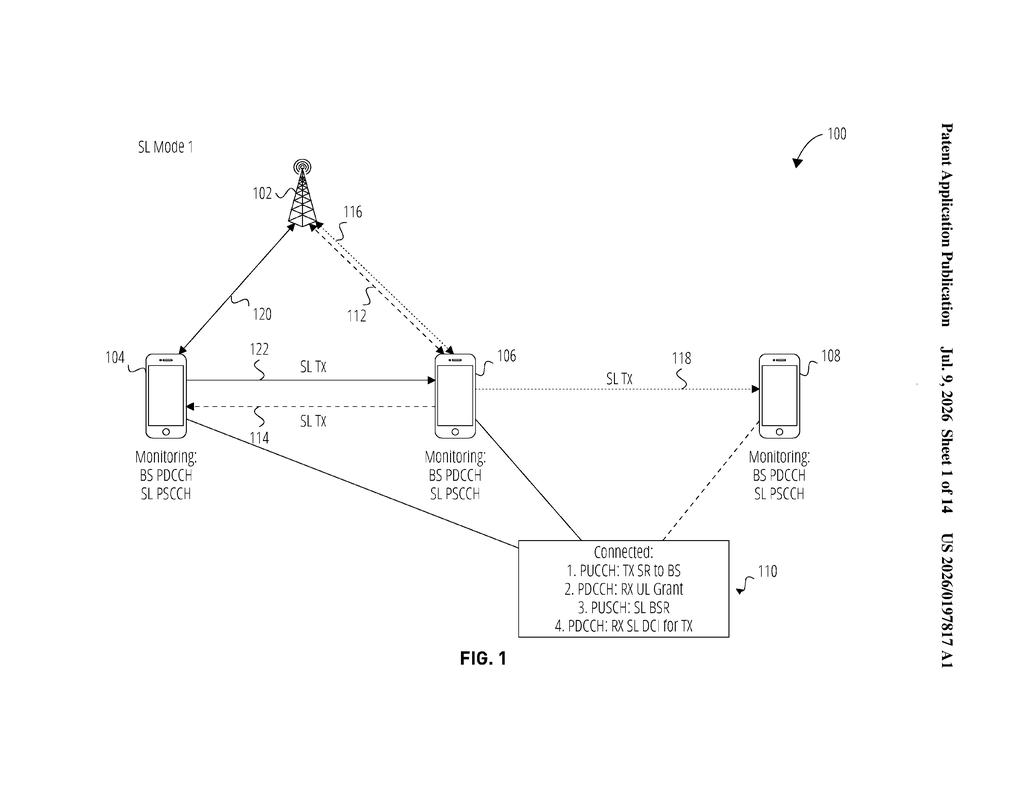
What Apple's local wireless coordinator actually does
Imagine you're in a factory or a hospital ward with ten devices all trying to talk to the same cell tower at once. Right now, each device has to individually fight for airtime. Apple's patent describes a system where one device, called a management node, steps in as a local coordinator for the whole group.
The management node gets permission from the cell tower to use certain chunks of wireless airtime, then tells the other devices in the group exactly when and how to use them. The group also gets its own private slice of airtime that no outside devices can touch, which keeps internal traffic organized and protected.
This kind of setup is aimed at scenarios where you have many devices clustered together, think a fleet of sensors, wearables, or industrial gadgets, and you want them to communicate efficiently without each one constantly pinging the tower separately.
How the management node handles shared vs. Private airtime
The patent describes a two-tier wireless arrangement. A base station (a cell tower or similar infrastructure) provides two types of airtime resources to the group:
- An exclusive resource pool (ERP): a dedicated slice of wireless spectrum reserved only for this device cluster, used for internal coordination messages.
- One or more shared resource pools (SRPs): broader chunks of airtime that multiple groups or devices on the network can use, but that the management node can activate and schedule for its group when needed.
The management node UE (a device that acts as the group's coordinator) receives a grant from the base station saying, in effect, 'your group can use this shared airtime block right now.' It then sends a scheduling message over the exclusive pool telling every device in its subnetwork exactly when to transmit using that shared airtime.
This means the base station only has to deal with one device per cluster for scheduling decisions, rather than dozens. The patent also covers cases where there are multiple management nodes and multiple overlapping subnetworks sharing the same infrastructure, which is where the coordination gets more complex.
What this means for device clusters and future Apple products
For Apple, this is likely relevant to dense device scenarios: a cluster of Apple Watch units in a medical setting, a swarm of Vision Pro headsets in an enterprise environment, or a set of AirTags and sensors in a smart-home or industrial context. By offloading scheduling decisions from the cell tower down to a local coordinator device, the system can react faster and with less congestion.
For you, the practical effect would be devices in a group working together more reliably in crowded wireless environments, with less dropped data and faster handoffs. It also points toward Apple building out the infrastructure thinking needed for future products that operate as coordinated clusters rather than independent gadgets.
This is a fairly deep infrastructure patent aimed at 5G sidelink and next-generation device-to-device communication standards, not something that lands in a consumer feature any time soon. That said, Apple has been building up its cellular standards portfolio, and this kind of architecture is exactly what you'd need before deploying large clusters of Apple devices in enterprise or industrial settings.
There are more where this came from
We read every patent application Big Tech publishes and send you the ones worth knowing. Plain English, free, every week.
Want this weekly breakdown for a company we don't cover? Patentlyze Pro →
Be the first to weigh in