
Samsung Display Patents a Machine That Feeds Glass Continuously Into Protective Resin Film
Making flexible glass for phones and foldables is painstaking work. Samsung Display has filed a patent for a machine that automates the tricky process of wrapping small glass pieces in protective resin, sandwiched between two thin films.
What Samsung's glass-coating machine actually does
Imagine trying to wrap dozens of tiny, fragile glass wafers in a protective coating without cracking them or leaving air bubbles. That's roughly the challenge Samsung Display is trying to solve here.
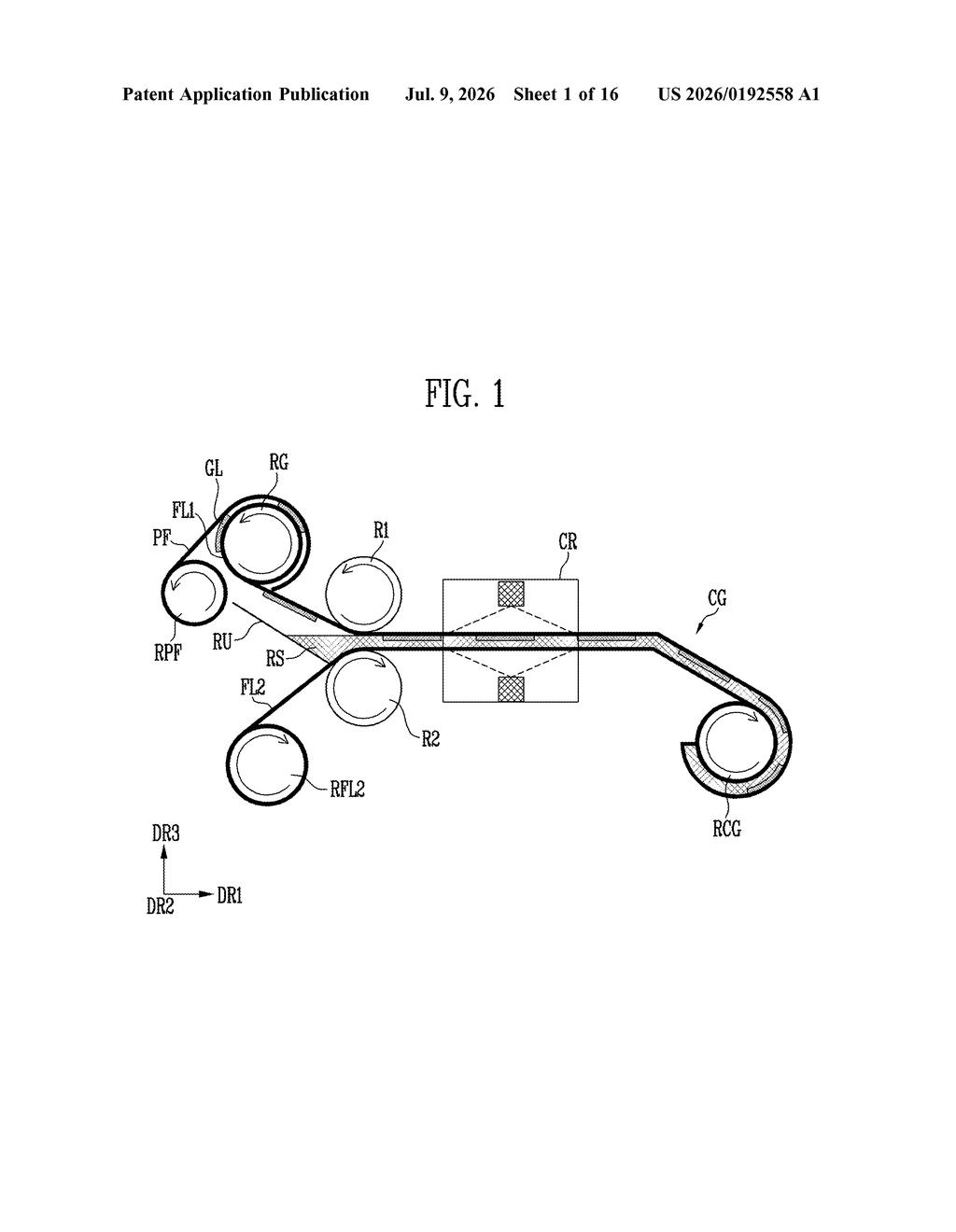
This patent describes a machine that feeds glass pieces on a roll, like a long strip of stickers. The machine peels off a protective backing, squirts resin around the glass, and then presses a second film on top using a pair of rollers. The result is glass that's neatly sealed inside two films with resin filling all the gaps around it.
The end product, coated glass, is used in display panels, especially the kind found in foldable phones where thin, flexible glass needs extra protection. Automating this process on a roll-to-roll line means it can be done faster and more consistently than doing it by hand.
How the roller system seals glass between two films
The patent describes a roll-to-roll manufacturing apparatus, a type of production line where material is fed from one spool, processed continuously, and wound onto another. Think of how a printing press handles paper, but for glass and films.
The machine has several key stages:
- A substrate supply unit holds a wound reel. The substrate is a long strip carrying small glass pieces, each with one protective film already attached to one side and a removable backing on the other.
- A first film removing unit peels off that removable backing, exposing the bare side of the glass.
- A resin supply unit deposits liquid resin onto the exposed glass and the film beneath it.
- Two rollers, a first roller and a second roller, press a second film down onto the resin-covered glass. The gap between the rollers forces everything into close contact, pushing resin into all the spaces around the glass pieces.
The key technical claim is that the resin fills the space around the glass between the two films, not just on top of it. That encapsulation is what gives the finished product its protective and optical properties.
What this means for flexible display production
Roll-to-roll manufacturing is how display makers keep costs down and output up. If Samsung Display can coat glass continuously on a reel rather than processing individual pieces one at a time, it can produce coated glass panels much faster. That matters especially for foldable displays, where ultra-thin glass with precise coatings is central to how the screen bends without cracking.
For you as a consumer, better-automated coating processes tend to mean fewer defects and potentially lower production costs on devices like foldable phones. This patent doesn't describe a finished product, but it does hint at Samsung Display investing in the manufacturing infrastructure that makes those products possible at scale.
This is a manufacturing process patent, not a flashy feature announcement, and it reads like one. It describes machinery for a very specific production step and is unlikely to spark headlines on its own. That said, roll-to-roll glass coating is a genuine bottleneck in foldable display production, so anyone tracking Samsung's manufacturing investments will find it worth logging.
Get our take in your Top Stories
Liked this breakdown? Add Patentlyze as a preferred source on Google, and our plain-English take shows up more often in your Top Stories the next time Samsung patent news breaks.
There are more where this came from
We read every patent application Big Tech publishes and send you the ones worth knowing. Plain English, free, every week.
Want this weekly breakdown for a company we don't cover? Patentlyze Pro →