
Apple Patents a System for Syncing Wi-Fi Signals Across Multiple Access Points
What if your Wi-Fi router and its sibling access point could coordinate their signals like a synchronized swimming team? That's the core idea behind Apple's latest wireless networking patent.
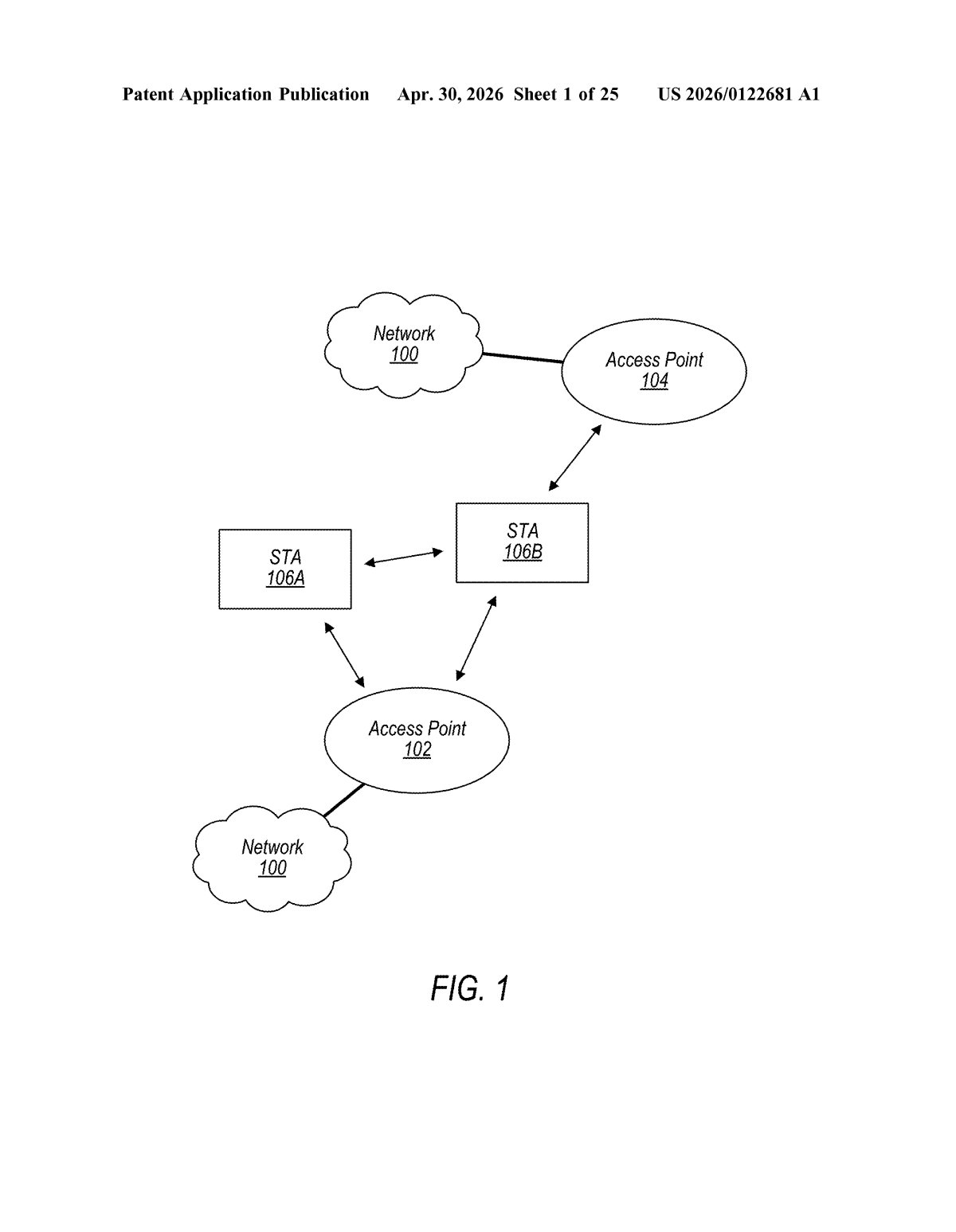
What Apple's coordinated Wi-Fi beamforming actually does
Imagine you have two Wi-Fi access points in your home — one in the living room, one in the office. Right now, they mostly operate independently, which can cause interference and missed opportunities to steer their signals toward your devices more efficiently. Apple's patent tackles exactly that problem.
The idea is to let multiple access points coordinate their antenna signals — a technique called beamforming — so they're working together rather than stepping on each other. One access point acts as the leader, sending a special control message that kicks off a shared window of time. The second access point replies in a way that confirms both are on the same clock.
The key detail is how they stay synchronized: both devices calculate the same "do not transmit" timer (called a network allocation vector) from each other's messages. That shared timing is what lets them coordinate without collisions. It's a fairly precise handshake, and getting it right is harder than it sounds.
How Apple's access points negotiate beamforming timing
The patent describes a protocol for coordinated beamforming (CBF) sounding — a process where multiple Wi-Fi access points measure channel conditions so they can aim their antenna signals more precisely at client devices (like your laptop or phone).
The first access point sends what the patent calls an Initial Control Frame (ICF) to the second access point. This frame opens a transmit opportunity (TXOP) — essentially a reserved window of airtime — specifically for the sounding process. Critically, the ICF includes a duration value used to set a network allocation vector (NAV), which is Wi-Fi's built-in mechanism for telling nearby devices "stay quiet, the channel is in use."
The second access point responds with an Initial Control Response (ICR) that includes its own duration value. The clever bit: the second duration is derived from the first, so both access points (and any nearby devices listening in) can independently calculate the same NAV value. That consistency is what prevents collisions and keeps the coordination window clean.
- ICF (Initial Control Frame): the opening handshake from AP1 to AP2
- TXOP (Transmit Opportunity): the reserved airtime block
- NAV (Network Allocation Vector): a countdown timer that silences competing transmissions
- CBF Sounding: the measurement phase that tells each AP how to aim its signal
What this means for multi-room Wi-Fi performance
For everyday users, this is the kind of plumbing work that makes mesh Wi-Fi networks meaningfully faster and more reliable — especially in crowded environments like offices or apartments where multiple access points are in range. If Apple is building this into future AirPort hardware or router software (HomeKit router partners, say), coordinated beamforming could reduce dead zones and improve throughput without any user configuration.
More broadly, this aligns with the IEEE 802.11be (Wi-Fi 7) specification, which formally introduces multi-AP coordination as a feature. Apple filing patents around the coordination signaling layer suggests it's not just planning to support Wi-Fi 7 passively — it wants to own specific implementation details of how that coordination happens.
This is solid, unglamorous Wi-Fi infrastructure work that matters more than it looks. Multi-AP coordination is one of Wi-Fi 7's headline features, and the NAV synchronization problem Apple is solving here is a genuine technical friction point — not a trivial edge case. Whether this shows up in a future AirPort revival or just in Qualcomm/Broadcom chipsets Apple buys is an open question, but the filing is clearly non-trivial engineering.
There are more where this came from
We read every patent application Big Tech publishes and send you the ones worth knowing. Plain English, free, every week.
Want this weekly breakdown for a company we don't cover? Patentlyze Pro →