
Meta Patent Targets Heart Rate Monitor Accuracy in Low-Light Environments
Heart rate sensors in wearables often struggle in low light, picking up more noise than signal. Meta is patenting a way to automatically detect those conditions and switch the sensor into a cleaner, more reliable reading mode.
What Meta's low-noise heart rate mode actually does
Imagine you're lying in a dark room trying to fall asleep, and your wrist-worn device is tracking your heart rate. The problem is that in dim conditions, the optical sensor that measures your pulse can become overwhelmed by signal noise, producing readings that are less accurate than they should be.
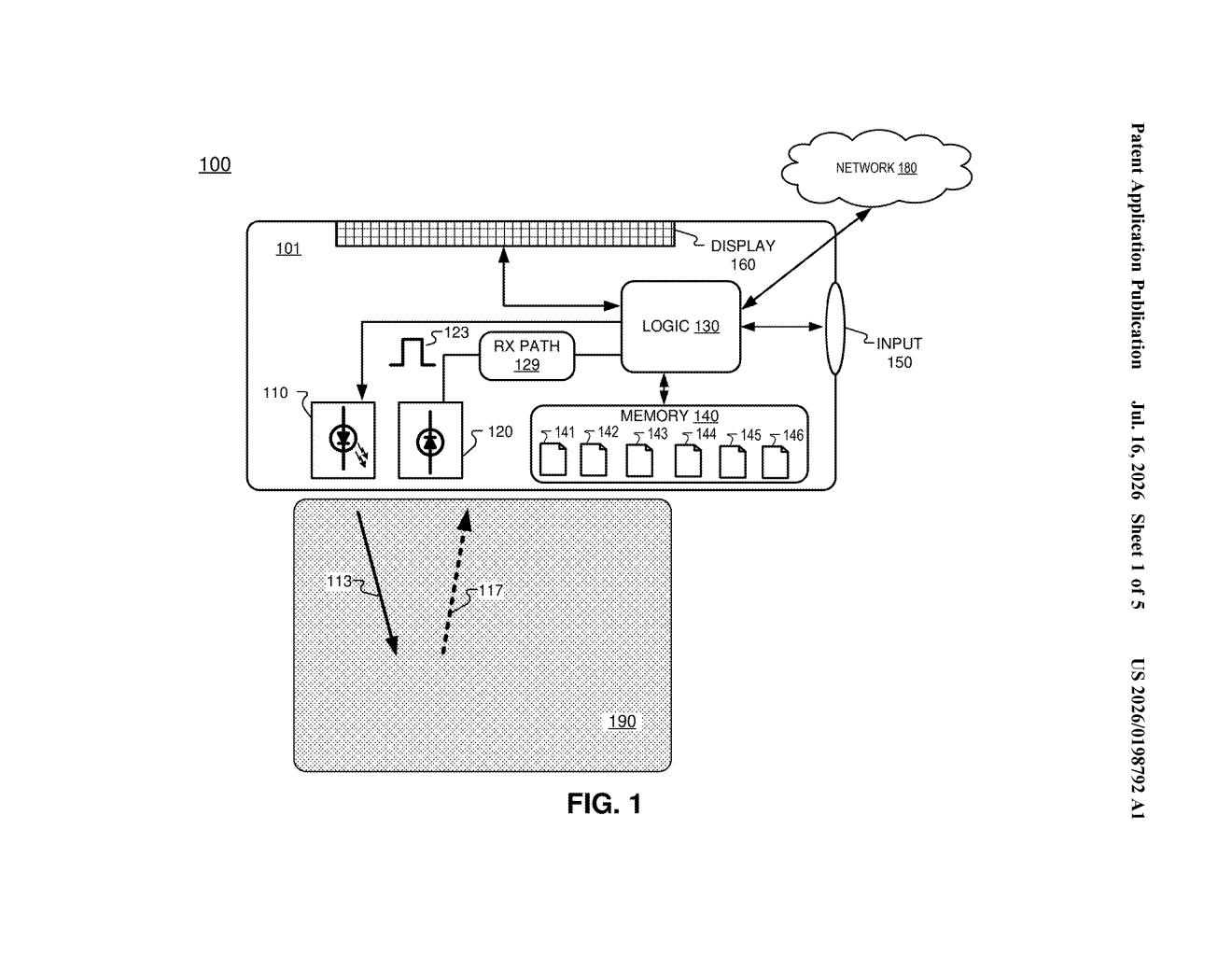
Meta's patent describes a wearable that pays attention to two things at once: how much light is bouncing back to its sensor, and how bright the surrounding environment is. When both readings drop below certain thresholds, the device shifts into a low-noise mode designed specifically for those dim-light moments.
The idea is that your heart rate data should be just as reliable when you're sleeping or in a dark gym as it is in broad daylight. It's a small but meaningful fix for anyone who relies on a wearable to track overnight heart rate or sleep patterns.
How the sensor decides when to switch modes
The wearable uses a photoplethysmography (PPG) setup, which is the same basic technology in most fitness trackers: a light source shines into your skin, and a sensor measures how much light bounces back. The rhythm of that returning light corresponds to your heartbeat, since blood flow changes the skin's reflectivity with each pulse.
The challenge is noise floor (the baseline level of unwanted signal that can drown out the real data). In bright environments, the sensor has plenty of signal to work with, and noise is less of a problem. In dark environments, the returning light signal gets weaker, and noise becomes a bigger proportion of the total reading.
Meta's system adds an ambient light sensor to the mix. The processing logic monitors two things:
- Whether the light bouncing back to the sensor is below a set threshold
- Whether the surrounding ambient light is also below a set threshold
Only when both conditions are true does the device enter low-noise mode, adjusting the sensor's noise floor to compensate for the low-signal environment. This prevents the device from needlessly switching modes in bright conditions where it isn't required.
What this means for Meta's smart glasses and wearables
Heart rate accuracy during sleep is one of the most complained-about limitations of consumer wearables. Optical sensors work best when the signal is strong, and nighttime conditions are exactly when the signal gets weakest. A mode that automatically compensates for that is directly useful for sleep tracking, overnight health monitoring, and any scenario where you're in a dark environment.
Meta has been building health-sensing hardware into its Ray-Ban smart glasses line and is expected to expand into more health-focused wearables. A patent like this, focused on keeping biometric readings accurate in low-light conditions, fits that direction. It's a signal that Meta is thinking carefully about the sensor quality problems that come with always-on wearables, not just the flashier features.
This is a focused, practical patent rather than a splashy concept. Improving heart rate accuracy in low-light conditions is a real and unresolved problem in wearables, and Meta's dual-threshold approach, checking both reflected and ambient light before switching modes, is a sensible way to handle it without burning extra power unnecessarily. Worth watching as Meta's wearables roadmap gets more health-oriented.
There are more where this came from
We read every patent application Big Tech publishes and send you the ones worth knowing. Plain English, free, every week.
Want this weekly breakdown for a company we don't cover? Patentlyze Pro →
Be the first to weigh in