
New Patent Adjusts Workout Goals Based on What You Eat
Log a burger before your run and your Apple Watch might automatically tell you how much extra distance you need to cover. That's the core idea in Apple's latest fitness patent.
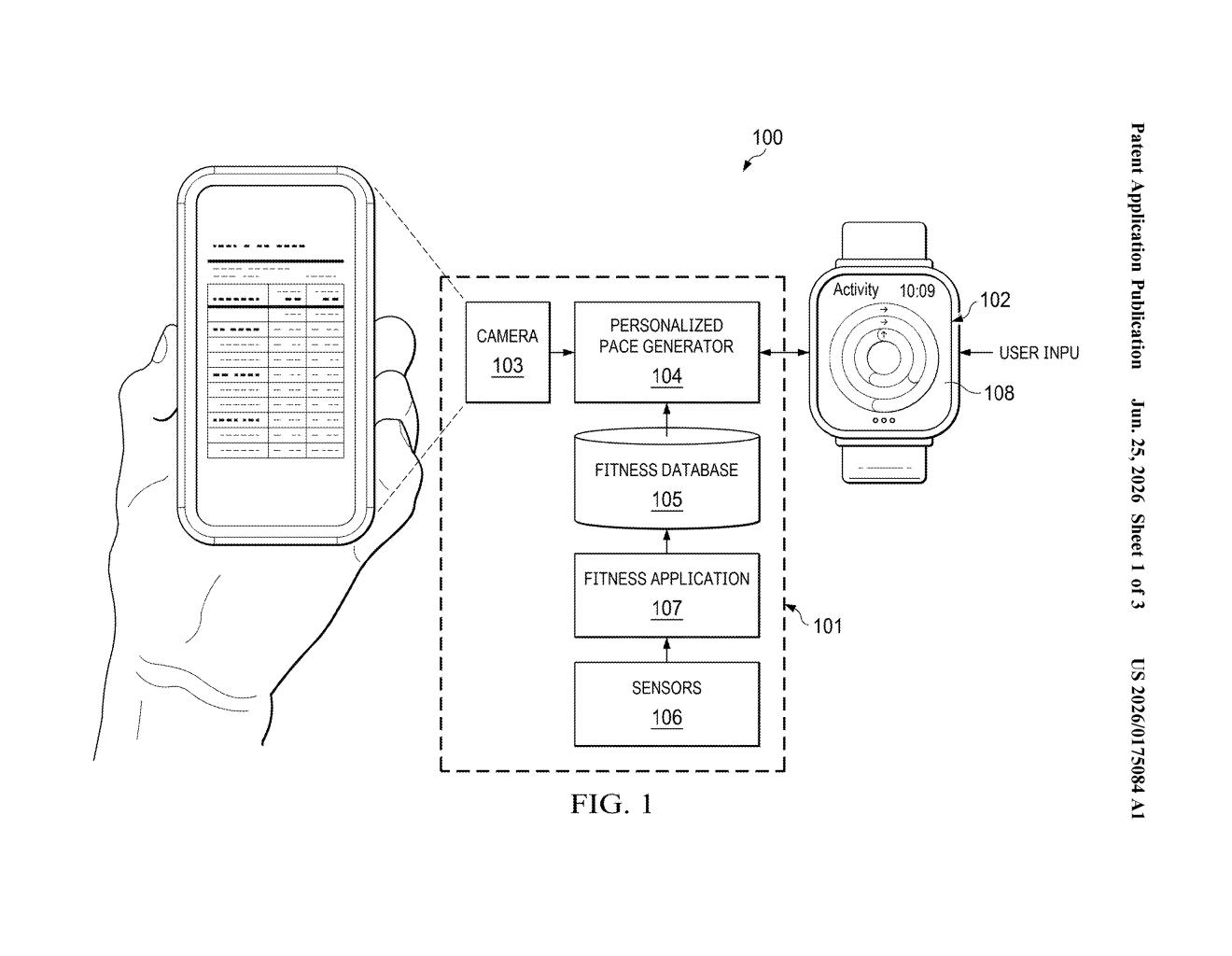
What Apple's food-to-exercise feedback actually does
Imagine you scan a meal before heading to the gym, and your fitness tracker instantly updates your workout goal to account for those calories. That's exactly what this patent describes. Instead of keeping food tracking and exercise goals in separate silos, Apple's system ties them together in real time.
The device looks at what you're about to eat (or just ate), compares it against your personal fitness profile, your past calorie history, and your goals, then spits out what Apple calls "physical activity calorie equivalent" data. In plain terms: it converts the food into an exercise target and adjusts your workout goal on the spot.
So if you're trying to close your Activity rings and you logged a 600-calorie lunch, your device might nudge your afternoon walk goal upward. The system is personalized, meaning two people eating the same meal could get different targets based on their individual fitness history and goals.
How the device converts calories eaten into exercise targets
The patent describes a fitness device (almost certainly an Apple Watch or a paired iPhone) that takes four inputs and produces one output.
- Nutrition information for a food item the user is about to consume or has just consumed
- Fitness profile, which includes the user's historical activity data and their stated fitness goal (weight loss, maintenance, performance, etc.)
- Previous calories consumed by the user, so the system has context for the full day's intake, not just the current meal
- Physical activity calorie equivalent (PACE) data, which is Apple's term for translating caloric intake into exercise output
The processor combines those inputs to generate a personalized PACE figure, then uses that figure to adjust the user's exercise goal and present the updated target on screen.
The word "personalized" is doing real work here. The claim explicitly distinguishes between raw calorie math and a calculation that also factors in the user's individual fitness profile. Someone who runs marathons and someone who is just starting to exercise could eat the same meal and receive different adjusted goals, because the system accounts for fitness level and history, not just food energy content.
What this means for Apple Watch fitness tracking
Right now, Apple's Health and Fitness apps treat food logging and exercise goals as largely separate tracks. You can see both numbers, but the device doesn't automatically close the loop between them. This patent describes a system that does exactly that, making the feedback dynamic rather than static.
For everyday users, this could make the Activity ring system feel less arbitrary. Instead of a fixed calorie-burn goal that ignores what you ate that day, your target shifts with your actual behavior. Whether Apple ships this as a feature in watchOS or as part of a deeper Health app overhaul isn't clear from the patent alone, but the concept maps directly onto tools Apple Watch wearers already use every day.
This is a genuinely useful idea that plugs an obvious gap in Apple's existing health ecosystem. The Activity rings and the Food log have always felt like they should talk to each other, and this patent describes exactly that handshake. It's not a flashy sensor or an AI model doing something exotic; it's sensible product thinking applied to data Apple already collects.
There are more where this came from
We read every patent application Big Tech publishes and send you the ones worth knowing. Plain English, free, every week.
Want this weekly breakdown for a company we don't cover? Patentlyze Pro →