
OpenAI Patents a Web-Browsing Bot You Can Take Over at Any Moment
OpenAI has filed a patent for a system where an AI handles a web browser on your behalf in the cloud, but you can jump in and take control whenever you want, mid-task, without stopping anything.
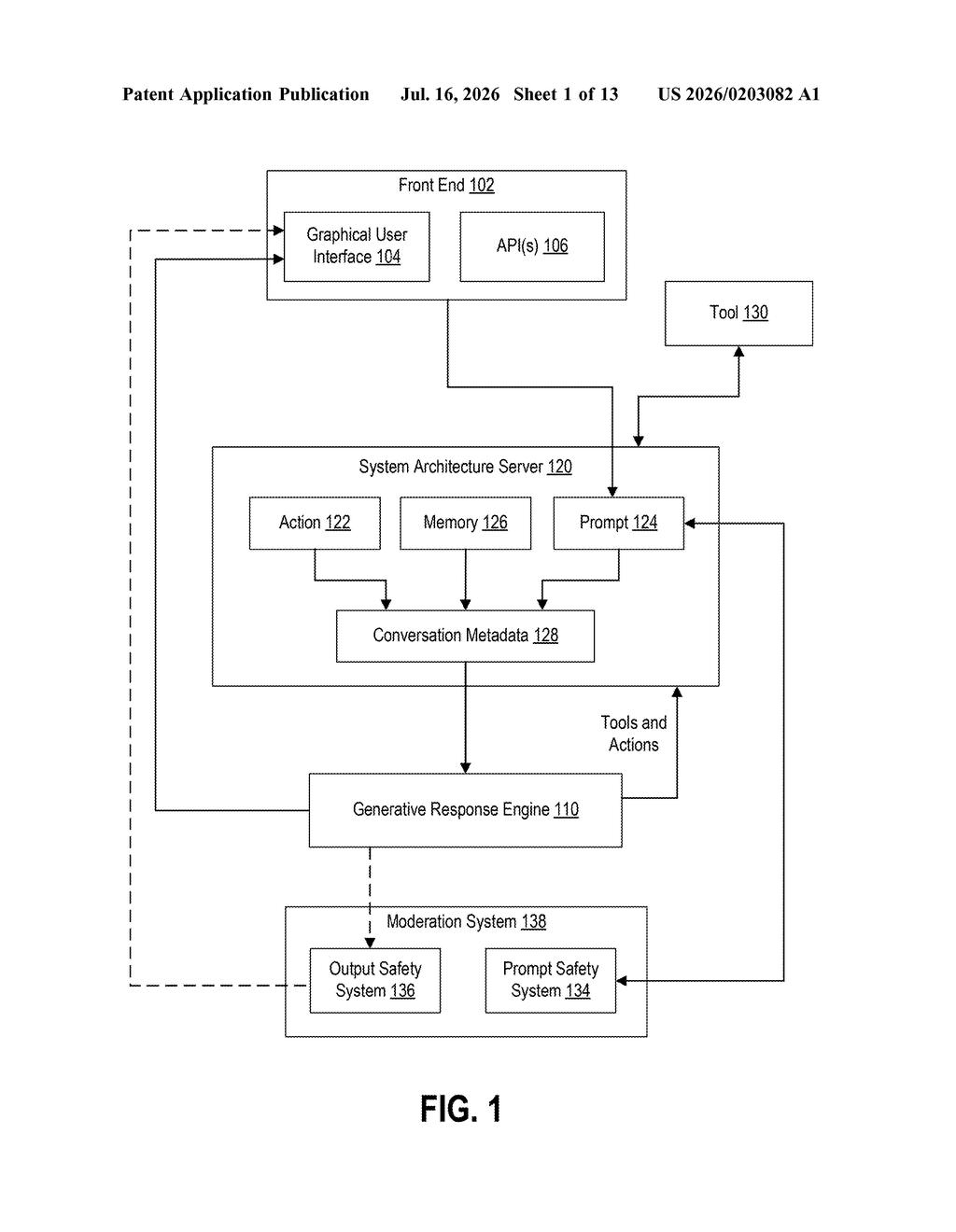
What OpenAI's AI-driven remote browser actually does
Imagine telling your computer to go book a flight, fill out a form, or research something online, and instead of doing it yourself, an AI just handles it. That's the core idea here. OpenAI's patent describes a system where an AI agent operates a web browser running on a remote server, not on your own device, and you watch a live feed of what it's doing.
What makes this interesting is the handoff. At any point, you can reach in and take control, clicking or typing directly as if the browser were your own. The AI then picks back up after you're done. It's a collaboration between you and the agent, not an all-or-nothing deal.
The browser itself is invisible in the traditional sense (called "headless" in developer terms, meaning it has no physical window on a screen) and runs in an isolated box on a server. Your local app just shows you the pictures of what's happening, almost like a video stream from a remote desktop.
How the AI agent and human share browser control
The system works in three layers. First, your local app (think a desktop or mobile application) sends a plain-language task instruction to a cloud service. That service spins up a headless browser (a browser with no visible interface, running invisibly on a server) inside a container (an isolated software environment, like a sandboxed virtual machine).
Second, a generative response engine (the AI model, similar to GPT) takes over that browser and starts executing the task. It clicks links, fills forms, navigates pages. As it works, it sends back a continuous stream of screenshots and event data, so your local app can display what the AI is doing in real time.
Third, and this is the key claim of the patent: you can interrupt. The system accepts a human control assertion, a signal that you want to take over. After that, your clicks and keystrokes are transmitted directly to the headless browser. The browser responds and sends back an updated screenshot, completing the loop.
- AI starts and runs the browser task autonomously
- Live screenshots stream back to your device
- You can grab control mid-task with a single input
- The browser updates and reflects your actions instantly
What this means for AI agents doing real web tasks
AI agents that browse the web on your behalf are one of the most actively contested areas in tech right now. The challenge has always been trust: do you let the AI do everything, or do you stay in the loop? This patent stakes out a middle position. The AI does the boring parts, and you intervene only when something goes wrong or requires a judgment call. That's a meaningfully different design philosophy than fully autonomous agents.
For OpenAI specifically, this lines up with the direction of products like Operator, the company's web-browsing AI agent. A patent like this suggests the underlying architecture for human-AI handoff control is something OpenAI is thinking about carefully, not just shipping as a demo feature.
This is a genuinely useful engineering idea, not just an AI marketing move. The hybrid control model (AI runs the browser, human can grab the wheel) solves a real trust problem that has tripped up every autonomous agent product so far. The claim that a human can assert control mid-stream, with the browser responding and sending back a new screenshot, is specific enough to be meaningful. Worth watching as a foundation for how OpenAI builds out its agent infrastructure.
Get our take in your Top Stories
Liked this breakdown? Add Patentlyze as a preferred source on Google, and our plain-English take shows up more often in your Top Stories the next time OpenAI patent news breaks.
There are more where this came from
We read every patent application Big Tech publishes and send you the ones worth knowing. Plain English, free, every week.
Want this weekly breakdown for a company we don't cover? Patentlyze Pro →