
Samsung Files Patent for Controlling Smart Signal-Reflecting Panels in 5G and 6G Networks
Imagine covering a dead zone behind a building not by adding a new cell tower, but by installing a flat panel that bounces signals around obstacles. Samsung's latest patent is about making that idea work reliably at scale.
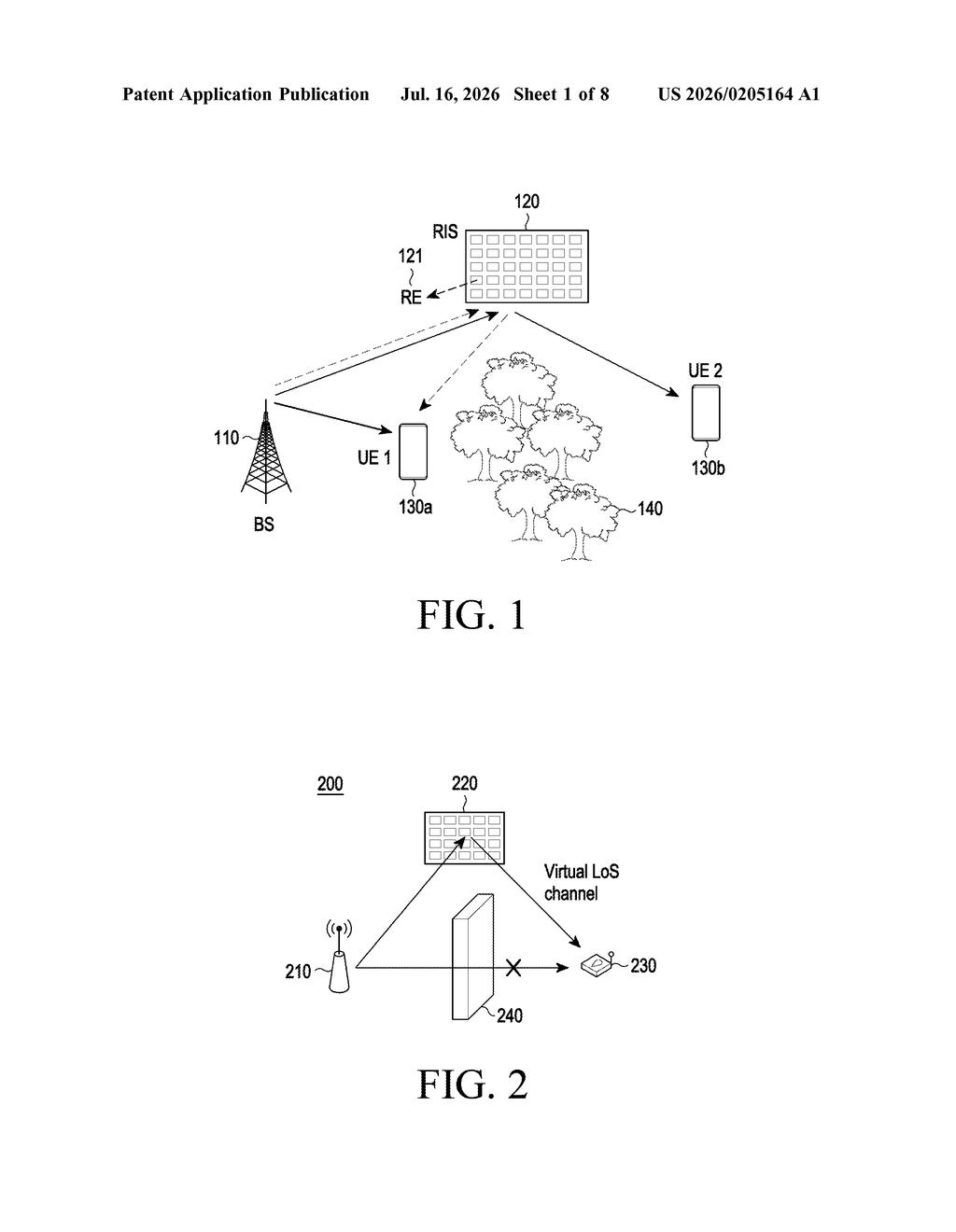
What Samsung's signal-reflecting panel system actually does
Picture a large, flat panel mounted on the side of a building. Instead of generating its own wireless signal, it acts like a programmable mirror, catching a signal from a cell tower and redirecting it toward your phone around a corner or through a crowd. These panels are called reconfigurable intelligent surfaces, or RIS, and they're one of the more practical ideas being explored for next-generation 5G and 6G networks.
The catch is coordination. The panel can reflect signals at different angles depending on how it's configured, and your phone needs to measure how well each configuration is actually working. This patent is about the system that keeps all of that organized: a base station tells the panel which reflection patterns to cycle through, and tells your phone exactly when and how to measure the quality of each one.
Think of it like a relay race where the tower is the coach, the panel is a runner passing the baton, and your phone is timing every handoff. Samsung's patent defines the rulebook that keeps everyone in sync.
How the base station assigns and schedules RIS measurements
The patent describes a base station (the cell tower hardware managing connections) that coordinates a reconfigurable intelligent surface (RIS) device. A RIS is a panel of small, electronically controllable antenna elements that can reshape and redirect radio waves without generating power of their own.
The base station does two main things under this patent:
- It sends RIS-IM resource configuration information to the RIS device. This includes which time-frequency slots (called RIS interference measurement resources, or RIS-IM resources) are assigned to each reflecting pattern (a specific angle or direction the panel will bounce signals), plus how often those slots repeat.
- It sends report configuration information to the user's phone (called a UE, or user equipment), telling the phone when to measure signal quality through the RIS device and how to report back what it found.
The RIS-IM resource acts as a shared reference point: the panel reflects using a known pattern at a known time, and the phone measures the result. The base station can then use those measurements to decide which reflection pattern works best for that phone's position.
This kind of structured measurement is standard practice in cellular networks (similar to how phones already measure reference signals from towers), but applying it to RIS devices, which cycle through many patterns rapidly, requires a new coordination layer. That's the core of what Samsung is patenting here.
What this means for 5G and 6G coverage in hard-to-reach spots
RIS technology is widely discussed as a low-cost way to extend coverage in 5G and 6G deployments without adding full base stations everywhere. Buildings, stadiums, tunnels, and dense urban blocks all create radio dead zones, and reflective panels are a cheaper fix than new towers. But none of that works unless phones and towers can reliably agree on how to measure and report signal quality through the panels.
For you as a user, this kind of infrastructure work is invisible but consequential: better measurement means the network picks the right panel configuration faster, which translates to more consistent speeds in spots that would otherwise have weak coverage. Samsung, as both a major network equipment maker and a phone manufacturer, has a direct commercial interest in getting this coordination standard right before 6G specifications are locked in.
This is a dry but consequential standards-layer patent. RIS is a real technology with real industry backing, and the measurement coordination problem Samsung is solving here is a genuine bottleneck. It's not flashy, but whoever shapes the signaling protocol for RIS in 6G standards will have significant influence over how the technology is deployed globally. Samsung filing this now, ahead of 6G standardization, is a deliberate positioning move.
Get our take in your Top Stories
Liked this breakdown? Add Patentlyze as a preferred source on Google, and our plain-English take shows up more often in your Top Stories the next time Samsung patent news breaks.
There are more where this came from
We read every patent application Big Tech publishes and send you the ones worth knowing. Plain English, free, every week.
Want this weekly breakdown for a company we don't cover? Patentlyze Pro →