
Samsung Patent Lets Cell Towers Hand Off Object Tracking to Nearby Towers
Your phone's cell tower can already track your position. Samsung's latest patent wants towers to coordinate that same trick for any moving object, handing the job off to the next tower before coverage runs out.
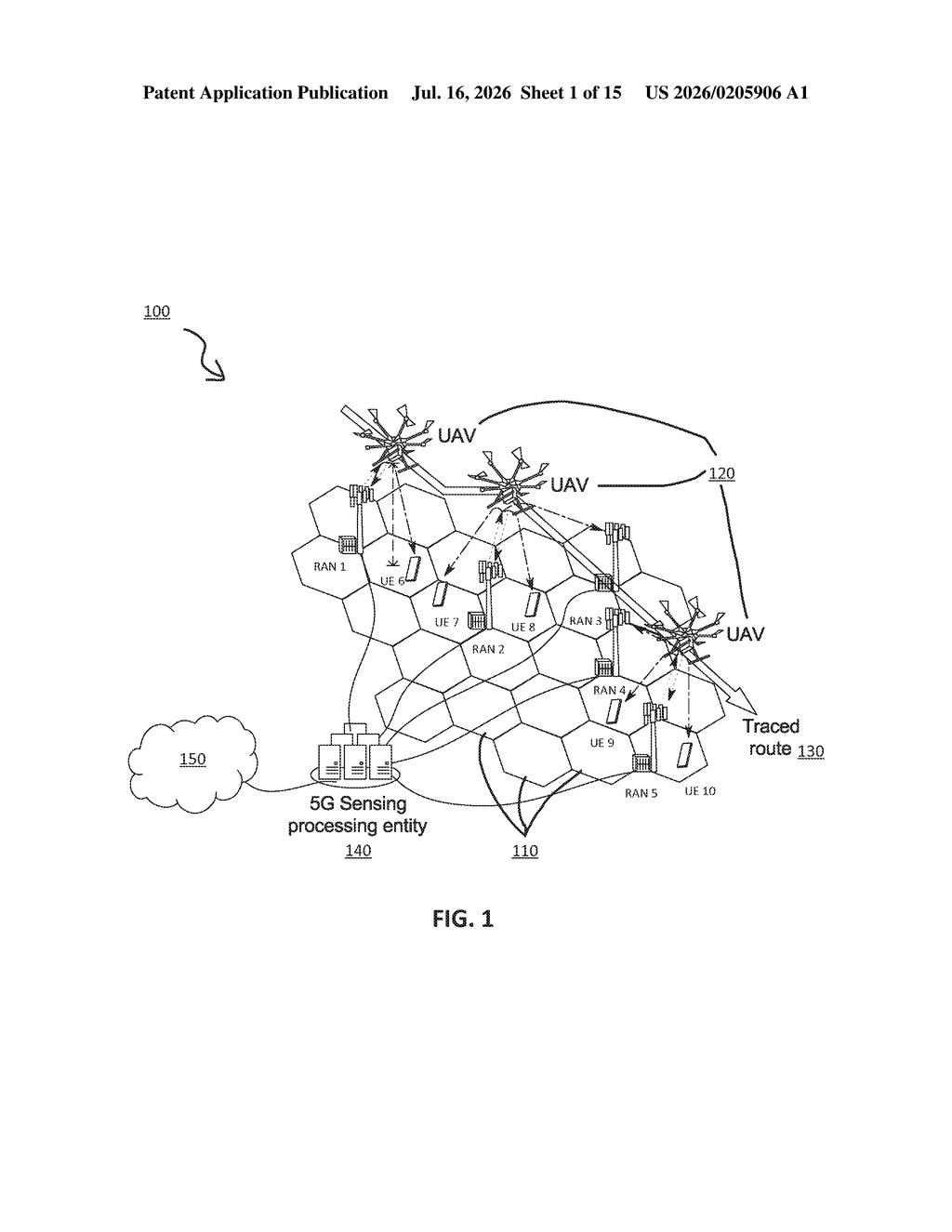
What Samsung's tower-to-tower object tracking actually does
Imagine a security camera that can only cover one room. When someone walks into the hallway, a separate camera has to pick them up. The first camera has to tell the second one where the person is headed, or there's a gap in coverage. Samsung's patent works the same way, but for cell towers tracking moving objects.
Modern 5G networks are being designed to do more than just carry your data. They can also act like radar, bouncing signals off nearby objects to figure out where things are and how fast they're moving. This is called integrated sensing and communication, or ISAC.
The problem is that a moving car, drone, or person will eventually leave one tower's coverage area. This patent describes a way for the first tower to automatically alert the next tower, sending along the object's last known position and speed so the handoff is immediate and nothing gets lost.
How the switch request carries position and velocity data
The patent describes a coordination method inside an ISAC (integrated sensing and communication) network, which is a 5G or future 6G setup where the same radio hardware used for calls and data is also used to detect and track physical objects, like radar.
When a first node (think: a base station or cell tower) is tracking a mobile object, it monitors that object's position and velocity. When the object moves toward the edge of that tower's sensing range, the first node identifies a second node better positioned to continue tracking.
It then sends a switch request to that second node. Critically, the request includes the object's current location and speed, so the receiving tower doesn't have to start from scratch. The second node can immediately begin its own sensing operation with full context.
The patent covers two flavors of switching:
- Node switching: handing the sensing job to a completely different tower or base station
- Mode switching: changing how a single node performs sensing, for example switching from a passive listener to an active transmitter
What this means for 5G radar and connected vehicles
For ISAC to work at scale, seamless object tracking across multiple towers is a foundational requirement. Without a handoff protocol like this, a drone or vehicle would disappear from the network's awareness the moment it crossed a coverage boundary. That's a serious problem if carriers want to pitch 5G sensing as a tool for traffic management, autonomous vehicles, or low-altitude drone corridors.
For everyday users, the near-term impact is indirect. But if this kind of infrastructure becomes standard, it's a building block for cities that can track vehicles and pedestrians using existing cell towers rather than installing dedicated sensor hardware. That's a significant cost argument, and Samsung, as both a major 5G equipment maker and a device manufacturer, has reason to push this architecture.
This is a foundational infrastructure patent, not a consumer feature. It solves a real coordination problem that would otherwise block ISAC from working across more than one tower's coverage zone. It's not flashy, but without something like this, network-level radar tracking stays a lab demo. Worth filing, and worth watching as 6G standards solidify.
Get our take in your Top Stories
Liked this breakdown? Add Patentlyze as a preferred source on Google, and our plain-English take shows up more often in your Top Stories the next time Samsung patent news breaks.
There are more where this came from
We read every patent application Big Tech publishes and send you the ones worth knowing. Plain English, free, every week.
Want this weekly breakdown for a company we don't cover? Patentlyze Pro →