
Nvidia Patents a Single-Step Tool for Reshaping Complex Image Data on the Fly
Nvidia has patented a programming interface that lets developers collapse complex, multi-dimensional data structures in one instruction rather than chaining together multiple operations. It's a small quality-of-life change with real performance implications for GPU-heavy workloads.
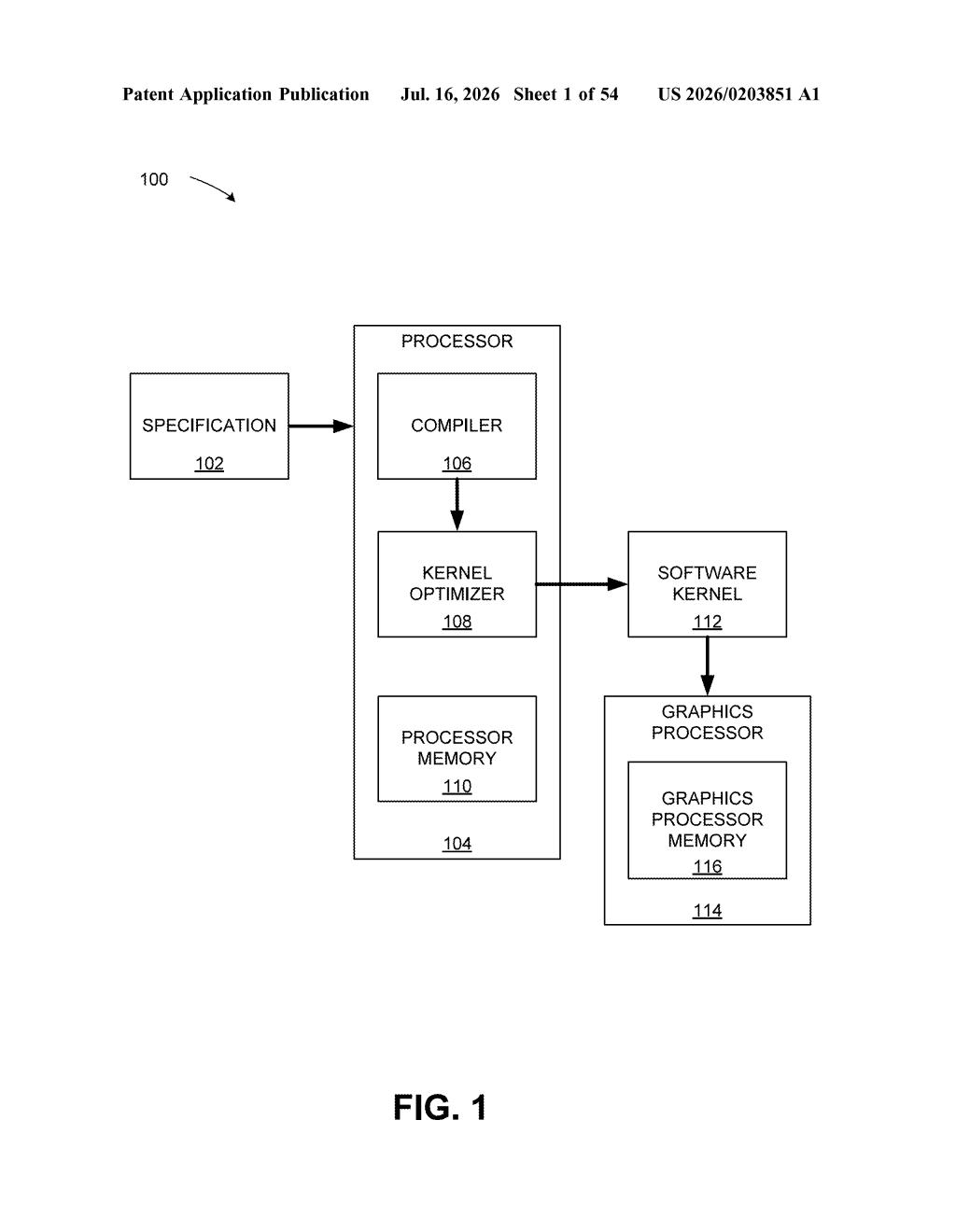
What Nvidia's tensor-reduction API actually does
Imagine you're organizing a massive spreadsheet that has rows, columns, tabs, and sub-tabs. If you wanted to flatten it down to a simpler format, you'd normally have to do that one layer at a time. Nvidia's patent describes a shortcut: a single command that lets a developer specify which layers to collapse and how, all at once.
This matters because modern AI and image-processing programs constantly work with tensors, which are essentially multi-dimensional grids of numbers (think of them as the "spreadsheets" that AI uses to store image data, video frames, or model weights). Shrinking or reshaping those grids is a routine but time-consuming operation.
With this new API, a developer can issue one call that says: "take this tensor, reduce these specific dimensions, and combine them using this rule." The processor handles the rest in one go, rather than requiring multiple back-and-forth steps.
How the API call collapses multiple dimensions at once
A tensor is a multi-dimensional array of numbers. A 2D tensor is a matrix (rows and columns); a 4D tensor might represent a batch of color images (samples, height, width, color channels). AI models and image-processing pipelines manipulate these constantly.
Tensor reduction is the operation of collapsing one or more dimensions by applying a mathematical rule across them (for example, summing all values along a given axis, or taking the maximum). Currently, reducing multiple dimensions typically requires chaining several individual reduction calls.
Nvidia's patent describes a processor and an API designed to perform a multidimensional tensor reduction in a single operation. The API call accepts three key parameters:
- Input tensor descriptor: identifies the specific tensor to be processed
- Reduction operation type: the mathematical rule to apply (sum, max, mean, etc.)
- Specification parameter: a list of which dimensions to collapse, two or more at once
The processor's internal circuits execute all the specified reductions in one pass. This avoids the overhead of multiple API round-trips and intermediate memory allocations that come with doing reductions one dimension at a time.
What this means for GPU and AI workload development
For GPU developers writing AI training code or image-processing pipelines, fewer API calls means less overhead between the program and the hardware. Collapsing multiple dimensions in a single instruction can reduce memory bandwidth usage and the number of times data has to be read from and written back to GPU memory, which is often the real bottleneck.
This is a fairly narrow infrastructure improvement aimed squarely at developers, not end users. But given how central tensor operations are to nearly every AI model, even a small efficiency gain here compounds across billions of operations during training or inference. It fits Nvidia's broader strategy of tightening the gap between software instructions and raw GPU execution.
This is unglamorous plumbing work, but it's exactly the kind of low-level optimization that Nvidia has built its GPU dominance on. A single-call multi-dimension reduction isn't a headline feature, but it's the sort of thing that shows up as a real-world speedup in AI training benchmarks. If it ships in CUDA, framework developers will use it.
There are more where this came from
We read every patent application Big Tech publishes and send you the ones worth knowing. Plain English, free, every week.
Want this weekly breakdown for a company we don't cover? Patentlyze Pro →