
Microsoft Files Patent to Fix Poor Lighting During Live Video Calls
Microsoft is patenting an AI system that fixes your face on video calls when you're sitting in a dark room, making you look properly lit to everyone else on the call without you doing a thing.
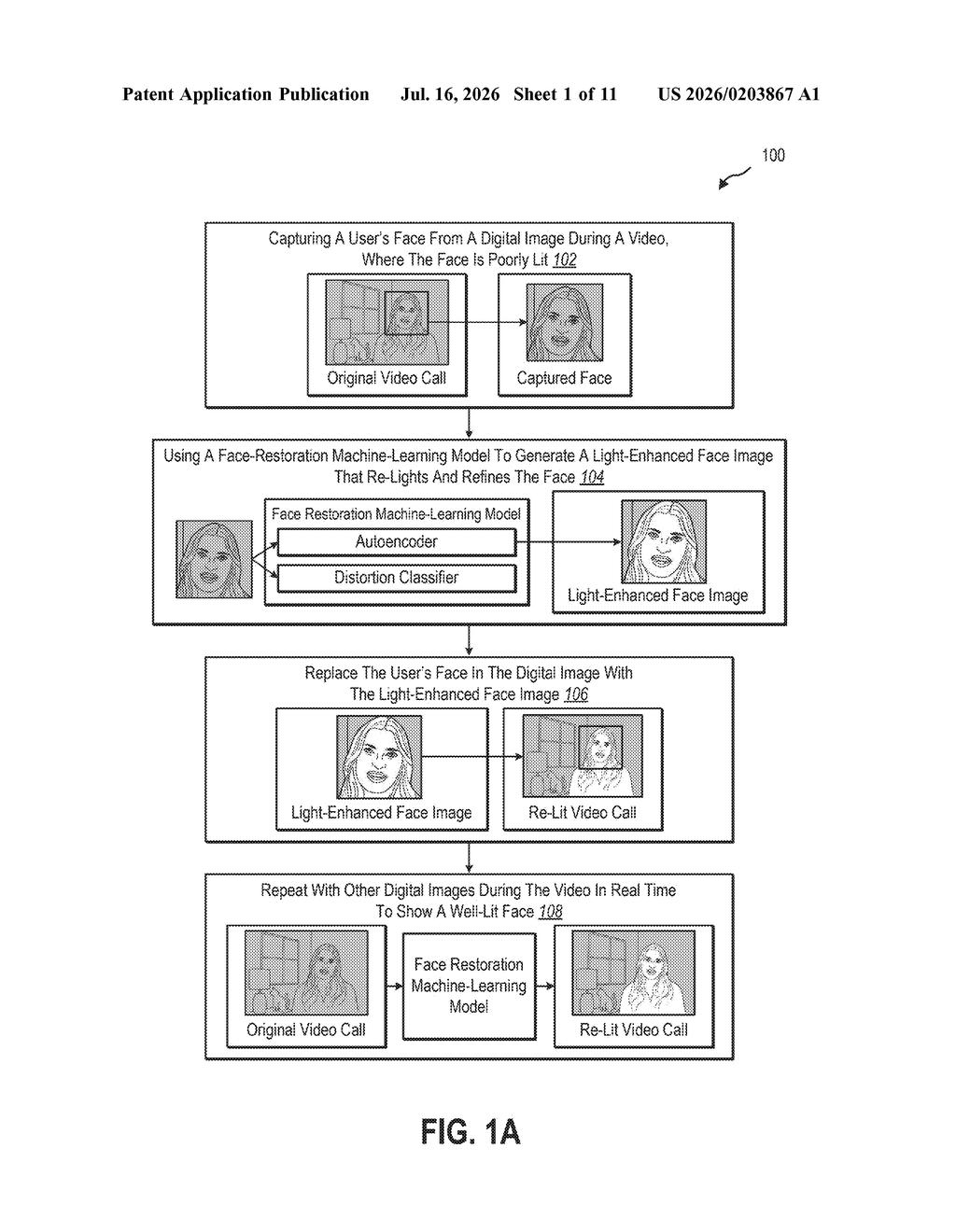
What Microsoft's AI face-lighting system actually does
Imagine you're on a video call from a dim bedroom or a dark office corner. Everyone else can barely see your face, and you look like a grainy silhouette. Right now, the only fix is to buy a ring light or move to a brighter spot.
Microsoft's patent describes an AI system that detects when your face is underlit or degraded by poor conditions, then re-lights and restores it in real time, before the video ever reaches the other participants. The people on the other end see a clear, well-lit version of your face, even if your actual room looks nothing like that.
The system handles this entirely on the fly, during a live video stream. It figures out what kind of problem exists (too dark, too blurry, etc.), fixes the face, and then blends it back into the original background so the result looks natural.
How the two neural networks split the work
The system runs two AI models together to fix low-quality video faces in real time.
First, a distortion classifier looks at the incoming video frame and identifies what kind of degradation is present (for example: low light, blur, or compression noise). Think of it as a quality inspector that labels the problem before any fixing happens.
Second, an autoencoder (a type of neural network that compresses an image into a compact description, then rebuilds it) takes both the face data and the distortion label, and produces a corrected, properly lit version of the face. The distortion label tells the autoencoder exactly what kind of fix to apply, rather than guessing.
The patent describes the final steps like this:
- Detect the degradation type in the current frame
- Encode the face into feature vectors (a compact numerical representation)
- Generate a corrected, relit face image using both inputs
- Composite that corrected face back onto the original video background
- Send the combined result to the display
By separating the diagnosis step from the correction step, the system can apply targeted fixes instead of running a generic enhancement pass on every frame.
What this means for video calls without good lighting
Bad lighting is one of the most common complaints about video calls, and the current software fixes (background blur, basic brightness nudges) barely help when conditions are genuinely poor. A system that re-lights a face in real time, invisibly and automatically, would be a meaningful quality-of-life change for anyone who works from home or joins calls from imperfect spaces.
Microsoft builds Teams, and this kind of AI video enhancement would fit directly into that product. The patent also has implications for any recorded video, not just live calls, which opens the door to post-processing use cases in products like Clipchamp or other Microsoft video tools.
This is a practical, well-scoped patent aimed at a problem real people actually hit every day. The two-model approach (diagnose first, then fix) is a sensible design choice that makes the system more efficient than brute-force enhancement. If this ships in Teams, it would be one of those features people notice immediately.
Get our take in your Top Stories
Liked this breakdown? Add Patentlyze as a preferred source on Google, and our plain-English take shows up more often in your Top Stories the next time Microsoft patent news breaks.
There are more where this came from
We read every patent application Big Tech publishes and send you the ones worth knowing. Plain English, free, every week.
Want this weekly breakdown for a company we don't cover? Patentlyze Pro →