
Qualcomm Patents a Camera Self-Calibration Method Using Cylindrical Image Wrapping
When a camera on a car or phone is even slightly tilted, every reading it feeds to a navigation or detection system is wrong. Qualcomm's new patent describes a way for a device to spot and fix that tilt on its own, without a human technician.
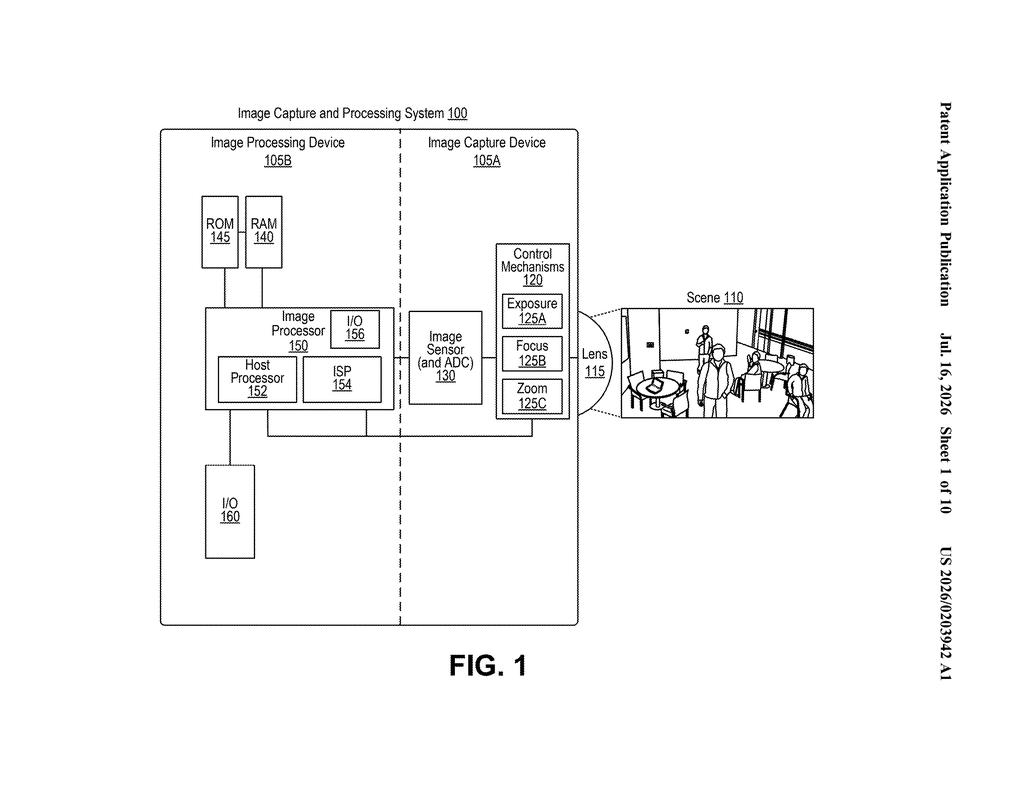
How Qualcomm's cylindrical trick corrects a tilted camera
Imagine hanging a picture frame on a wall but the nail is slightly off. Everything in the photo looks fine until you hold a level up to it. Cameras on phones, cars, and robots have the same problem: even a tiny tilt means the camera is feeding skewed data to every system that depends on it.
Qualcomm's patent describes a way to catch and correct that tilt automatically. The device takes what the camera sees and wraps it around the inside of an imaginary cylinder, like projecting a movie onto a curved screen. In that cylindrical view, things that should be perfectly vertical, like a building edge or a lamp post, show up as reference lines. If those lines are tilted, the system knows the camera is off and adjusts its settings to compensate.
The result is a sensor that can recalibrate itself whenever it drifts out of alignment, without needing a factory reset or a trip to a repair shop.
How the cylindrical projection reveals sensor misalignment
The patent describes a three-step process running on a computing device (a phone chip, a car's onboard processor, or similar hardware).
- Generate a cylindrical projection: The device takes a standard flat camera image and remaps its pixels onto the surface of a virtual cylinder. This projection style is common in panoramic photography and has a useful property: truly vertical lines in the real world stay perfectly straight vertical lines in the cylindrical image, regardless of where in the frame they appear.
- Find a reference line: The system identifies an object in the scene whose orientation is known or can be assumed, such as a vertical wall edge, a utility pole, or a horizontal road surface. It extracts the line that represents that object in the cylindrical image.
- Adjust sensor parameters: If the reference line is tilted away from where it should be, the processor calculates how much the sensor is misaligned and updates its calibration parameters accordingly, correcting for roll, pitch, or other angular errors.
The cylindrical projection is the key insight. Flat (rectilinear) images distort lines near the edges of the frame, which makes tilt detection unreliable. The cylindrical format removes that distortion, giving the algorithm a clean, consistent baseline to measure against.
What this means for self-driving and mobile camera systems
Cameras are the primary eyes of autonomous driving systems, robotics, and augmented reality. A sensor that drifts out of calibration, even by a fraction of a degree, can cause lane-keeping systems to misjudge road position or AR overlays to appear offset from the real world. Continuous, automatic recalibration is a practical requirement for any system that has to stay accurate over months and years of real-world use.
For Qualcomm specifically, this fits squarely into its automotive and XR (extended reality) chip ambitions. The company's Snapdragon Ride and Snapdragon XR platforms both depend on tight camera-sensor coordination. A built-in calibration technique like this could make those platforms more reliable in the field, and harder for competitors to match without licensing the approach.
This is a solid, focused engineering patent rather than a flashy concept. Sensor calibration drift is a real and underappreciated problem in autonomous systems, and the cylindrical projection idea is a genuinely tidy solution to an edge-distortion problem that plagues simpler approaches. It's not headline-grabbing, but it's exactly the kind of infrastructure work that separates reliable production hardware from lab prototypes.
Get our take in your Top Stories
Liked this breakdown? Add Patentlyze as a preferred source on Google, and our plain-English take shows up more often in your Top Stories the next time Qualcomm patent news breaks.
There are more where this came from
We read every patent application Big Tech publishes and send you the ones worth knowing. Plain English, free, every week.
Want this weekly breakdown for a company we don't cover? Patentlyze Pro →