
Qualcomm Patents Zoom-Aware Rectification for Stereo Camera Pairs
When you zoom in on a dual-camera phone, the stereo math that powers depth sensing quietly breaks — Qualcomm's new patent is a fix for exactly that problem.
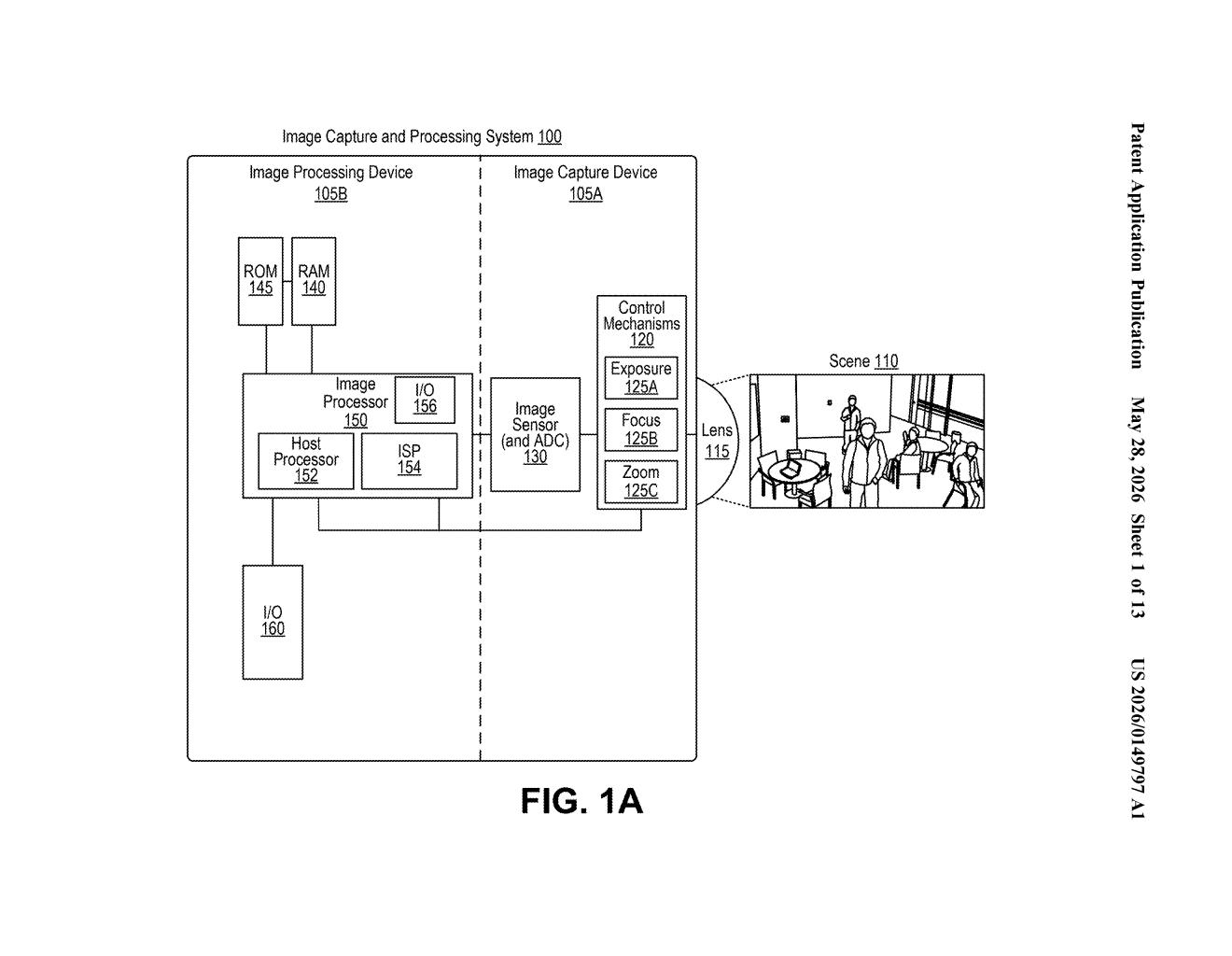
What Qualcomm's stereo zoom fix actually does
Imagine you're taking a portrait photo and you pinch-to-zoom in on someone's face. Your phone has two cameras working together to figure out depth — which lets it blur the background convincingly. But here's the catch: that depth calculation depends on both camera images being perfectly "aligned" in a mathematical sense. When you zoom, that alignment gets thrown off.
Qualcomm's patent describes a system that recalculates the alignment math on the fly as you zoom. Instead of doing a full geometric correction after the fact, it adjusts a matrix — basically a set of coordinates that describes how to warp and crop each camera's image — so both frames stay in sync at any zoom level.
The result is that depth information stays accurate whether you're shooting at 1x, 2x, or somewhere in between. For the user, that means features like portrait mode, 3D depth mapping, or AR overlays should hold up even when you're zoomed in — rather than silently degrading.
How the rectification matrix scales with zoom level
The patent describes a pipeline for processing stereo image pairs — images captured simultaneously by two cameras separated by a known physical distance — at variable zoom levels.
Normally, stereo cameras rely on rectification (a geometric transformation that aligns the two images so corresponding pixels fall on the same horizontal scanline, making depth estimation much faster). This rectification is pre-calculated at calibration time for a fixed field of view. When zoom changes — either optical or digital — the crop window shifts, and the pre-baked rectification no longer applies cleanly.
Qualcomm's approach computes a zoom-adjusted rectification matrix for the second (typically the right or telephoto) camera based on a scale factor derived from the new zoom level. It then uses that matrix to warp (geometrically transform) only the relevant portion of the second camera's raw image data. The first camera's contribution is handled by simply cropping to the matching region.
- Input: a stereo image pair at a baseline zoom level
- Trigger: a new zoom level is requested
- Processing: compute scale-adjusted rectification matrix → warp the second image's sub-region
- Output: a rectified zoomed stereo pair ready for downstream depth estimation
The key insight is that recomputing the rectification matrix per-zoom is cheaper and more accurate than trying to re-rectify after an independent zoom operation on each camera separately.
What this means for depth sensing in mobile cameras
Depth sensing on smartphones is increasingly central to features like portrait mode, AR, and even LiDAR-free 3D scanning. All of those depend on stereo or multi-camera geometry being accurate — and right now, most systems silently degrade that accuracy the moment you zoom. A fix at the rectification layer means the entire downstream depth pipeline inherits the correction automatically, rather than requiring every app or feature to implement its own workaround.
For Qualcomm specifically, this matters because its Snapdragon camera ISP and Computer Vision IP are core selling points for Android OEMs. Solving stereo zoom cleanly at the silicon/firmware level is exactly the kind of differentiation that shows up in benchmark camera shootouts — and in the pitch to phone makers.
This is a genuinely useful engineering patent, not a broad land-grab. The problem it solves — stereo rectification breaking under zoom — is real and affects every multi-camera depth pipeline. It's not flashy, but fixing this at the rectification matrix level rather than patching around it in software is the right architectural choice. If Qualcomm ships this in a Snapdragon ISP update, camera quality in zoom-portrait scenarios improves across a huge swath of Android devices without app developers doing anything.
There are more where this came from
We read every patent application Big Tech publishes and send you the ones worth knowing. Plain English, free, every week.
Want this weekly breakdown for a company we don't cover? Patentlyze Pro →