
Intel Patents a Chip That Resizes Video and Blurs Backgrounds in One Step
Every time a video call blurs your background, your device is doing two separate jobs: resizing the image and blurring the right parts. Intel wants to collapse both into a single hardware step.
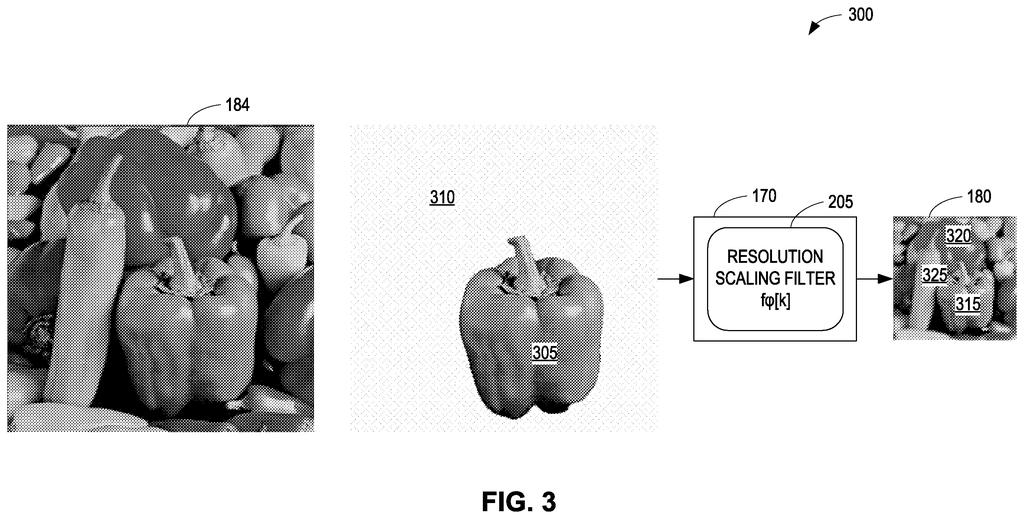
How Intel's one-step video blur actually works
Imagine you're on a video call with background blur turned on. Behind the scenes, your device has to do two things: shrink or scale the camera image to fit the screen, and then figure out which parts to blur (you) versus which parts to soften (the wall behind you). Right now, those are usually two separate operations, which means more processing time and more power consumed.
Intel's patent describes a chip design that does both at once. The trick is hiding a map of "what to blur" directly inside the image file itself, using a part of the image data called the alpha channel. That hidden map tells the chip, pixel by pixel, whether each area should stay sharp, get fully blurred, or land somewhere in between.
Because the chip reads that map and applies the right blur while it's already resizing the image, the whole job gets done in a single pass. No second round of processing needed.
How the alpha channel drives the filter selection
The system takes an image in RGBA format, which is a standard way of storing image data with four channels: Red, Green, Blue, and Alpha. Normally, the Alpha channel controls transparency. Here, Intel repurposes it to carry a segmentation mask, essentially a pixel-by-pixel map saying "this area should be sharp" or "this area should be blurred."
When the chip needs to produce each output pixel in the scaled-down (or scaled-up) image, it looks at the Alpha values of all the source pixels that contribute to that output pixel and calculates a coverage metric (a score that measures how much of the contributing area is marked for blurring). Based on that score, each output pixel gets classified as one of three types: sharp, blurred, or transitional (a soft edge between the two zones).
Each classification then triggers the selection of a different filter coefficient set from memory. Those coefficients feed into a polyphase finite impulse response (FIR) filter, which is a well-established hardware method for resampling images precisely. The key innovation is that the same filter pass that resizes the image also applies the appropriate level of blur, depending on the region.
- Sharp region: filter preserves full detail
- Blur region: filter applies a softening effect during resize
- Transitional region: filter blends between the two to avoid hard edges
What this means for real-time video on Intel hardware
For chips running real-time video, doing two separate filtering passes costs processing time and power. Collapsing them into one is a meaningful efficiency gain, especially for thin laptops or mobile devices where power budgets are tight. Video conferencing, streaming, and camera apps that offer background blur or selective focus effects are the obvious beneficiaries.
For Intel specifically, this fits its strategy of building more specialized media-processing hardware into its chips. If this design ships inside an integrated GPU or a dedicated video engine, it could let Intel claim better battery life or frame rates than competing chips for camera-heavy workloads. That's a concrete, testable advantage in a market where video calls have become a daily fixture.
This is a solid, practical engineering patent, not a flashy concept. Combining resize and blur into a single hardware pass is the kind of unglamorous efficiency work that actually matters in shipping products. It's worth tracking because it points to Intel investing in specialized video hardware, not because it reimagines anything fundamental about how images work.
There are more where this came from
We read every patent application Big Tech publishes and send you the ones worth knowing. Plain English, free, every week.
The drawings
13 drawing sheets from US 2026/0212447 A1 · click any drawing to enlarge


Want this weekly breakdown for a company we don't cover? Patentlyze Pro →
Be the first to weigh in