
Google Patents an AI System That Hides Secret Messages Inside Videos
Google wants to hide undetectable messages inside video footage using AI, in a way that survives editing, compression, and re-uploading. The goal is to track where a video came from, even if someone tries to strip out any obvious labels.
How Google's invisible video watermark actually works
Imagine every photo that leaves a professional camera already contains a hidden, invisible signature that identifies exactly who took it and when. You can't see it, and cropping or adjusting the photo doesn't remove it. Google is working on the same idea for video, but using AI to make the hiding much harder to detect or remove.
The system takes a short digital message (think: a unique ID code) and weaves it into the actual pixels of a video in a way that looks completely normal to the human eye. The AI learns how to hide the data so that it's spread across both space (individual frames) and time (how frames connect to each other).
This kind of technology is often called digital watermarking, and it's a tool studios, news organizations, and AI developers use to prove ownership or trace the source of a clip. Google's version automates and tightens that process with a trained AI model.
Inside Google's 3D spatial-temporal video encoding approach
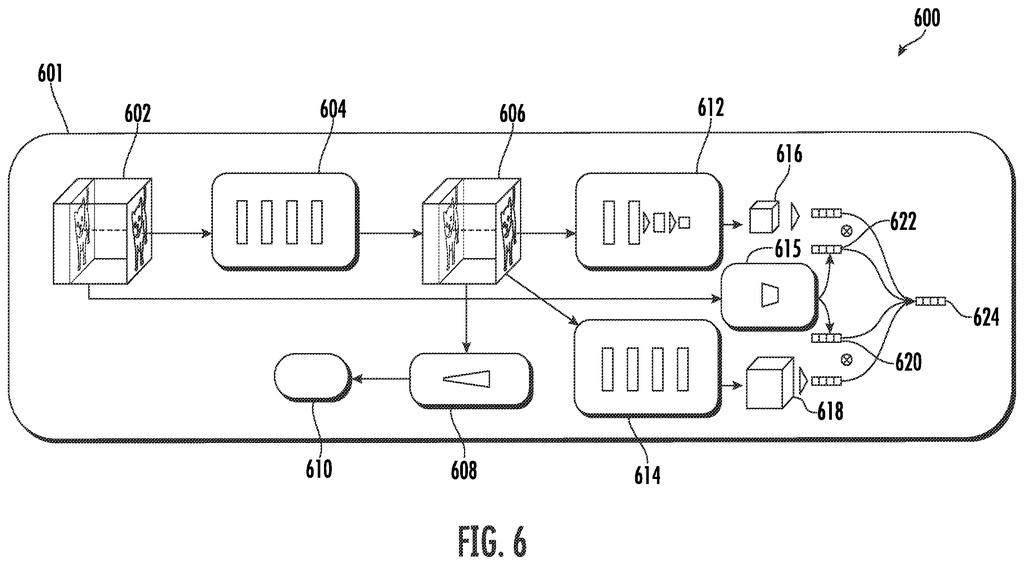
The patent describes a two-stage machine-learning pipeline for encoding hidden messages into video.
Stage one: transformation. A trained model processes the raw video and converts it into a three-dimensional feature encoding (a compressed mathematical representation that captures both the visual content of individual frames and the motion relationships between them, across width, height, and time).
Stage two: embedding. The system takes that 3D representation alongside a message vector (a string of data, like a unique content ID) and fuses them together. The output is spatial-temporal watermark encoding data, meaning the hidden message is distributed across frames in a way that accounts for how pixels move through time, not just how they look in a single freeze-frame.
The final encoded video looks visually identical to the original. A paired decoder model can later extract the original message from the video, even after it has been compressed, trimmed, or otherwise processed.
- Input: original video + message to hide
- Processing: 3D feature extraction followed by message embedding
- Output: visually unchanged video with hidden, recoverable data
What invisible watermarks mean for AI-generated video
Content authenticity is one of the biggest open problems in AI-generated media. As AI video tools become easier to use, platforms and regulators are under pressure to find reliable ways to label synthetic or proprietary content. Invisible watermarks that survive re-encoding and re-uploading are one of the most practical answers anyone has proposed, because they don't rely on metadata that can be stripped in one click.
For everyday users, this could show up in platforms you already use. If Google embeds this in YouTube uploads or in AI video tools like Veo, every clip could carry a traceable fingerprint. That's useful for copyright enforcement, but it also raises questions about what gets tracked and who has access to the decoder.
This is genuinely useful work in a space that badly needs practical solutions. The AI-generated video problem is real and getting worse fast, and watermarking is one of the few approaches that doesn't require the cooperation of bad actors. The technical approach here, spreading a hidden signal across both space and time rather than individual frames, is a meaningful step beyond older watermarking techniques.
There are more where this came from
We read every patent application Big Tech publishes and send you the ones worth knowing. Plain English, free, every week.
The drawings
9 drawing sheets from US 2026/0212438 A1 · click any drawing to enlarge


Want this weekly breakdown for a company we don't cover? Patentlyze Pro →
Be the first to weigh in