
Patent: One Camera Reads Scene Distance Using an AI Image-Refinement Process
The same class of AI that turns text into photorealistic images can, according to a new Google patent, also figure out how far away every object in a photo is, using just one ordinary camera.
What Google's single-camera depth trick actually does
Imagine taking a photo with your phone and having software instantly know that the coffee cup is 18 inches away, the wall is 6 feet back, and a person is walking toward you at a certain speed. Normally that kind of depth and motion data requires specialized hardware like lidar or a stereo camera pair. Google's patent describes a way to get that information from a single, standard camera image.
The trick is borrowing the engine behind AI image generators like Stable Diffusion. Those tools work by starting with random noise and gradually cleaning it up into a picture. Google's approach runs that process in reverse for depth: start with a rough or even completely blank depth estimate, then let the AI iteratively refine it until it produces a detailed map of how far every pixel is from the camera.
The same system also handles optical flow, which is the technical term for tracking how objects move between two frames of video. Both capabilities, depth and motion, coming from one AI trained on the diffusion process could be useful anywhere a camera needs to understand the physical world around it.
How the diffusion model refines a noisy depth guess
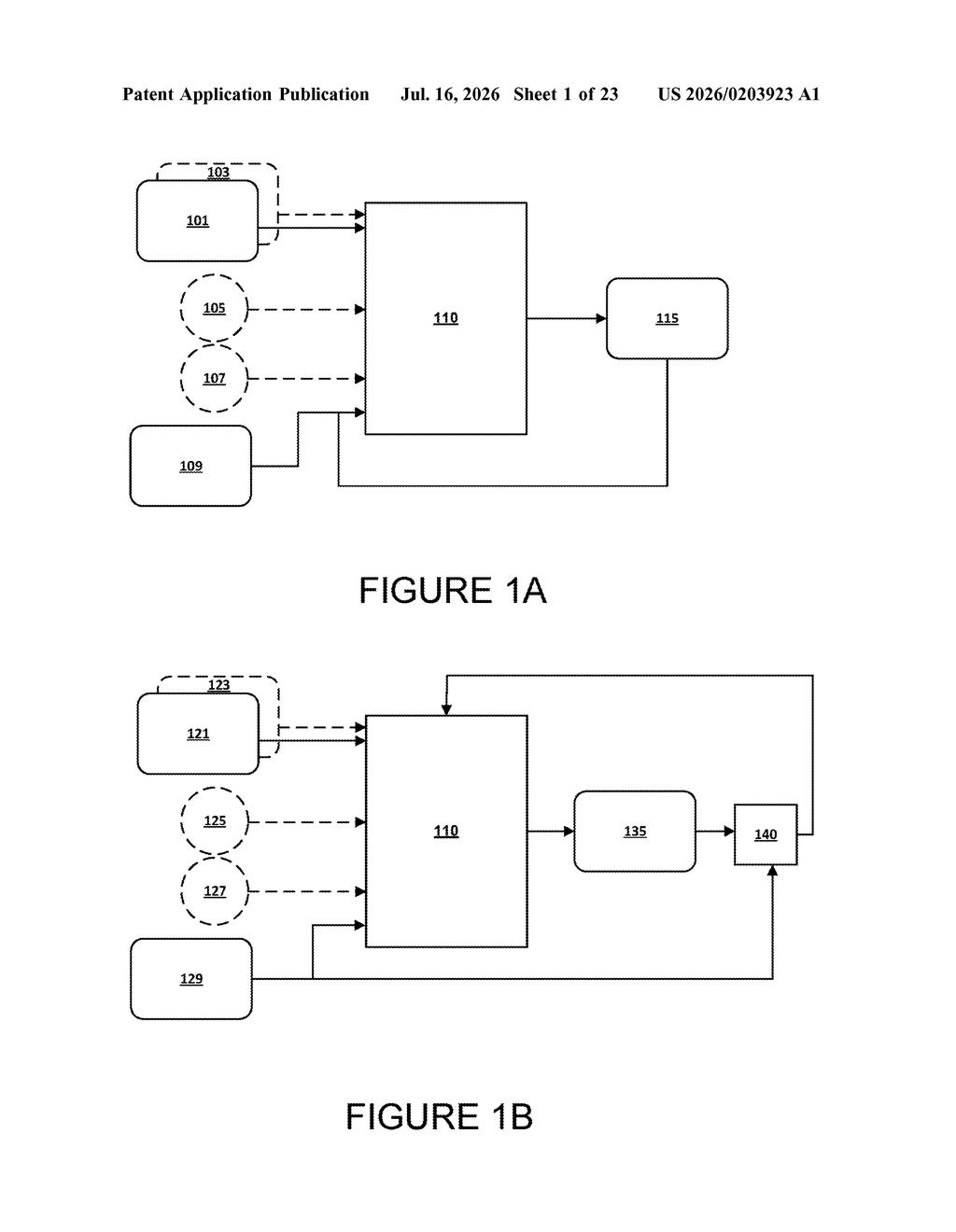
The patent describes a training method for a machine learning model that predicts two things from color images: depth maps (a picture where brightness encodes distance from the camera) and optical flow maps (a picture that encodes the direction and speed each pixel moved between frames).
To train the model, Google takes a known, correct depth map and deliberately corrupts it by adding noise, producing a blurry, degraded version. The model receives both the original color photo and that noisy depth map, then tries to predict a cleaner version. The difference between the model's output and the correct answer generates loss values (a score of how wrong the prediction was), which are used to update and improve the model over thousands of training rounds.
This approach, borrowed directly from diffusion models (the architecture behind AI image generators like Midjourney), gives the system a useful property: at inference time it can:
- Generate a depth map from scratch with no starting information
- Refine an imperfect or incomplete depth map, such as one full of holes from a broken sensor
- Work with noisy, preliminary estimates from other algorithms and clean them up
The patent covers both depth estimation from a single image (monocular depth) and optical flow from video pairs, treating both as the same kind of denoising problem.
What this means for AR, robotics, and self-driving cameras
Depth estimation from a single camera is one of the harder problems in computer vision, and it matters enormously for augmented reality, robotics, and autonomous vehicles. Today many systems solve it either with expensive hardware (lidar, radar, stereo lenses) or with dedicated neural networks that can struggle with unusual lighting or unfamiliar scenes. A diffusion-based approach that can start from a rough guess and iteratively improve it is more flexible, and the patent claims better output quality at lower compute cost than prior methods.
For you as a user, this is the kind of foundational work that eventually shows up in features like better portrait-mode blur on phones, more accurate AR object placement, or video calls that can realistically separate you from your background without a green screen. Google already ships depth-related features across Pixel phones, Google Maps, and its AR platform, so this research has a clear internal customer.
This is substantive research, not a defensive filing. Diffusion models have already proven themselves for image generation, and applying the same training framework to depth and optical flow is a genuinely interesting architectural bet. The ability to refine imperfect or incomplete depth maps natively, rather than needing clean training data, is the part worth watching most closely.
There are more where this came from
We read every patent application Big Tech publishes and send you the ones worth knowing. Plain English, free, every week.
Want this weekly breakdown for a company we don't cover? Patentlyze Pro →
Be the first to weigh in