
Qualcomm Patents a System That Pre-Adjusts Chip Speed Before Work Arrives
Instead of waiting for your phone's chip to get overwhelmed and then throttling back, Qualcomm's new patent describes a system that predicts what's coming and adjusts the chip's settings before the load hits.
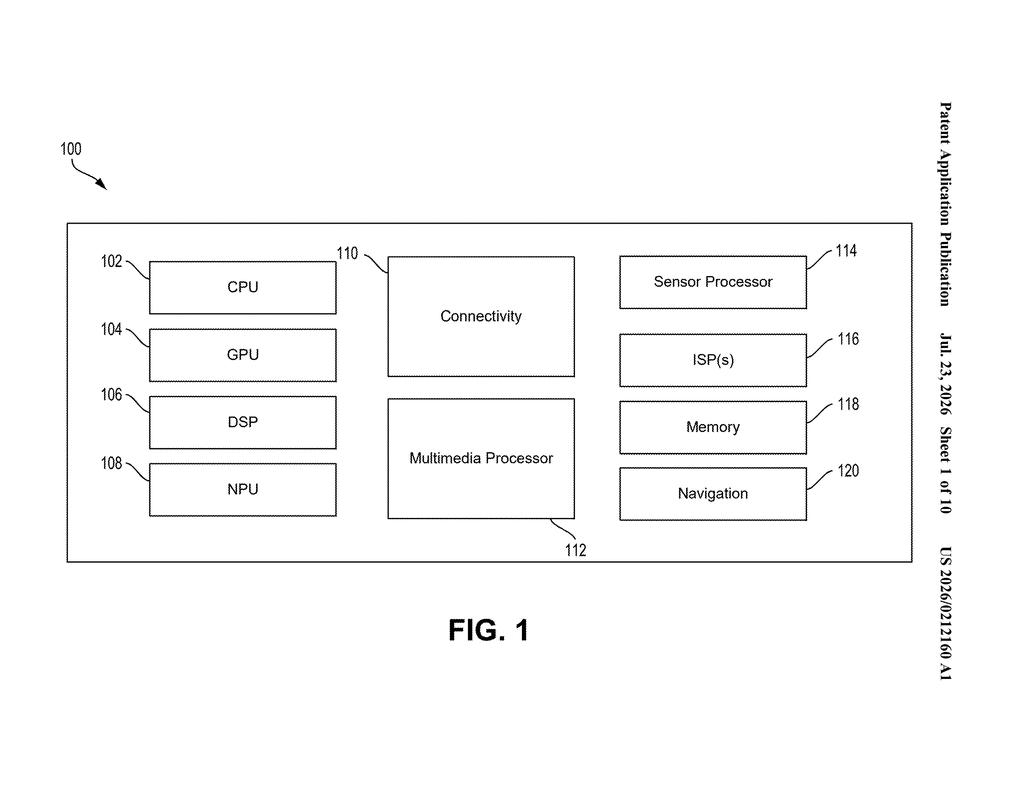
How Qualcomm's chip would tune itself on the fly
Imagine your phone's processor as a car engine. Right now, most chips work reactively: they notice you've floored the accelerator and then decide how much power to give you. By the time they respond, there's already a brief lag or energy waste.
Qualcomm's patent describes a different approach. A small machine learning model sits alongside the main processor, watches what the chip has been doing, and predicts what kind of work is about to come. Based on that prediction, it adjusts the chip's speed and voltage settings ahead of time, before the demand spike actually happens.
The goal is a chip that wastes less power when it doesn't need to run hot, and never gets caught flat-footed when a demanding task kicks in. That translates to better battery life and more consistent performance for everyday tasks like gaming, video calls, or loading heavy apps.
How the ML model reads chip data and acts on it
The system works in three steps that repeat continuously while your device is running.
- Data collection: The apparatus gathers live performance data from the processor, things like how busy each core is, memory access patterns, and power draw.
- Embedding generation: That raw data gets compressed into a compact numerical summary called an embedding (think of it as a fingerprint that captures the processor's current state in a form the ML model can read quickly).
- Prediction and adjustment: A machine learning model reads the embedding and predicts what kind of task the processor is about to handle. The system then changes performance parameters (clock speed, voltage, which cores are active) to match that predicted workload.
The key word in the claim is prediction. This is not a thermostat that reacts after the room gets too hot; it's trying to open the window before the temperature rises. The patent does not specify which ML architecture is used, leaving room for lightweight models appropriate for always-on, on-device inference.
What this means for battery life and performance on mobile chips
Chip performance management is one of the biggest levers phone makers have for balancing battery life against speed. Current governor systems (the software that decides how fast a chip runs) are largely rules-based and reactive. Replacing or augmenting them with a predictive ML layer is something the industry has been moving toward, and a patent like this positions Qualcomm to build that capability directly into its Snapdragon silicon.
For you as a user, a working version of this would mean your phone runs cooler and lasts longer during light tasks, while still delivering full speed the moment you need it. For Qualcomm's customers, the chip makers and phone manufacturers who license Snapdragon, it's a selling point in a market where efficiency benchmarks matter more every year.
This is a solid incremental filing, not a surprise. Predictive chip scaling using on-device ML is a known direction the whole industry is pursuing, and Qualcomm publishing a patent here is more about staking a claim than revealing a secret weapon. The interesting question is how lightweight the ML model actually is when running continuously on the same processor it's trying to manage.
Get our take in your Top Stories
Liked this breakdown? Add Patentlyze as a preferred source on Google, and our plain-English take shows up more often in your Top Stories the next time Qualcomm patent news breaks.
There are more where this came from
We read every patent application Big Tech publishes and send you the ones worth knowing. Plain English, free, every week.
The drawings
10 drawing sheets from US 2026/0212160 A1 · click any drawing to enlarge


Show the other 2 sheets


Want this weekly breakdown for a company we don't cover? Patentlyze Pro →