
Samsung Patents a Chip That Works Harder to Fix Weak Cellular Signals
Samsung's latest patent describes a modem chip that measures the quality of the wireless signal it's receiving and then decides how much computational effort to spend decoding each chunk of data. It's a small but practical idea that sits at the heart of every phone call and data transfer you make.
What Samsung's adaptive modem decoding actually does
Imagine your phone is trying to download something while you're on the edge of a Wi-Fi zone. The signal is patchy, and your phone's modem is working overtime trying to make sense of the garbled data. That extra effort burns battery.
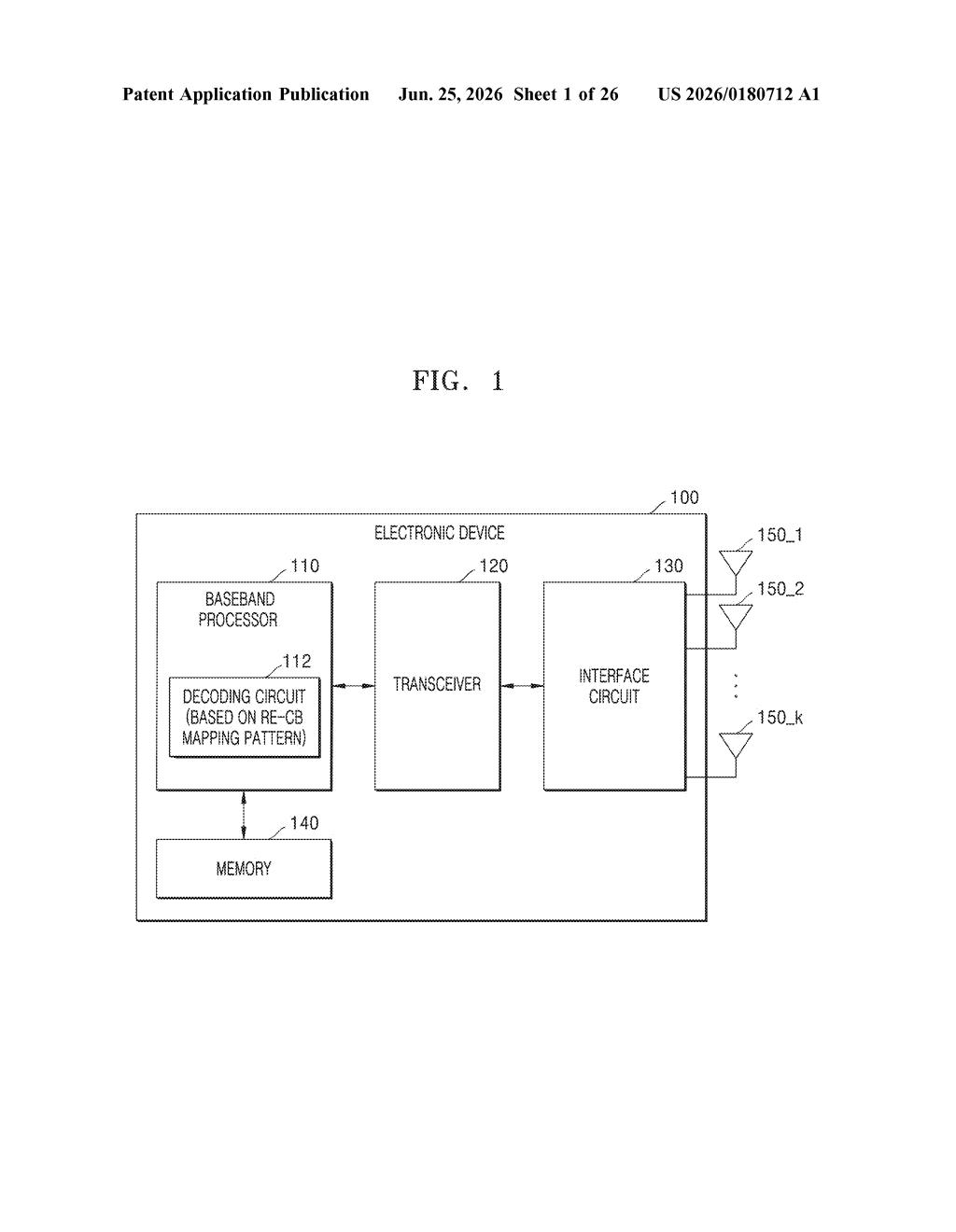
Samsung's patent describes a modem chip that first checks how clean the incoming signal is, then sets a cap on how many attempts it will make to decode each block of data. If the signal is strong and clear, it doesn't need many tries. If it's weak, it may allow more. The key is that it tailors this limit based on both the signal quality and a specific map of how data is arranged in that transmission slot.
The result is a modem that doesn't waste processing power on easy jobs, and focuses its effort where it's genuinely needed. That kind of efficiency matters most on the chips inside your phone, where every milliwatt of power saved translates to longer battery life.
How the chip maps signal quality to decoding work limits
The patent describes a three-step process running inside a modem chip, the component in your phone that handles wireless communication.
- Signal quality measurement: The chip measures the quality of the individual "resource elements" (small, specific frequency-time slots in a 5G or LTE transmission) that carry the incoming data.
- Iteration budget allocation: Based on that quality measurement and a "resource element-to-code block mapping pattern" (a lookup of which resource elements correspond to which chunks of data in a given transmission slot), the chip assigns a maximum number of decoding attempts per code block. A code block is a fixed-size segment of data that the modem decodes independently.
- Bounded decoding: Each code block is then decoded using an iterative algorithm (think of it as a loop that refines a noisy guess repeatedly) but only up to the assigned limit.
The key insight is that not all code blocks experience the same signal conditions, even within the same transmission. By consulting the mapping pattern, the chip knows which blocks landed on cleaner or noisier resource elements and can budget effort accordingly, rather than applying one flat limit to everything.
What this means for battery life and 5G modem efficiency
For the average phone user, this kind of modem optimization shows up indirectly as better battery life and more consistent data speeds in variable signal conditions. The chip stops doing unnecessary work when the signal is clean, and that saved power adds up over a day of use.
For Samsung, this is relevant to both its Galaxy smartphone modems and its Exynos modem chips, which it supplies to other device makers. As 5G networks carry more data at higher speeds, the computational cost of decoding grows. A method that tunes effort dynamically rather than always assuming the worst-case signal could give Samsung's chips a measurable efficiency edge in benchmarks and real-world thermal performance.
This is a focused, incremental improvement to modem decoder efficiency rather than a headline feature. It's the kind of low-level optimization that rarely gets announced at a product launch but determines whether your phone runs warm in your pocket. Worth noting for anyone tracking Samsung's modem roadmap, but not a development that changes the competitive picture on its own.
There are more where this came from
We read every patent application Big Tech publishes and send you the ones worth knowing. Plain English, free, every week.
Want this weekly breakdown for a company we don't cover? Patentlyze Pro →