
Salesforce Patents an AI That Watches Your Workday and Tells You What to Do Next
Salesforce is patenting a system that monitors your calendar, emails, and work habits, then surfaces a list of tasks you probably should have done already. One click, and the AI does them for you.
What Salesforce's AI task-suggester actually does
Imagine finishing a sales call and immediately getting a pop-up that says: 'Want me to send a follow-up email and log this meeting?' You click accept, and it's done. That's the core idea here.
Salesforce's patent describes an AI that sits inside a work platform, watches what you're doing (meetings, messages, deadlines, customer interactions), and then generates a ranked list of things you should probably do next. It could be drafting an intro email to a new prospect, reminding you to submit an expense report, or nudging you to check in with a client you haven't contacted in a while.
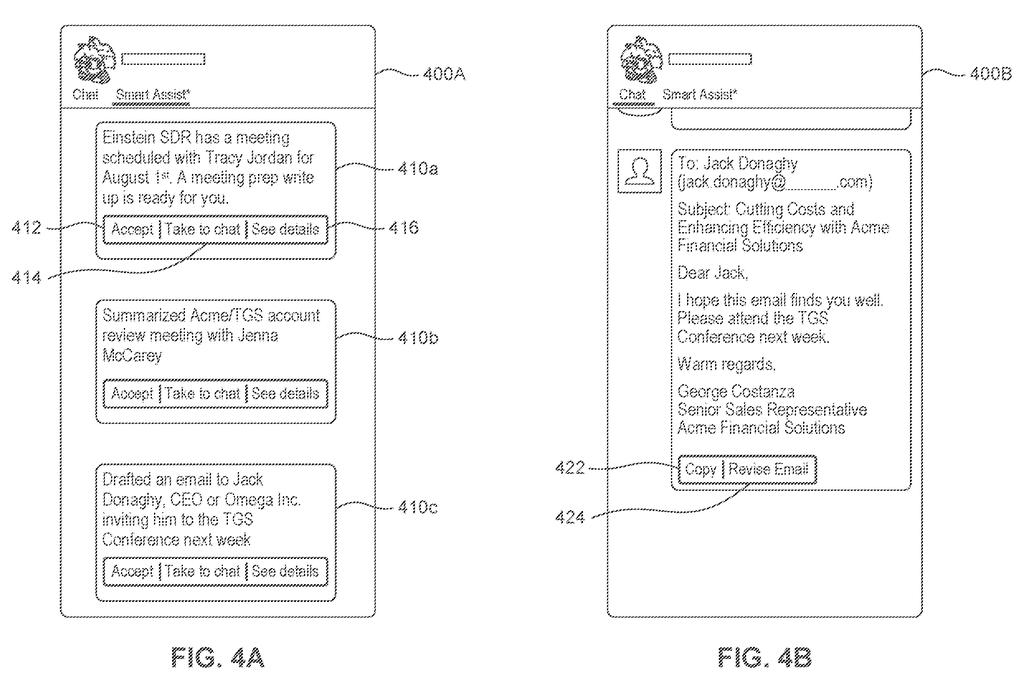
The suggestions appear in a chat window or a to-do-style list. You can accept them as-is, edit them, or ignore them. If you accept, the system carries out the action on your behalf. Think of it as a persistent, attentive assistant that never loses track of loose ends.
How the model picks and surfaces recommended actions
The system continuously collects data from inside a workflow environment (think Salesforce's own CRM platform). That data includes things like:
- Actions the user has taken recently (emails sent, records updated)
- Calendar entries and scheduled meetings
- Company policies and guidelines
- Customer records and interaction history
A machine-learning model (trained on historical data about what users actually did in similar situations in the past) analyzes that combined picture to identify which actions are most appropriate right now. This is a form of next-action prediction: the model essentially asks, 'given everything I know about this user and their customers, what task would a good employee do at this moment?'
The recommended actions are then presented in a chat interface or a list interface, each paired with buttons for accepting, editing, or dismissing the suggestion. If the user hits accept, the system executes the action automatically, without the user having to navigate to another screen or manually fill out a form.
The claim also specifies that the model considers the circumstance of the customer, not just the user, meaning it can factor in things like a client's recent complaint or an upcoming renewal date when deciding what to suggest.
What this means for CRM and workplace automation
For Salesforce, this is an extension of the AI automation push it has been building into its platform under the Agentforce umbrella. A system that proactively surfaces and executes tasks could reduce the manual busywork that sales and support teams spend most of their day on, and it keeps users inside Salesforce rather than switching between tools to manage follow-ups.
For you as a user, the interesting question is control. The patent explicitly requires a human to hit an accept button before anything happens, which suggests Salesforce is trying to keep a person in the loop rather than letting the AI act silently. That's a meaningful design choice in a space where fully automated agents are becoming more common.
This is a fairly direct formalization of what Salesforce has already been demoing publicly with Agentforce. The patent's value is less about a novel technical idea and more about staking legal ground on the specific combination of proactive suggestion, contextual analysis, and one-click execution inside a CRM workflow. It's not the most technically ambitious filing, but it's strategically sensible.
There are more where this came from
We read every patent application Big Tech publishes and send you the ones worth knowing. Plain English, free, every week.
The drawings
9 drawing sheets from US 2026/0211540 A1 · click any drawing to enlarge


Want this weekly breakdown for a company we don't cover? Patentlyze Pro →