
Nvidia Patent Reveals AI Agents Tackling Complex Factory Maintenance Queries Together
Imagine being able to ask a factory's maintenance system 'Why did Line 3 slow down last Tuesday, and which parts are likely to fail next?' in plain English, and getting a real answer. That's the idea behind this Nvidia filing.
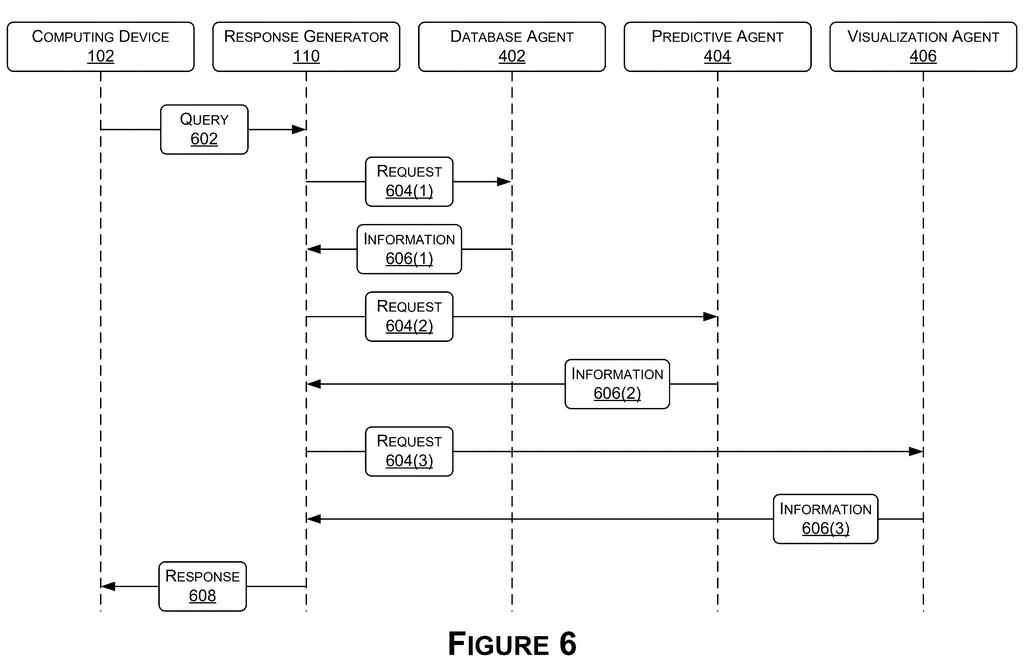
How Nvidia's maintenance AI splits up a complex question
Picture a technician at a factory who needs to know why a machine has been running hot and whether it's about to break down. Right now, answering that question usually means digging through sensor logs, calling an engineer, and waiting. Nvidia's patent describes a system where you just type the question in plain English and the AI figures out the rest.
The system doesn't hand your question to a single AI and hope for the best. Instead, a kind of AI coordinator breaks your question into smaller pieces and sends each piece to a specialized AI agent, one that might be good at reading sensor data, another at spotting patterns in maintenance records, and so on. Each agent does its part, then the coordinator stitches the answers back together into one response.
The goal is to make industrial machines easier to monitor and maintain without requiring the person asking to be a data scientist. You ask a question the way you'd ask a colleague, and the system handles the complexity behind the scenes.
How the query router picks agents and assembles answers
The patent describes a multi-layer AI pipeline built specifically for predictive maintenance, the practice of catching machine problems before they cause a breakdown.
At the front of the pipeline is a query router: when a question comes in, the system judges how complex it is and picks an appropriate language model to handle it. Simple questions get a lighter-weight model; complicated, multi-part questions get a more capable one. This routing step is meant to avoid wasting compute on questions that don't need it.
The chosen language model then runs what the patent calls a ReACT framework (Reasoning and Acting), a technique where an AI doesn't just generate text but also decides when to call outside tools, fetch data, or delegate work. Here, that delegation means breaking the original question into sub-tasks and sending each one to a specialized agent. The patent describes agents using their own tools, models, and algorithms, things like anomaly detectors, time-series analyzers, or parts-inventory checkers.
- Agent 1 might retrieve recent sensor readings for a specific machine.
- Agent 2 might cross-reference historical failure patterns.
- Agent 3 might check whether a spare part is in stock.
The coordinating language model collects all the agent responses and synthesizes them into a single, coherent answer that gets sent back to the person who asked.
What this means for industrial AI and factory floors
Factories, power plants, and data centers all run on equipment that really shouldn't fail unexpectedly, but the data those machines produce is often locked in specialized systems that require expert interpretation. Nvidia's approach tries to put a natural-language layer on top of that complexity, so a floor supervisor doesn't need a data analyst sitting next to them to get a useful answer.
For Nvidia, this also fits a broader pattern: the company has been building out its industrial AI portfolio, including its Omniverse and industrial digital-twin platforms. A patent like this suggests Nvidia sees AI-powered maintenance as a software layer it wants to own, not just the chips that power it.
This is a real engineering idea applied to a real problem, not a speculative moonshot. Multi-agent AI coordination for industrial maintenance is an active area of competition, and Nvidia staking out patent territory here makes strategic sense given its push into industrial AI software. The specific value will depend on how well the query router and agents actually perform in messy real-world factory environments, which the patent naturally doesn't address.
There are more where this came from
We read every patent application Big Tech publishes and send you the ones worth knowing. Plain English, free, every week.
The drawings
14 drawing sheets from US 2026/0212128 A1 · click any drawing to enlarge


Want this weekly breakdown for a company we don't cover? Patentlyze Pro →