
Qualcomm Patents Technology for Lifelike 3D Scenes Viewable from Any Angle
Qualcomm has filed a patent for a system that can take depth and color data from a scene, break it into chunks, and figure out exactly how that scene should look from any camera angle, including ones that were never photographed.
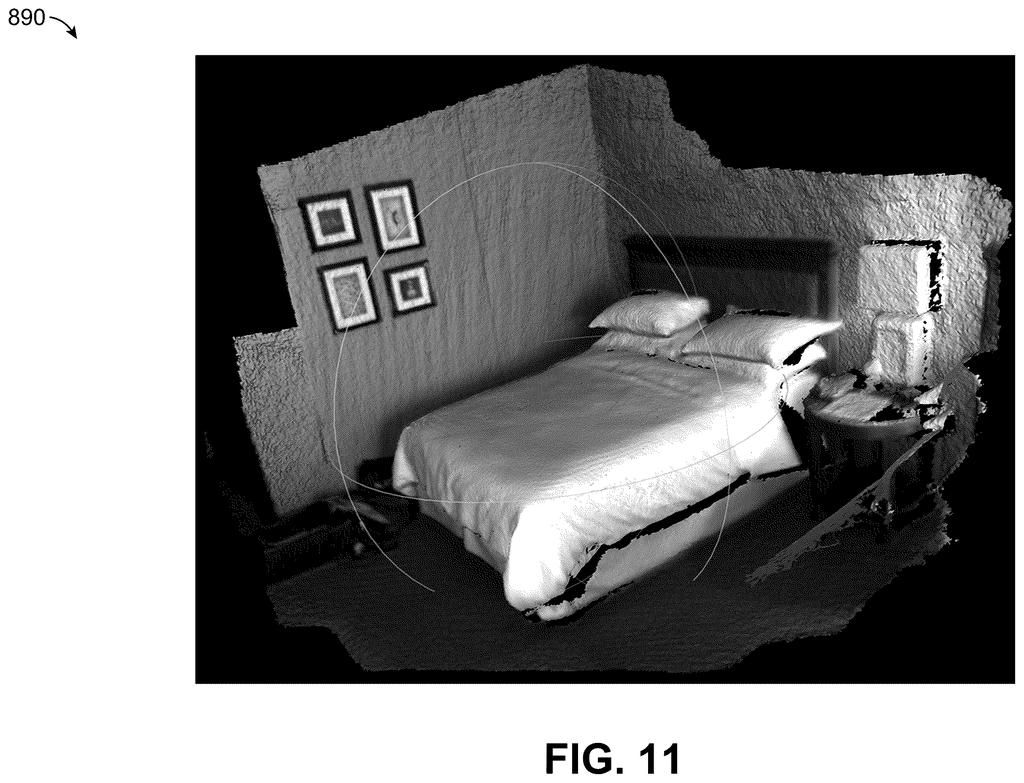
What Qualcomm's block-based 3D reconstruction actually does
Imagine you're scanning a room with your phone's camera. You capture it from a few different spots, but later you want to see how it looks from a corner you never actually filmed. Normally, you'd be out of luck. Qualcomm's patented system is designed to solve exactly that problem.
The system chops the scene into small 3D chunks (like tiny cubes filling the space), then figures out how light and color in each chunk would change depending on where you're looking from. It stores that lighting information efficiently so it can reconstruct a believable image from any viewpoint on demand.
The result is a 3D texture map that makes virtual recreations of real places look correct no matter which direction a virtual camera is pointed. Think of it as giving a computer enough information about a space that it can convincingly fake being there from angles it never actually saw.
How voxel blocks and spherical harmonics handle shifting light
The patent describes a pipeline with four main steps:
- Voxel block selection: The system uses depth data (distance measurements from a depth sensor or camera) and pose data (where the camera was pointed and positioned) to divide the scene into a grid of 3D cubes called voxels. Only the relevant blocks are selected, keeping computation focused.
- Spherical harmonic coefficient calculation: For each voxel block, the system computes a set of mathematical values called spherical harmonic coefficients. Think of these as a compact way to encode how the color of a surface changes depending on what direction you view it from, the same wall looks slightly different at a glancing angle versus head-on, and these coefficients capture that variation.
- Per-direction color resolution: Given a specific viewing direction, the system reads back the appropriate color value from those stored coefficients for each block. This lets it reconstruct what the block would look like from that angle without re-scanning anything.
- 3D texture map generation: All those per-block color values are assembled into a full 3D texture map, which is essentially a complete description of how the scene's surfaces are colored from any viewpoint.
The approach is block-based rather than per-pixel, which keeps memory use manageable and makes it practical to run on devices with limited hardware, including mobile chipsets.
What this means for AR, gaming, and on-device 3D capture
For augmented reality and spatial computing, the ability to render a real captured scene accurately from arbitrary viewpoints is a core unsolved problem at the device level. Most high-quality solutions today require powerful server-side processing or large neural networks. Qualcomm's block-based approach is explicitly designed to be efficient enough for a computing device, which in Qualcomm's world typically means a Snapdragon-powered phone, headset, or XR device.
If this lands in a shipping product, it could mean your phone or AR glasses can build and display photorealistic 3D models of real spaces on the fly, without sending your data to the cloud. That matters for privacy, latency, and for making AR experiences that actually look right when you move your head.
This is a technically solid patent in a genuinely competitive space, Google, Meta, and Apple are all racing toward on-device 3D scene reconstruction. Qualcomm's angle here is efficiency: by chunking scenes into voxel blocks and using spherical harmonics instead of heavier neural representations, they're betting on a leaner path to the same goal. Whether it's meaningfully differentiated from existing approaches like NeRF-lite systems is the real question, but for a chipmaker trying to put this capability directly on mobile hardware, the direction makes sense.
There are more where this came from
We read every patent application Big Tech publishes and send you the ones worth knowing. Plain English, free, every week.
The drawings
18 drawing sheets from US 2026/0212583 A1 · click any drawing to enlarge


Want this weekly breakdown for a company we don't cover? Patentlyze Pro →
Be the first to weigh in