
Sony Patents AR Glasses That Turn Real Objects Transparent When They Block Your View
In augmented reality, a wall or piece of furniture can completely hide the virtual objects you're trying to interact with. Sony's new patent describes a system that figures out when that's happening and makes the real obstruction go partially or fully transparent, based on what you're doing and where you are.
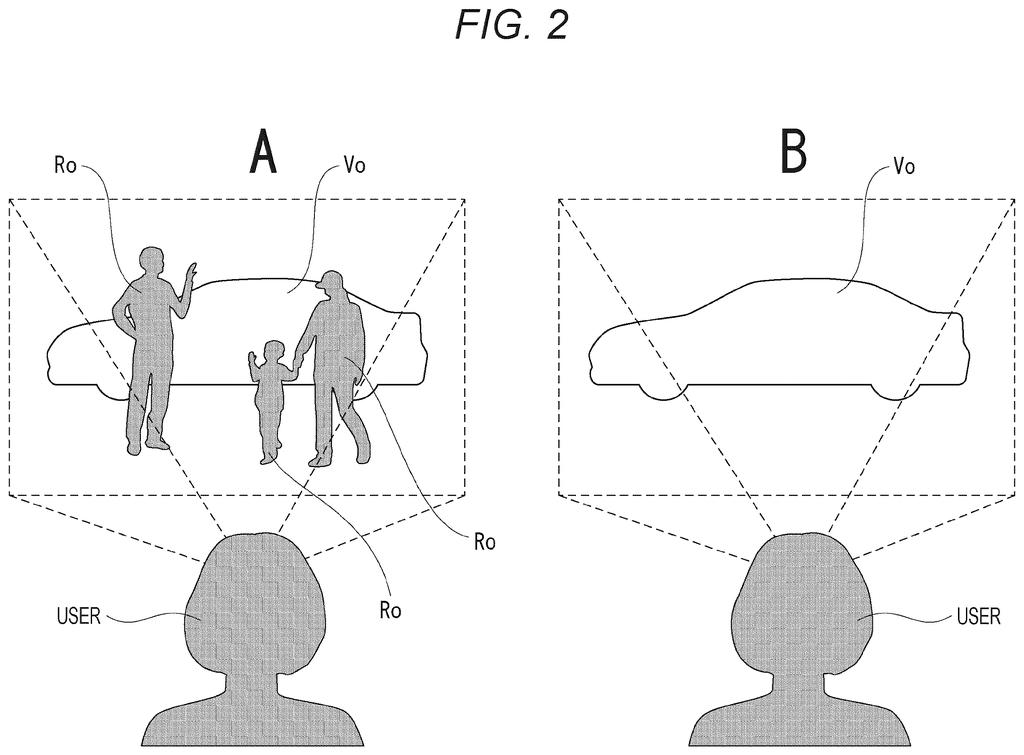
How Sony's AR system decides what to see through
Ever tried to grab something off a high shelf and found your own arm was blocking your view of exactly where to reach? AR headsets face a version of that problem constantly: real-world things, like walls, furniture, or even your own hand, can float in front of virtual objects and completely block them.
Sony's patent describes a system that watches two things: what you're doing (reaching, looking, turning your head) and how close you are to whatever physical object is in the way. Based on that combined read, it adjusts how transparent the blocking object appears in your headset's view. The wall doesn't literally disappear, but in the headset's display it fades enough that you can see the virtual content behind it.
The key idea is that the system doesn't just blindly make everything transparent all the time. It makes a judgment call, checking your action and your position first, so the effect only kicks in when it's actually useful to you.
… performs scene determination related to at least one of action of a user or a positional relationship between the user and a real object in a case where the real object exists between a viewpoint position and a virtual object …
Translation: The glasses figure out what you are doing and where you are standing whenever something blocks your view of a digital graphic.
How the scene-determination engine controls transparency
The patent centers on a transparency control unit, a piece of software logic that runs two checks before it changes how anything looks in the AR display.
First, it performs what the patent calls scene determination: analyzing whether a real physical object sits between your viewpoint (where your eyes are) and a virtual object placed in the scene. If nothing is blocking anything, the system does nothing.
If something is in the way, the unit then looks at two factors:
- User action, what you are physically doing, such as reaching toward the object, looking at it, or walking toward it.
- Positional relationship, how far you are from the real object and how directly it lines up between you and the virtual content.
Combining those two inputs, the system decides how transparent to render the obstructing object in the display. A real wall that you're standing far from might stay fully opaque. The same wall, as you approach and reach toward the virtual object behind it, could gradually fade. The patent is written broadly enough to cover any real object, any kind of user action, and any degree of transparency, which is both its strength and its notable feature from a coverage standpoint.
… controls transparency of the real object on the basis of a result of the scene determination …
Translation: The device makes the blocking physical object see through depending on that situational analysis.
What this means for Sony's next AR headset
AR headsets live or die on whether virtual content feels like it belongs in the real world. Right now, any physical object that drifts in front of a virtual one simply blocks it, breaking the illusion and making interactions awkward. Sony's approach would let a headset handle that gracefully and automatically, which is table stakes for the kind of hands-free, room-scale AR experiences most companies are chasing.
For you as a user, the practical result is an AR environment that feels more fluid: the headset gets out of its own way when you're trying to interact with something virtual. The system is also sensor-agnostic as written, meaning it could apply to future Sony headsets, PlayStation VR successors, or any mixed-reality device the company ships with depth and motion sensing built in.
Sony's 29th filing we've tracked in the AR glasses race since July builds on earlier applications like room scanning to shape your view and beaming images onto the retina.
Claim 1 covers any system that reads a situation, whether what a user is doing or where a user is standing relative to a physical object, and uses that reading to control how see-through that object becomes when it is blocking something digital. The claim names no specific sensors, no particular display hardware, and no specific software logic, which means it reaches any technical approach that produces this result.
In practice, that breadth matters enormously. Any AR headset or application that automatically makes physical objects fade or turn transparent because they are blocking digital content, based on user behavior or position, falls within what Claim 1 describes.
Whether the patent office accepts the claim at this width depends on how much similar prior work already exists, but as written, Sony is attempting to own a foundational behavior that nearly every useful AR experience eventually needs to work well.
There are more where this came from
We read every patent application Big Tech publishes and send you the ones worth knowing. Plain English, free, every week.
The drawings
21 drawing sheets from US 2026/0289920 A1 · click any drawing to enlarge


Want this weekly breakdown for a company we don't cover? Patentlyze Pro →
Be the first to weigh in