
Qualcomm Patents an AI Co-Pilot That Flags Road Threats and Asks for Your Input
Self-driving cars are only as good as their ability to spot trouble before it happens. Qualcomm's new patent describes an AI system that not only watches the road for threats, but also stops to ask you what to do about them.
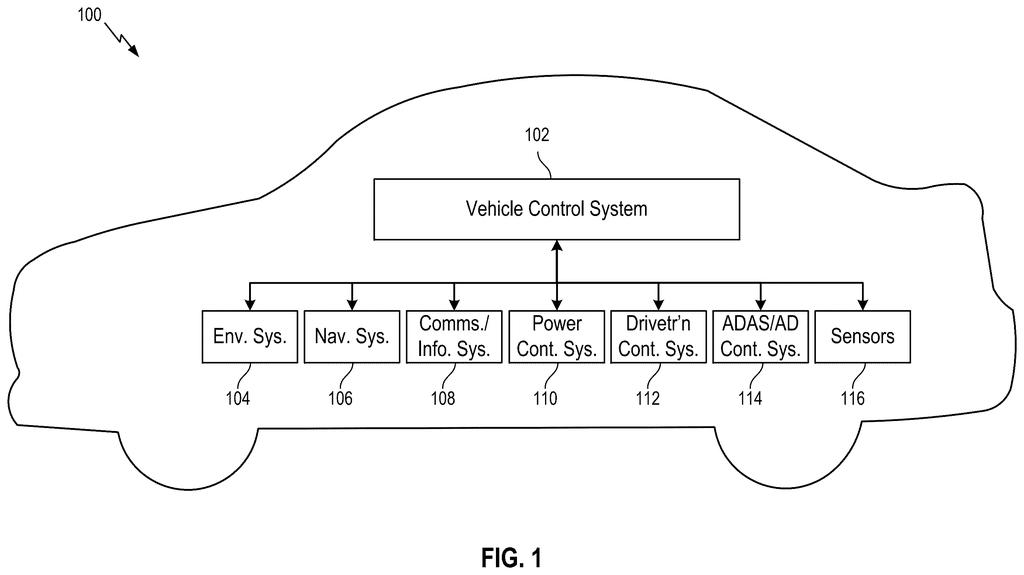
How Qualcomm's self-driving threat detector works for you
You're riding in a self-driving car when the system detects something odd: an object on the road that might have been placed there deliberately, or another vehicle behaving erratically. Instead of making a decision on its own, the car's AI flags the situation and tells you what it found.
That's the core idea in this Qualcomm patent. A layer the patent calls a "manager" sits between the car's sensors and its main AI brain. It decides which questions to ask the AI at any given moment, based on what the cameras and radar are seeing, and also on how fast the chip is running and how much processing power is available. When the AI responds, the manager translates that answer into plain information for the driver.
Critically, the system also collects your feedback. If you say the AI got something wrong, or push back on its read of a situation, that response gets fed back in as a new question, and the AI tries again. The loop keeps the human in the conversation rather than leaving everything to the machine.
… select, via a manager, a set of prompts for input to a machine learning model trained to assist with autonomous driving for the vehicle, based at least in part on the sensor data and on at least one of (i) an inference time of the trained machine learning model or (ii) one or more hardware metrics for the vehicle; …
Translation: The system picks questions to ask the AI based on current road conditions and computer performance.
How the manager picks prompts and loops in the driver
The patent describes a processing system designed to sit inside an autonomous or semi-autonomous vehicle. Its job is to manage how a large AI model (specifically, a model that processes language-style prompts to reason about driving decisions) gets used in real time.
Here is what the system does step by step:
- Sensor ingestion: The system collects data from the vehicle's cameras, radar, lidar, and other sensors, building a picture of the road environment.
- Prompt selection: A "manager" component picks which specific questions (prompts) to send to the AI model. The choice is based not just on what the sensors see, but also on the model's current inference time (how long the AI takes to produce an answer) and hardware metrics like chip load. This means the system can scale its questions up or down depending on available computing resources, which matters a lot in a vehicle where processing power is finite.
- Threat identification: The AI model generates responses ("output tokens," meaning structured text or classification outputs) that flag either adversarial objects (things that may have been placed or used to deceive or confuse the car's sensors) or safety events (road hazards, sudden stops, erratic behavior nearby).
- Driver feedback loop: The manager presents the AI's findings to the driver, collects feedback, converts that feedback into a new prompt, and re-queries the model. This creates a closed loop where human judgment can correct or refine the AI's output in real time.
The set of output tokens is associated with at least one of (i) one or more adversarial objects in the environment or (ii) one or more safety events in the environment.
Translation: The AI flags dangerous objects or hazardous situations on the road ahead.
What this means for trust in self-driving cars
Most autonomous driving systems treat the human as a backup, someone who takes over when the AI fails. This patent flips that slightly: it keeps the driver inside the decision loop on specific threat calls, turning the car's AI into something closer to an advisor than a silent operator. For you as a passenger or driver, that means fewer moments where the car does something that feels unexplained, and more moments where it actually tells you what it saw and why it acted.
The adversarial-object detection angle is the more pointed part of the claim. Qualcomm has been filing around vehicle security and connected-car systems since at least 2022. Self-driving cars are known to be vulnerable to deliberate interference, like printed patterns that confuse cameras or spoofed sensor signals. A system that explicitly tries to catch that class of threat and surface it to the driver adds a layer of protection that today's production vehicles largely lack.
Qualcomm's 42nd filing we've tracked since July in our self-driving sensing race watchlist follows cuts autopilot on hard routes and hand grabbing the wheel.
The most noticeable change here is that the car can tell you when something in your environment looks suspicious or dangerous, and it can do that in plain language rather than a silent correction you never see. If a painted sign on the road or an object on the shoulder is confusing the car's judgment, you would know about it instead of riding blind while the system struggles.
The other piece that matters is pushback. Most automated systems in a vehicle make a decision and move on. This design lets you flag a disagreement and have the system reconsider, which means you stay in the loop at moments that actually count.
Whether this holds up at highway speed with a packed processor is a real question, and the patent does not answer it. But the basic promise, that the car talks to you about what it sees and listens when you respond, is a concrete improvement over systems that leave you guessing.
There are more where this came from
We read every patent application Big Tech publishes and send you the ones worth knowing. Plain English, free, every week.
The drawings
4 drawing sheets from US 2026/0285344 A1 · click any drawing to enlarge


Want this weekly breakdown for a company we don't cover? Patentlyze Pro →
Be the first to weigh in