
Samsung Patents a Power-Aware Task Scheduler for Multi-Core Chips
Every chip in your phone has multiple processing cores, and the question of which core handles which task has a surprisingly large impact on battery life. Samsung's latest patent describes a scheduling system that tries to answer that question more efficiently than current approaches.
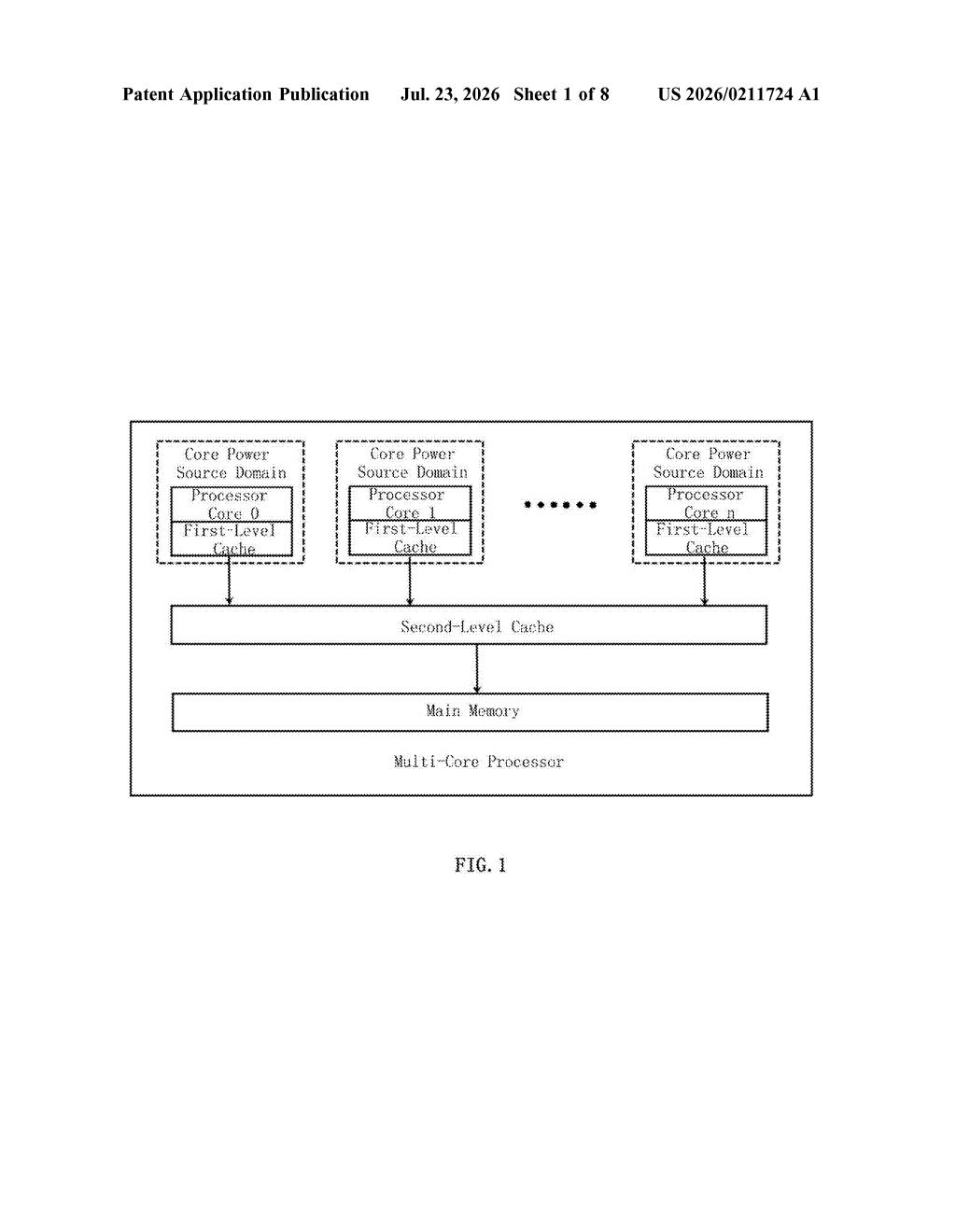
How Samsung's chip scheduler picks the right core for the job
Imagine your phone's chip as a team of workers, each with different strengths. Right now, when your phone gets a new task (opening an app, fetching email), it needs to figure out which worker to hand it to. Do it wrong and you waste power; a worker who's bad at that job burns more energy than one who's well-suited for it.
Samsung's patent describes a method where the system scores each core twice before assigning any task: once for how well that core would handle the incoming task, and again for how well it's currently handling whatever it's already doing. A core only becomes a candidate if it would do a better job on the new task than it's doing on the current one.
From those candidates, the core with the highest score for the new task wins the assignment. The goal is to keep work on the cores that can run it most efficiently, which in practice means squeezing more battery life out of the same hardware.
How affinity scores route tasks to the best available core
The patent introduces a two-score affinity system for deciding where to run a task on a multi-core processor.
When a new task becomes ready to run, the scheduler collects three data points:
- First scheduling parameter: properties of the incoming (ready) task, such as its workload characteristics
- Second scheduling parameter: properties of whatever task is currently running on each core
- First running parameter: the current state of each core, including how long it has been sitting idle
Using those inputs, the system calculates two scores per core. The ready-task affinity (how efficiently a given core would run the new task, expressed as a power-consumption optimization score) and the current-task affinity (how well that core is already matched to its current workload). A core is only eligible to receive the new task if its ready-task affinity score is higher than its current-task affinity score, meaning displacing the current task would actually be a net efficiency gain.
Among all eligible cores, the one with the highest ready-task affinity wins and becomes the target processor core for the new task. The continuous idle duration of each core feeds into the running parameter, so cores that have been sitting unused are weighted into the calculation.
What this means for battery life in Samsung devices
Modern mobile chips, including Samsung's own Exynos line, already use heterogeneous core designs where big, fast cores and small, efficient cores coexist. The scheduling logic that decides which core handles which job is a major factor in how long your battery lasts during everyday use. A smarter scheduler that avoids mismatching tasks to cores could extend screen-on time without any hardware changes.
For Samsung, filing this as a method patent rather than a hardware patent means it could apply broadly across any multi-core chip architecture. That matters both for phones and for chips in televisions, tablets, and other Samsung products where thermal management and battery efficiency are design priorities.
This is competent, incremental chip scheduling work rather than anything attention-grabbing. The core idea, score tasks and cores before assigning work, is a sensible refinement of existing scheduling heuristics, and the power-efficiency framing is credible. It won't excite anyone outside a kernel engineering team, but it's the kind of unglamorous optimization that actually ships in products and improves daily battery life.
There are more where this came from
We read every patent application Big Tech publishes and send you the ones worth knowing. Plain English, free, every week.
The drawings
8 drawing sheets from US 2026/0211724 A1 · click any drawing to enlarge


Want this weekly breakdown for a company we don't cover? Patentlyze Pro →