
Samsung Patents a Light Sensor That Tunes Its Own Sensitivity on the Fly
Most light sensors are fixed at one sensitivity level, which means they either miss faint signals or get overwhelmed by bright ones. Samsung's new patent describes a sensor that can tune itself in real time, depending on what it needs to detect.
What Samsung's gate-controlled light sensor actually does
Imagine a microphone that can automatically whisper-quiet itself in a loud concert hall, then crank up its sensitivity the moment the music stops. Light sensors in cameras and medical devices face the same challenge: they need to be sensitive enough to catch dim signals without being blinded by bright ones.
Samsung's patent describes a new type of light detector that can adjust how aggressively it amplifies incoming light. Each tiny sensing unit in the array has an extra control terminal, called a gate electrode, that acts like a volume knob. By changing the voltage on that gate, the sensor can dial its amplification up or down without physically reconfiguring anything.
This tunability matters most in situations where lighting conditions change quickly, or where you need the same sensor to handle both very faint and very bright signals. Think low-light photography, medical scanners, or lidar systems in self-driving cars.
How the gate electrode adjusts electron multiplication
The patent describes a photodetector built from an array of individual photoelectric conversion devices, each of which converts incoming light into an electrical signal and then amplifies it.
The amplification happens inside what the patent calls an electron multiplication region, where two semiconductor layers of opposite types are pressed together. When light hits this junction and the voltage is right, a single electron can trigger a cascade of additional electrons, turning a faint signal into a measurable one. This is the same basic principle behind avalanche photodiodes (APDs), a well-established sensor type used in scientific instruments and lidar.
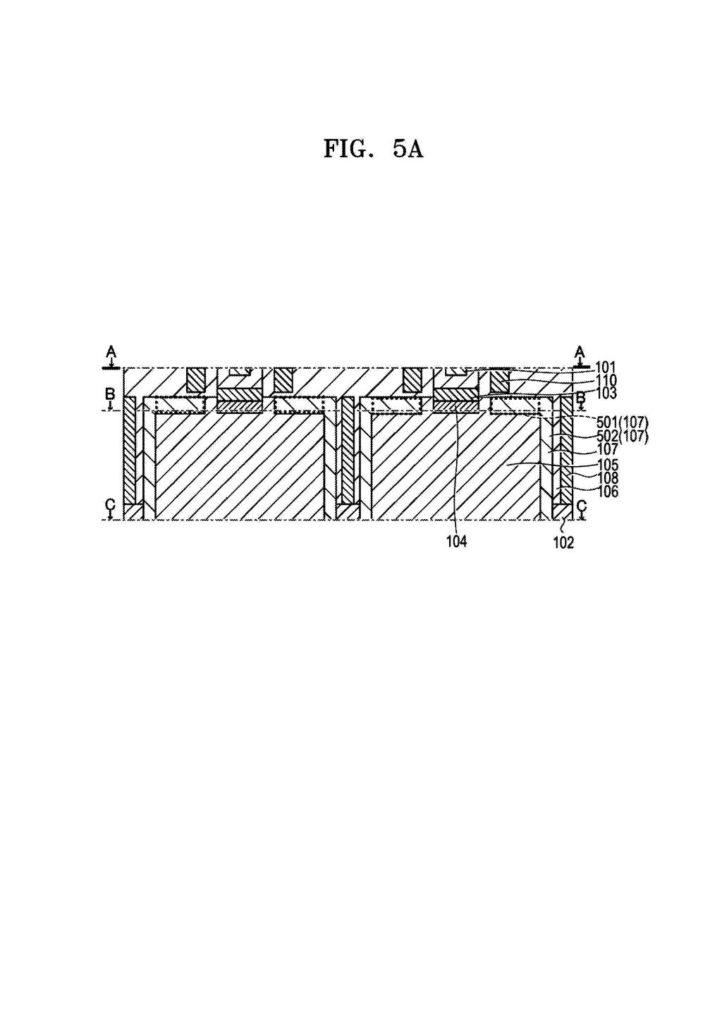
The novel piece here is the gate electrode. Wrapped around the central cathode (the negative terminal of each sensing cell), the gate sits next to a semiconductor layer called the voltage transfer region, separated from it by a thin insulating film. By changing the voltage applied to this gate, the chip can control how much of the anode voltage actually reaches the multiplication region. In other words:
- Higher gate voltage: more voltage reaches the junction, stronger amplification
- Lower gate voltage: less voltage reaches the junction, weaker amplification
This gives the sensor dynamic, per-pixel control over gain without switching hardware or swapping components.
What this means for cameras and medical imaging sensors
For consumer devices, tunable gain in a single sensor could mean cameras that handle high-contrast scenes better, or time-of-flight depth sensors (the kind used for Face ID-style authentication and AR features) that work reliably in both bright sunlight and dim interiors without needing separate hardware modes.
The bigger opportunity is likely in specialized imaging: medical positron emission tomography (PET) scanners, scientific photon-counting instruments, and automotive lidar all use avalanche-type sensors and all benefit from precise, software-adjustable gain. Samsung competes in both consumer image sensors and industrial imaging components, so this patent covers significant ground.
This is a solid, incremental engineering patent on a real problem in sensor design. Tunable gain in avalanche photodetectors is genuinely useful, and the gate-electrode approach is a clean way to achieve it in silicon. It is not a dramatic leap, but it is the kind of careful component-level work that shows up in better cameras and scanners a few product generations later.
There are more where this came from
We read every patent application Big Tech publishes and send you the ones worth knowing. Plain English, free, every week.
The drawings
36 drawing sheets from US 2026/0210759 A1 · click any drawing to enlarge


Want this weekly breakdown for a company we don't cover? Patentlyze Pro →