
Samsung Patents a System That Gives Every App Its Own Battery Budget
Instead of letting apps compete freely for battery power, Samsung's new patent describes a system where the network itself hands each app a specific energy limit and checks whether apps are staying inside it.
How Samsung's per-app power budgeting would work on your phone
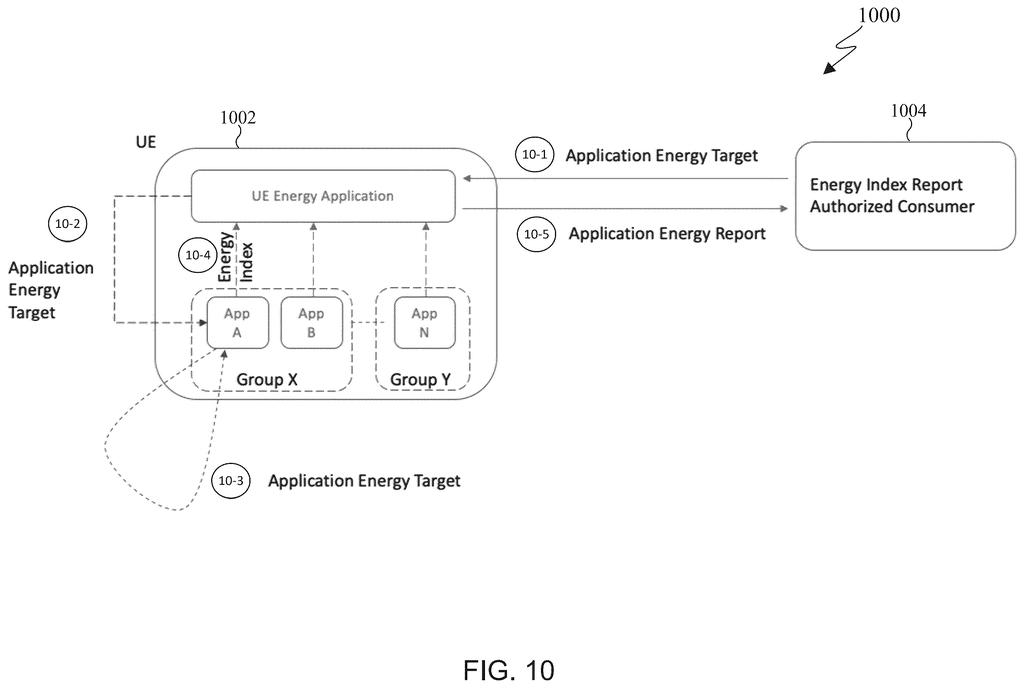
Imagine your phone is running a video call, a navigation app, and a music stream all at once. Right now, each of those apps grabs as much battery power as it wants, and your phone just tries to keep up. Samsung's patent describes a different approach: a central function on the network side groups those apps together, sets a total power budget for the group, and then breaks that budget down into individual targets for each app.
Each app gets configured to stay within its assigned limit. The apps then report back how much energy they actually used, and that information gets rolled up into a group-level report sent back to the network.
This is aimed at phones connected to 5G networks, where energy efficiency is increasingly a stated goal of the standards bodies that govern how networks and devices talk to each other. The idea is to give network operators and device software a shared language for measuring and controlling app-level power use.
How the network assigns and enforces per-app energy targets
The patent describes a chain of coordination between a network-side component called an Energy Information Function (EIF) and the software running on a user's device.
The EIF sends down group energy target information, which defines one or more "application energy groups." Each group is just a collection of apps running on the same device. The device-side software then looks at that group target alongside configuration details for each individual app (things like its expected behavior or priority) and calculates a per-application energy target for every app in the group.
Once those per-app targets are set, the system enforces them by configuring each app not to exceed its limit. The patent doesn't spell out exactly how enforcement works at the app level, but the framing suggests it's handled by software middleware sitting between the operating system and the apps themselves.
Apps then generate Application Energy Index (AEI) reports, which are essentially self-reported power usage summaries. The device aggregates those into a group-level report and sends it back up to the EIF, closing the feedback loop. This two-way flow (targets down, reports up) is the core of the architecture.
What this means for 5G battery life and network energy policy
Battery life is still one of the top complaints from smartphone users, and 5G radios are a known drain. This patent fits into a broader push inside 3GPP (the standards body that defines 5G) to make energy efficiency a first-class feature of the network, not just something device makers handle on their own. If Samsung ships something like this in a future One UI or Exynos platform, it could let carriers or enterprise network operators set energy policies that flow directly down to app behavior on employee or consumer devices.
For you as a user, this could mean your phone burns less battery in predictable ways when connected to a supporting network. The flip side is that it also hands network operators a new lever to constrain how your apps behave, which raises questions about who controls that policy and how transparent it is.
This is a fairly dry infrastructure patent targeting 5G network energy standards, but it's not trivial. Samsung is positioning itself to influence how 5G networks and devices negotiate power budgets, which matters both for consumer devices and for the enterprise and IoT markets where Samsung sells hardware. The real action here is in standardization bodies, not product launches.
There are more where this came from
We read every patent application Big Tech publishes and send you the ones worth knowing. Plain English, free, every week.
The drawings
15 drawing sheets from US 2026/0223010 A1 · click any drawing to enlarge


Want this weekly breakdown for a company we don't cover? Patentlyze Pro →
Be the first to weigh in