
Samsung Patents a System That Lets Each App Set Its Own Battery-Saving Rules
Most phones in low-power mode apply a blunt, one-size-fits-all throttle to every app. Samsung's new patent describes a more surgical approach: each app tells the system how much quality it can afford to lose, and the phone holds that line precisely.
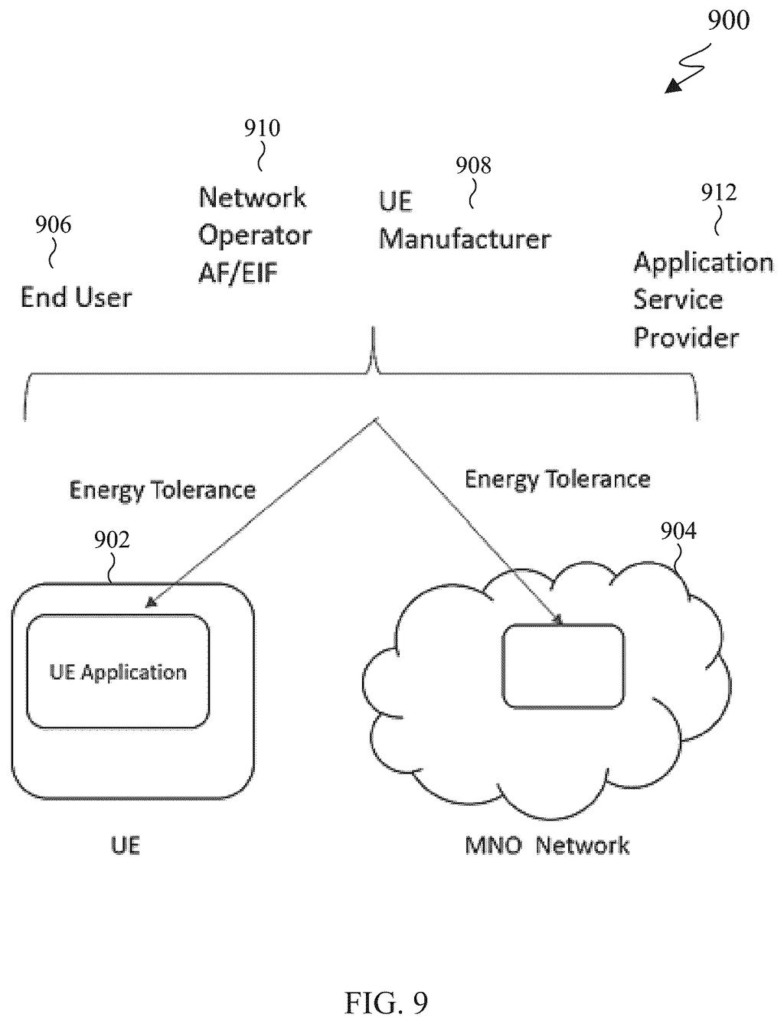
How Samsung's per-app battery tolerance actually works
A video call app runs at full quality while your phone burns through battery. A weather app sitting in the background gets the same treatment. That's how most phones work today, and it's wasteful.
Samsung's patent describes a system where each app comes with its own battery-saving rulebook. A streaming app might say, 'If the battery is low, you can drop my video resolution by one step, but don't cut my audio.' A navigation app might say, 'Slow my map refresh rate, but keep my GPS accurate.' The phone reads those rules and applies them precisely when it needs to conserve power.
The idea is that apps themselves know best what trade-offs their users can tolerate. Instead of the phone guessing, app developers declare their own quality floors, and the network or device enforces them automatically during energy-saving mode.
receiving application energy tolerance information for an application, wherein the application energy tolerance information includes (i) at least one tolerance value indicating an amount of service quality degradation permitted for the application under one or more energy constraints and (ii) at least one service quality level at which the tolerance value is to be applied …
Translation: Apps can specify how much performance they are willing to lose to save power.
How the QoS engine reads tolerance values and enforces them
The patent describes a framework that sits between the network (or device) and the applications running on it. It introduces the concept of application energy tolerance information, a structured set of rules each app can supply that tells the system two things: how much service quality it can lose, and at what point that trade-off should kick in.
Here's how the process works:
- An app (or its developer) submits tolerance values, which define how much degradation is acceptable. Think of these as quality floors: 'I can tolerate a 30% reduction in data throughput, but no more.'
- Those tolerance values are tied to specific service quality levels, so different rules can apply at different energy-constraint thresholds (mild battery saving versus critical low-power mode).
- The system receives energy consumption information from either the user device or a network function (a piece of software in the mobile network that monitors resources).
- When an energy constraint is triggered, the system calculates degraded QoS configurations (quality-of-service settings, meaning the specific network and processing parameters that govern how well an app performs) and enforces them for that app specifically.
The enforcement can happen on the device or at the network level, making this applicable to both local battery management and carrier-side network optimization. The patent comes out of the 5G ecosystem, where network functions can actively manage quality settings per connection.
… determining, based on the application energy tolerance information, degraded quality of service (QoS) configurations for the application at the at least one service quality level, and enforcing the degraded QoS configurations for the application …
Translation: The system automatically dials back app performance based on those custom rules.
What this means for low-power mode on Samsung phones
For users, the practical payoff is a phone that makes smarter trade-offs in low-power mode rather than blunt ones. Right now, battery-saver modes often break real-time features (video calls, live navigation, game connections) that users actually care about, while over-preserving bandwidth for apps that would work fine on a trickle. A per-app tolerance system could mean your video call stays smooth during a commute while a dozen background apps throttle themselves.
For Samsung, this fits into a broader push to differentiate its Android devices and network chipsets on energy efficiency, particularly as 5G connections carry a real battery cost. The patent sits at the intersection of device software and network management, which is territory Samsung can control end-to-end across its phones, modems, and carrier partnerships. The new Big Tech patents flowing out of the 5G power-management space suggest Samsung is not alone in treating per-application energy policy as a competitive layer, not just a background engineering task.
That makes this Samsung filing the 1106th we've tracked in our Samsung coverage since May, adding to work like the wallpaper placement application and the smart home energy check.
The problem this patent addresses is real and underappreciated. Battery-saver modes on smartphones have barely evolved in a decade: they throttle the CPU, cut background refresh, and dim the screen, treating every app the same. For a world running 5G connections that burn significantly more power than 4G, that bluntness costs users something they notice.
The approach here matches the scale of the problem well. Giving apps a way to declare their own quality floors is a practical engineering solution, not an overcomplicated one. It doesn't require users to configure anything, and it doesn't force the system to guess. Developers, who understand their apps better than any operating system heuristic can, set the rules once.
The honest caveat: this only works if app developers actually adopt the tolerance API, and that adoption is never guaranteed. The patent describes the enforcement engine, but the value of the engine depends entirely on how many apps feed it useful data. That's a real-world rollout problem the patent doesn't solve.
Get our take in your Top Stories
Liked this breakdown? Add Patentlyze as a preferred source on Google, and our plain-English take shows up more often in your Top Stories the next time Samsung patent news breaks.
There are more where this came from
We read every patent application Big Tech publishes and send you the ones worth knowing. Plain English, free, every week.
The drawings
18 drawing sheets from US 2026/0255210 A1 · click any drawing to enlarge


Want this weekly breakdown for a company we don't cover? Patentlyze Pro →
Be the first to weigh in