
AMD Patents a Way to Shift Power From Memory to Processors on the Fly
AMD is working on a way to temporarily steal power from your computer's memory and hand it to the processor when the chip really needs it, without noticeably slowing things down.
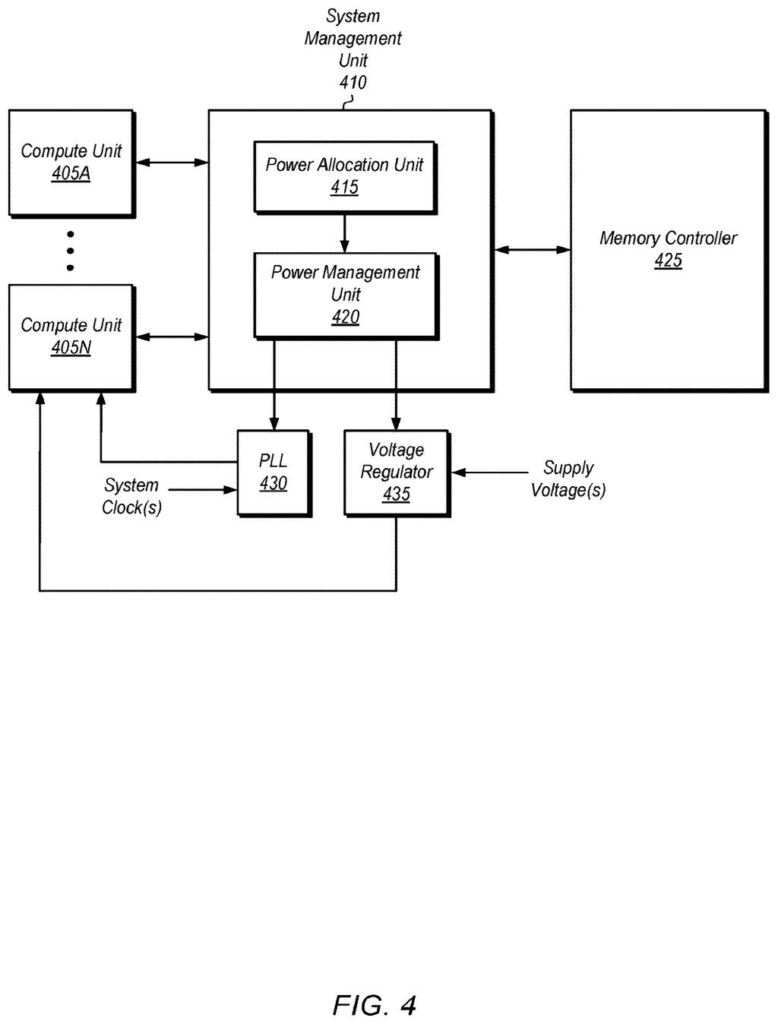
What AMD's memory power-borrowing system actually does
Imagine your laptop has a fixed power budget, like a household circuit breaker. When your processor is working hard on something important, it might actually benefit from more power than it currently gets. The catch is that something else has to give.
AMD's patent describes a system that watches for moments when your processor has a heavy workload, then borrows power from the memory subsystem (the part of the chip that reads and writes data to RAM) and redirects it to the processor. The memory side copes by pausing requests that aren't time-sensitive, while still handling the ones that can't wait.
The result, in theory, is a processor that runs faster during demanding tasks without needing a bigger battery or a louder fan. The memory slowdown is real but brief, and AMD is betting most software won't notice.
How the memory controller sorts critical from non-critical requests
The patent describes a system management unit (a small supervisory controller that sits above the processor and memory) that monitors whether one or more processors have tasks queued up. When it detects a busy workload, it reallocates a portion of the power budget away from the memory subsystem and gives it to the processor cores that need it.
Once that power transfer happens, a memory controller (the hardware that handles all traffic going to and from RAM) steps in and starts triaging incoming memory requests. It separates them into two buckets:
- Critical requests: operations the processor is actively waiting on, processed immediately.
- Non-critical requests: background or lower-priority data fetches that can be delayed briefly without stalling the workload.
By delaying only the non-critical requests, the memory subsystem can operate within its reduced power envelope without creating a bottleneck the user would feel. When the processor's workload eases, the power allocation shifts back, and the memory system clears its backlog.
All 20 claims listed in the filing have been canceled, which typically happens during patent prosecution when claims are amended or refiled. The core idea is still documented in the abstract and specification.
What this means for AMD chips in power-limited devices
For power-constrained devices like laptops, handheld gaming PCs, and mobile workstations, every milliwatt matters. A system that can dynamically shift power between chip components without a performance cliff is genuinely useful for sustained workloads, things like video rendering, gaming, or compiling code where the processor is the bottleneck and memory is momentarily idle enough to spare a little.
This also fits AMD's broader push into integrated chip designs where the processor and memory share a tight power budget. If this technique works as described, it could let AMD extract more peak CPU performance from the same thermal design without changing the hardware at all, just the firmware logic that governs power allocation.
This is a solid, unglamorous piece of power management engineering. It won't show up in a product keynote, but the kind of dynamic power shuffling AMD is describing here is exactly how modern chips squeeze out extra performance headroom in thin-and-light devices. The canceled claims make the filing look incomplete at this stage, so it's more of a documented technique than an imminent feature.
There are more where this came from
We read every patent application Big Tech publishes and send you the ones worth knowing. Plain English, free, every week.
The drawings
8 drawing sheets from US 2026/0219926 A1 · click any drawing to enlarge


Want this weekly breakdown for a company we don't cover? Patentlyze Pro →