
Meta Patent Targets Weak Blood-Oxygen Readings on Wearables With Automatic Fix
Blood-oxygen sensors on wearables often fail silently when light signal gets too weak, giving you a bad reading or no reading at all. Meta's new patent describes a system that catches that problem in real time and automatically dials up its sensitivity to compensate.
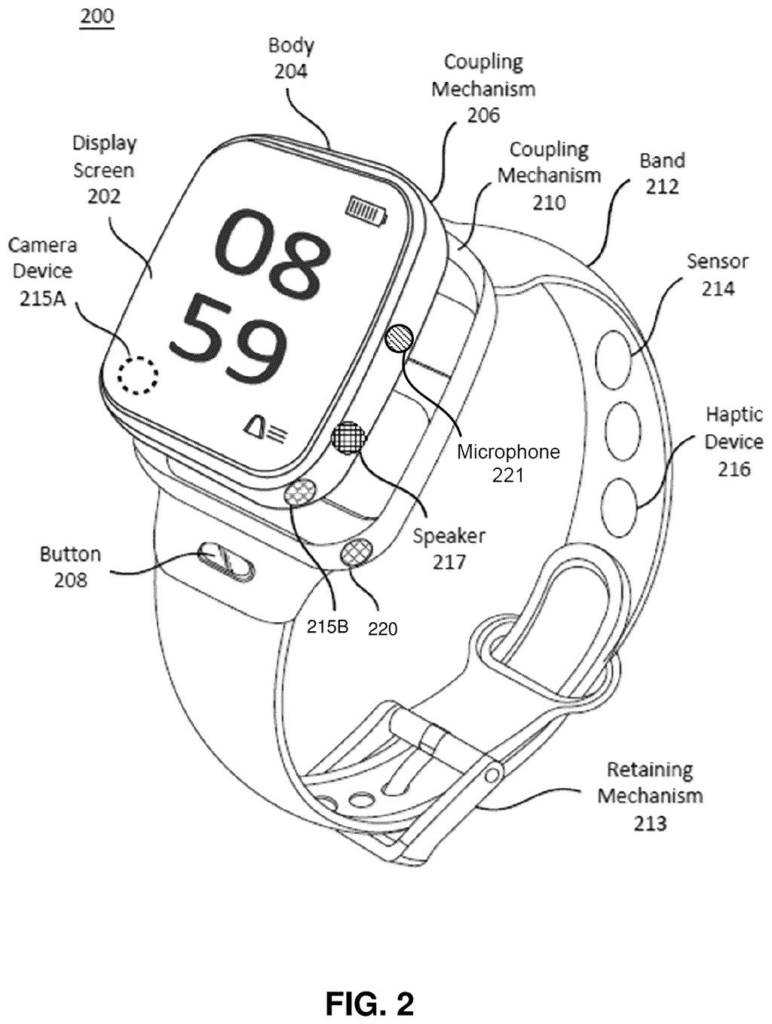
What Meta's adaptive oxygen sensor actually does
Imagine you're wearing a fitness band and it's trying to measure your blood-oxygen level, but the sensor is getting a faint return signal because your skin is darker, the fit is slightly loose, or you're moving around. Instead of giving you a bad number, most devices just fail. Meta's patent describes a wearable that detects when that signal is too weak and immediately responds.
When the light coming back to the sensor drops below a set threshold, the device does two things at once: it starts taking readings more frequently, and it strips away a background electrical interference (called an "analog offset") that can drown out a faint signal. Think of it like turning up the microphone sensitivity in a noisy room while also cutting the background hiss.
The result is that the device keeps trying to get you a usable oxygen reading even in conditions where the sensor would normally give up. It's a reliability fix, not a new sensor.
How the sensor adjusts sampling rate and analog offset
The patent covers a wearable equipped with a light source, a light sensor, and processing logic that watches the quality of incoming readings in real time.
In normal operation, the device shines light into the skin and measures how much bounces back. The ratio of absorbed versus returned light at different wavelengths tells the device what percentage of your hemoglobin is carrying oxygen (your SpO2, or blood-oxygen saturation level).
The key invention is a two-part automatic rescue mode that kicks in when the returning light signal falls below a defined threshold:
- Higher sampling rate: the sensor takes readings more frequently, giving the processing logic more data points to average out noise and improve accuracy.
- Reduced analog offset: the circuit subtracts a baseline electrical value (an offset that's normally added to keep readings in a workable range) so that the weak signal doesn't get clipped or lost in the noise floor of the electronics.
These two adjustments work together. More frequent sampling captures more signal, and reducing the analog offset means those faint samples are measured at a scale where they're actually distinguishable from zero.
What this means for Meta's smart glasses health ambitions
Blood-oxygen measurement is one of the harder health metrics to do reliably on a wrist or face-worn device, especially across different skin tones and wearing conditions. A sensor that adapts its own sensitivity automatically rather than just failing could meaningfully improve accuracy without requiring the user to reposition the device or hold still.
Meta has been building health features into its Ray-Ban smart glasses line and is widely reported to be working on future versions with more sensing capabilities. A patent like this, focused on optical signal reliability, fits that direction. For you as a potential user, it means fewer "couldn't get a reading" errors during workouts or in real-world conditions where a perfectly calibrated fit isn't guaranteed.
This is a focused engineering improvement, not a headline feature. But getting blood-oxygen readings right in a glasses form factor, where fit and skin contact are far less controlled than a watch, is a genuinely hard problem. If Meta is seriously pursuing health sensing on face-worn devices, patents like this are exactly the kind of foundational work that has to happen first.
There are more where this came from
We read every patent application Big Tech publishes and send you the ones worth knowing. Plain English, free, every week.
The drawings
6 drawing sheets from US 2026/0215706 A1 · click any drawing to enlarge


Want this weekly breakdown for a company we don't cover? Patentlyze Pro →
Be the first to weigh in