
Samsung Patents a Smart Ring That Knows Which Way You're Wearing It
A smart ring that doesn't know which way it's sitting on your finger can give you wildly wrong health readings. Samsung's latest patent tackles that problem directly.
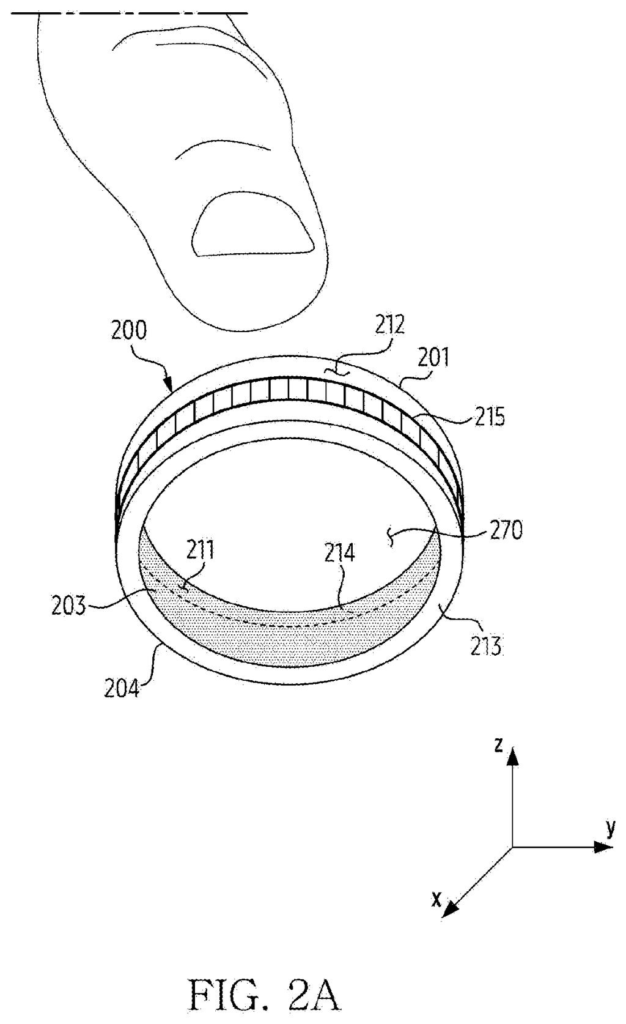
Why Samsung's ring needs to know which way it's on your finger
Imagine putting on a ring in the dark and not quite knowing if the sensor is pointing toward your palm or toward your knuckle. For a regular ring, that doesn't matter. For a health-tracking ring, it matters a lot, because the optical sensors inside need to be in the right position against your skin to accurately read your heart rate, blood oxygen, and sleep patterns.
Samsung's patent describes a smart ring with two separate light-detecting sensors placed at different spots inside the band. The ring shines light through a transparent inner surface onto your finger, then compares how much light each sensor picks up. Because your finger's skin, tissue depth, and curvature look different depending on which way the ring is oriented, those two readings together tell the ring exactly how it's positioned.
The practical benefit is that the ring can then correct its sensor readings automatically, or alert you to flip it around, rather than silently giving you inaccurate health data. You get accurate numbers without having to think about how you put the ring on.
How two light sensors figure out the ring's orientation
The patent describes a ring housing with two distinct layers: an outer shell and a partially transparent inner band that faces your finger. A single light emitter shines light inward through that transparent surface, and two separate light receivers (photodetectors placed at different positions around the ring's inner circumference) each capture the light that reflects back from your finger's tissue.
The core insight is that reflected light signals differ depending on where each sensor sits relative to your finger. Skin on the palm side of your finger behaves differently under light than skin on the knuckle side, due to differences in tissue thickness, blood vessel distribution, and skin tone. By comparing the first signal and second signal from the two receivers, the ring's processor can calculate which way it's oriented.
The claim is deliberately broad: the patent doesn't specify a single algorithm, leaving Samsung room to use simple signal-ratio comparisons or more involved machine-learning classification. What matters is the two-sensor architecture itself.
- Light emitter fires through the transparent inner housing
- Two receivers capture reflected light at different positions
- Processor compares the two readings to determine orientation
- Orientation data can then correct or flag health sensor output
What this means for Samsung Galaxy Ring accuracy
Samsung already sells the Galaxy Ring, and one known limitation of any ring-form health tracker is that users often put them on casually without checking orientation. If the optical heart rate sensor ends up on the wrong side of your finger, every reading it takes is less reliable. This patent gives Samsung a hardware-and-software path to fix that problem without adding extra buttons or requiring a specific visual guide on the band.
For you as a user, it means one less thing to worry about when you roll out of bed and put your ring on half-asleep. The ring figures it out. That kind of quiet correction is exactly what separates a device people trust from one they eventually stop wearing.
This is a practical, well-scoped patent solving a real problem that every optical ring tracker faces. It's not flashy, but it directly addresses a gap in sensor reliability that affects every Galaxy Ring user today. If Samsung ships this in a future Galaxy Ring generation, it could meaningfully improve health-data accuracy without changing anything about how you use the device.
There are more where this came from
We read every patent application Big Tech publishes and send you the ones worth knowing. Plain English, free, every week.
The drawings
39 drawing sheets from US 2026/0219742 A1 · click any drawing to enlarge


Want this weekly breakdown for a company we don't cover? Patentlyze Pro →
Be the first to weigh in