
Smart Ring Patent Enables Gesture Control of Linked Devices
Samsung is working on a way to use its smart ring as a gesture remote for other gadgets, but with a clever twist: the ring only starts listening for a movement after you deliberately touch it first.
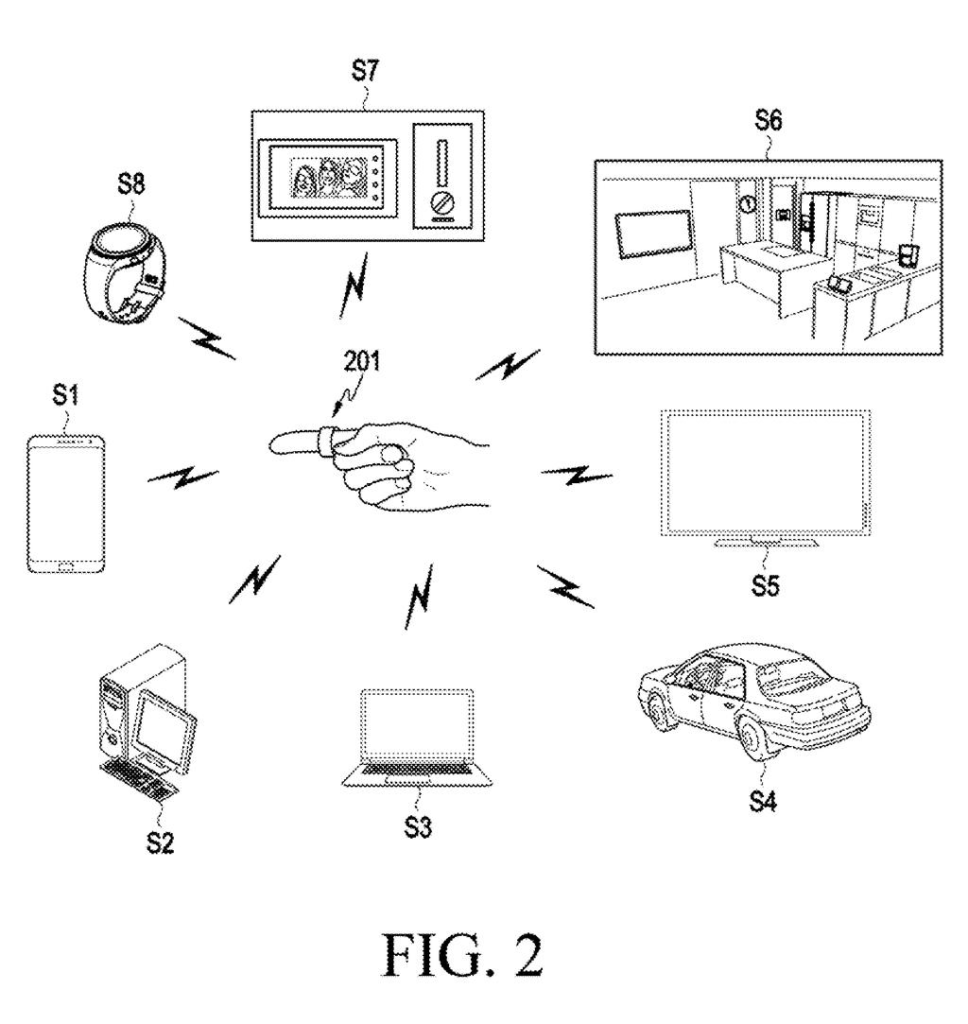
What Samsung's touch-then-gesture ring control actually does
Imagine trying to control your TV with hand gestures, but every time you scratch your nose or reach for your coffee, the TV does something weird. That accidental-input problem is exactly what this patent is trying to solve.
Samsung's idea is a two-step system built into a ring-shaped wearable. First, you touch the ring itself to tell it you're about to do something on purpose. Only after that tap does the ring start watching for a hand gesture using its motion sensor. It then sends that gesture wirelessly to a connected device, like a phone, TV, or tablet, to trigger an action.
Think of it like pressing a walkie-talkie button before you speak. The touch is your "I mean it" signal, and the gesture that follows is the actual command. It keeps everyday hand movements from being misread as instructions.
How the ring's two-sensor system filters real gestures
The patent describes a ring-shaped wearable with two distinct types of sensors working in sequence. The first is a touch sensor on the ring's surface that detects when you physically press or tap the device. The second is a motion sensor (likely an accelerometer or IMU, a chip that tracks orientation and acceleration) that picks up hand and finger movement.
The key design choice is that the motion sensor only becomes active after the touch sensor fires. This is sometimes called a "gated" input approach: one signal unlocks another. Without the initial touch, the ring ignores all physical movement entirely.
- User touches the ring's surface, activating gesture-detection mode
- Ring's motion sensor records the subsequent hand movement as a gesture
- Gesture data is encoded and transmitted wirelessly to a paired device
- The paired device interprets the gesture and executes the corresponding action
The communication circuitry referenced in the patent handles that wireless handoff, most likely via Bluetooth. The patent doesn't specify which gestures map to which actions, leaving that to the connected device's software.
What this means for Galaxy Ring as a device remote
The biggest practical problem with always-on gesture control is false positives: your device doing things you didn't ask it to do. By requiring a deliberate touch before the ring listens for movement, Samsung's approach cuts down on those accidental triggers without making the interaction feel complicated. That's a real usability improvement for a form factor where you can't rely on a screen to confirm what you're doing.
Samsung already sells the Galaxy Ring, so this patent fits neatly into an existing product line rather than hinting at something entirely new. If this control scheme ships, it could position the Galaxy Ring as a practical input device for controlling Galaxy phones, tablets, or even a TV, not just a fitness tracker you happen to wear.
This is a sensible, well-scoped idea rather than a flashy one. The two-step touch-then-gesture input solves a real problem that has made gesture wearables feel unreliable in the past. It won't make headlines, but it's exactly the kind of thoughtful interaction design that determines whether a device becomes a daily habit or a drawer decoration.
There are more where this came from
We read every patent application Big Tech publishes and send you the ones worth knowing. Plain English, free, every week.
The drawings
14 drawing sheets from US 2026/0219749 A1 · click any drawing to enlarge


Want this weekly breakdown for a company we don't cover? Patentlyze Pro →
Be the first to weigh in