
Nvidia Patents a Fix for How Games Track Motion Through Glass and Water
When a character runs behind a glass window or swims underwater in a video game, the engine often gets confused about where they actually are. Nvidia has a patent for a system that uses light simulation to figure it out correctly.
What Nvidia's refractive motion fix actually does
Picture a fish tank in a game. The fish inside looks shifted and distorted because the glass bends light, just like in real life. The problem is that modern game engines use something called motion vectors to track where things move between frames, and those vectors assume light travels in straight lines. Glass, water, and ice all bend light, which throws the math off.
When motion vectors go wrong, you get blurry ghosting, flickering edges, or smeared details around anything seen through a transparent surface. It's one of those subtle issues you might not notice by name, but you definitely notice it as "something looks off."
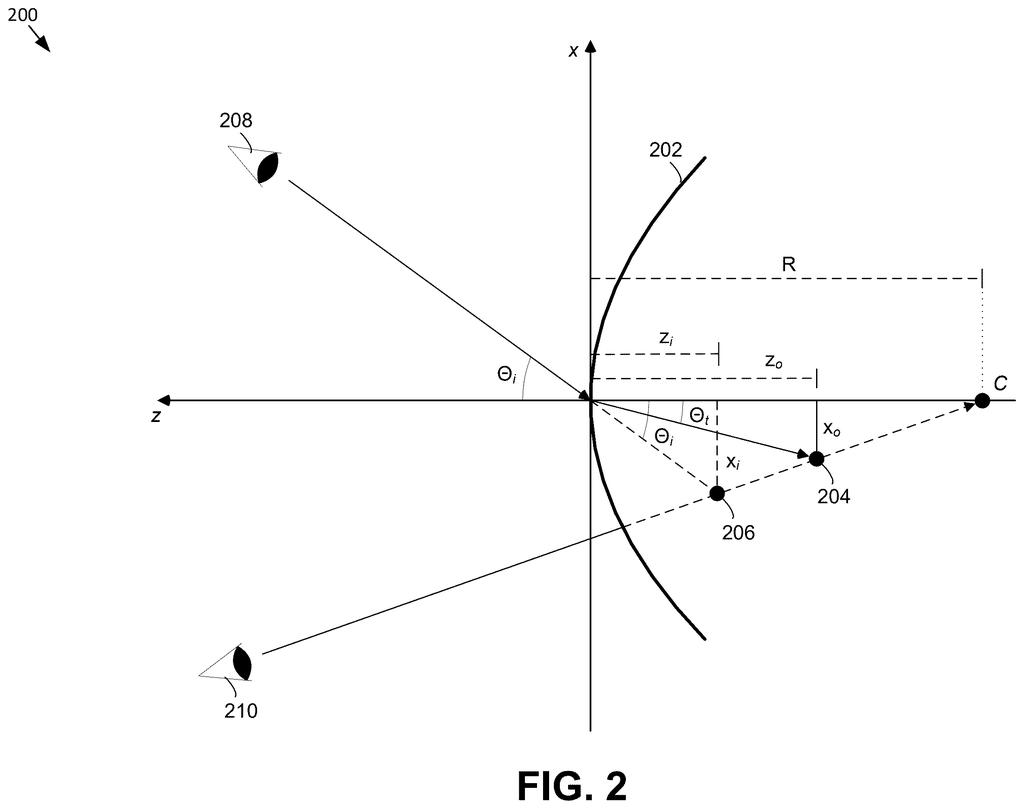
Nvidia's patent describes a system that fires simulated light rays through the refractive surface, figures out where the object appears to be from the camera's point of view (accounting for the bending), and uses that corrected position to generate accurate motion vectors. The result is that upscaling and temporal effects can work properly even when the camera is looking through something that distorts light.
How light-path sampling builds the transformation map
The patent covers a rendering pipeline component that handles motion vector estimation for refractive surfaces. Motion vectors are per-pixel arrows that tell the GPU where each part of the image moved from one frame to the next. They are essential for temporal upscaling technologies like DLSS, TAA (temporal anti-aliasing), and motion blur.
The problem is that a standard motion vector just tracks where an object's geometry moved in 3D space. It does not account for the fact that a refractive surface (glass, water, ice, a lens) bends the light path between that object and the camera, making the object appear to be somewhere it physically is not.
Nvidia's approach involves:
- Identifying which objects in a scene sit behind a refractive surface
- Sampling light paths through that surface using ray tracing to build a transformation data structure, essentially a lookup table that maps real positions to apparent (refracted) positions
- Using that map to compute where the object's image will appear on screen, not where the object actually is
- Generating motion vectors based on how that apparent image position moves frame to frame
The transformation data structure is the key invention. Rather than re-tracing every pixel every frame, the system builds a compact representation of how the refractive surface distorts space, then reuses it to warp motion vectors efficiently.
What this means for real-time rendering quality
For anyone who plays games or uses real-time 3D software, this matters most in scenes involving water surfaces, frosted or clear glass, car windows, or any transparent material. These are exactly the spots where temporal upscalers like DLSS tend to produce artifacts, because the motion data feeding them is wrong. A fix at the motion vector level cleans up the problem at the source rather than patching it afterward.
For Nvidia specifically, DLSS is a major selling point for its GPU lineup, and keeping it artifact-free in increasingly complex scenes is an ongoing engineering challenge. A more accurate motion vector system for refractive surfaces would improve DLSS quality in precisely the kinds of detailed environments (underwater levels, rain-soaked city streets, interior scenes with glass walls) that appear in modern games.
This is a focused, practical fix for a known weak spot in temporal rendering, not a conceptual moonshot. The refractive surface problem is well-documented among graphics engineers, and Nvidia is essentially patenting a ray-tracing-based solution that fits neatly into its existing DLSS pipeline. If this ships in a future driver or SDK update, most players will never know it happened, but they will see cleaner images.
There are more where this came from
We read every patent application Big Tech publishes and send you the ones worth knowing. Plain English, free, every week.
The drawings
5 drawing sheets from US 2026/0220787 A1 · click any drawing to enlarge


Want this weekly breakdown for a company we don't cover? Patentlyze Pro →
Be the first to weigh in