
Nvidia Patents Software That Rewrites Its Own Picture-Enhancing Rules for Every Scene
Most image-quality improvements in PC graphics require developers to change their games. Nvidia's new patent describes a way for the driver itself to intercept and rewrite display instructions on a frame-by-frame basis, with no changes needed from the app.
What Nvidia's per-frame image processing trick actually does
Imagine your phone's camera app applies different filters depending on whether you're shooting a sunset or a face, without you doing anything. This Nvidia patent works on a similar idea, but for your PC's graphics card.
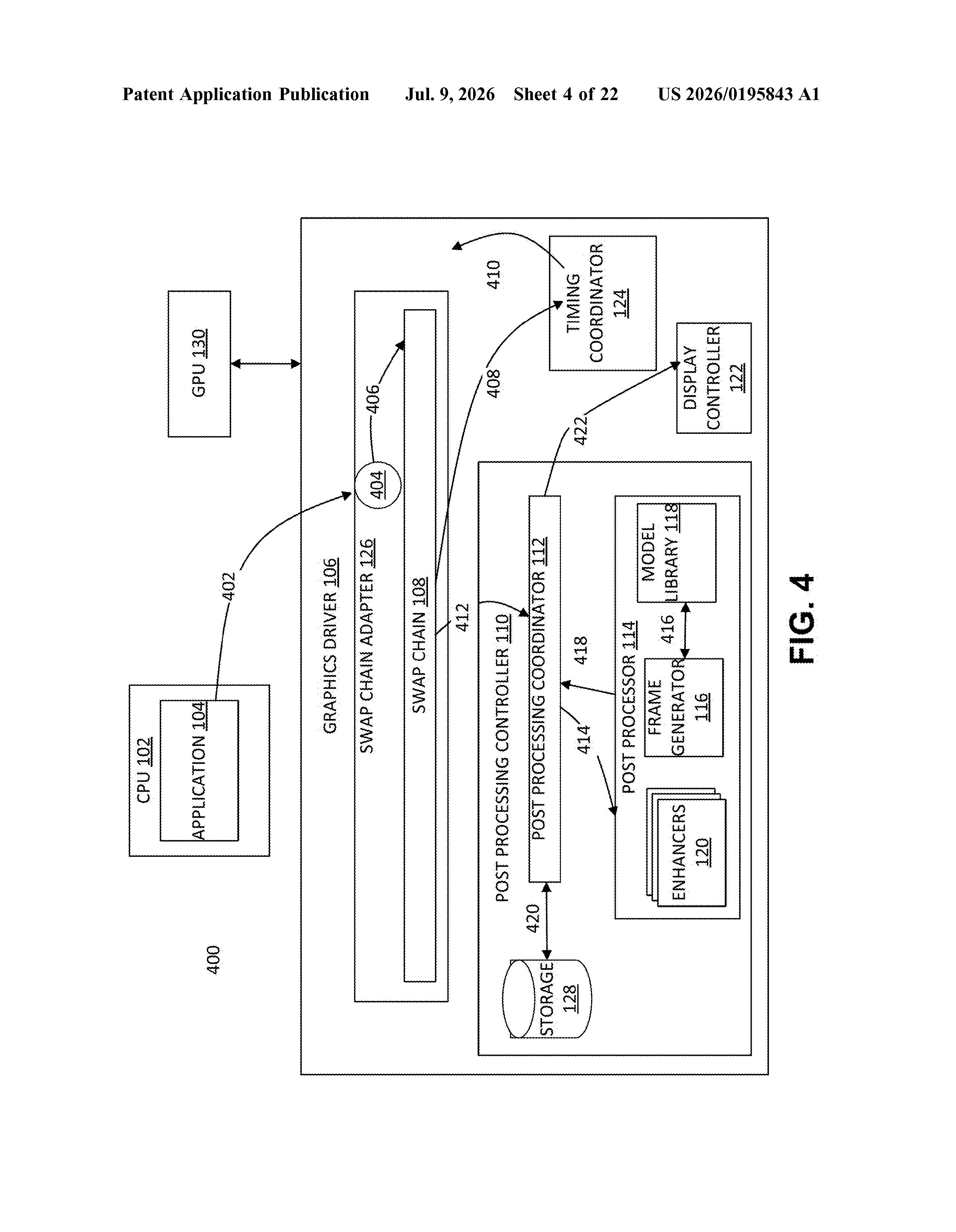
Right now, when a game sends a finished frame to your screen, the graphics driver mostly just passes it along. This patent describes a layer inside the driver, called a swap chain adapter, that stops the frame before it reaches your display, looks at information the app attached to it, and decides what kind of extra image processing to apply based on what's actually in that frame.
The result is that sharpening, upscaling, color correction, or other visual improvements can be applied intelligently and automatically, tailored to each individual frame, without the game developer having to build any of that in.
How the swap chain adapter rewrites display commands mid-flight
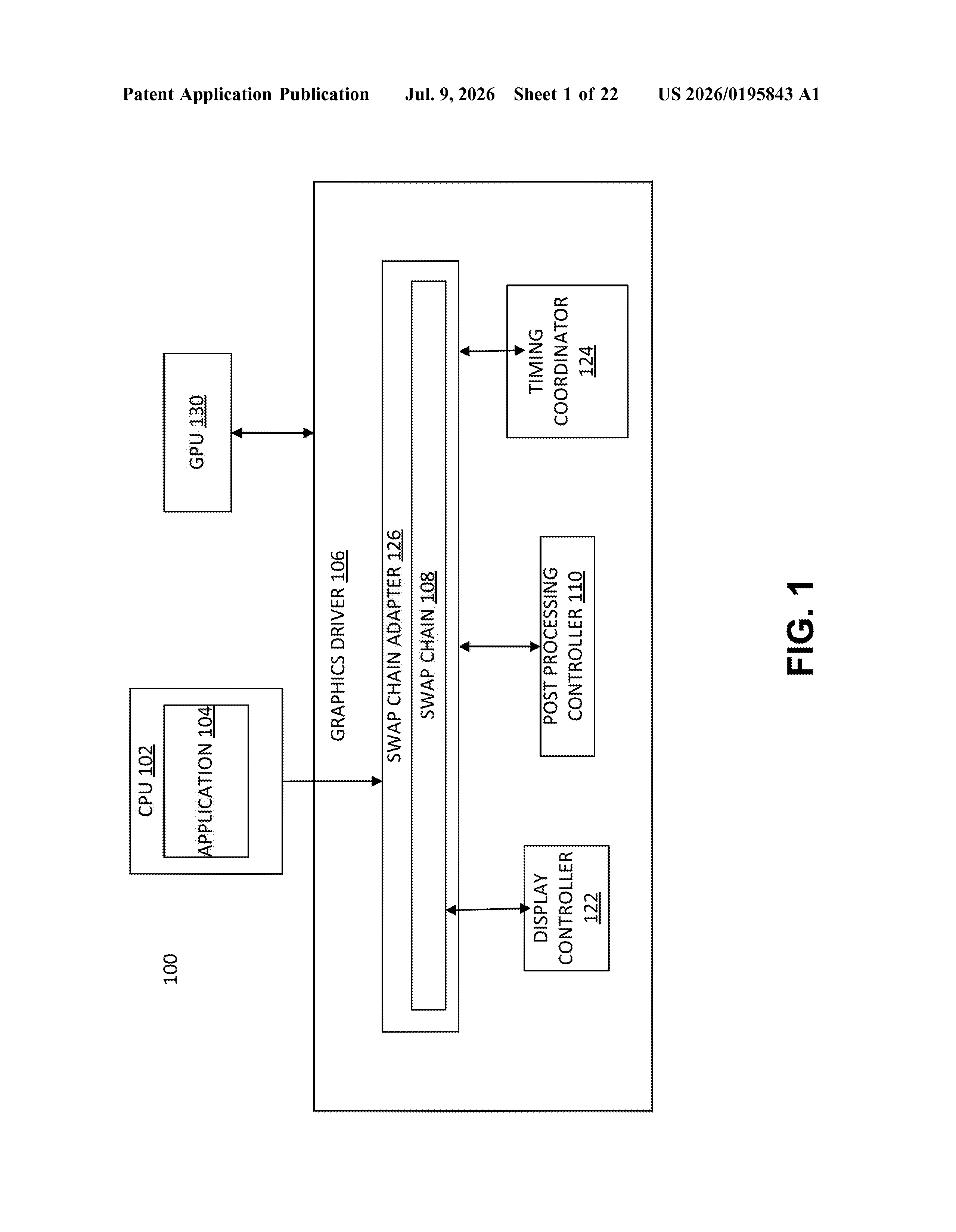
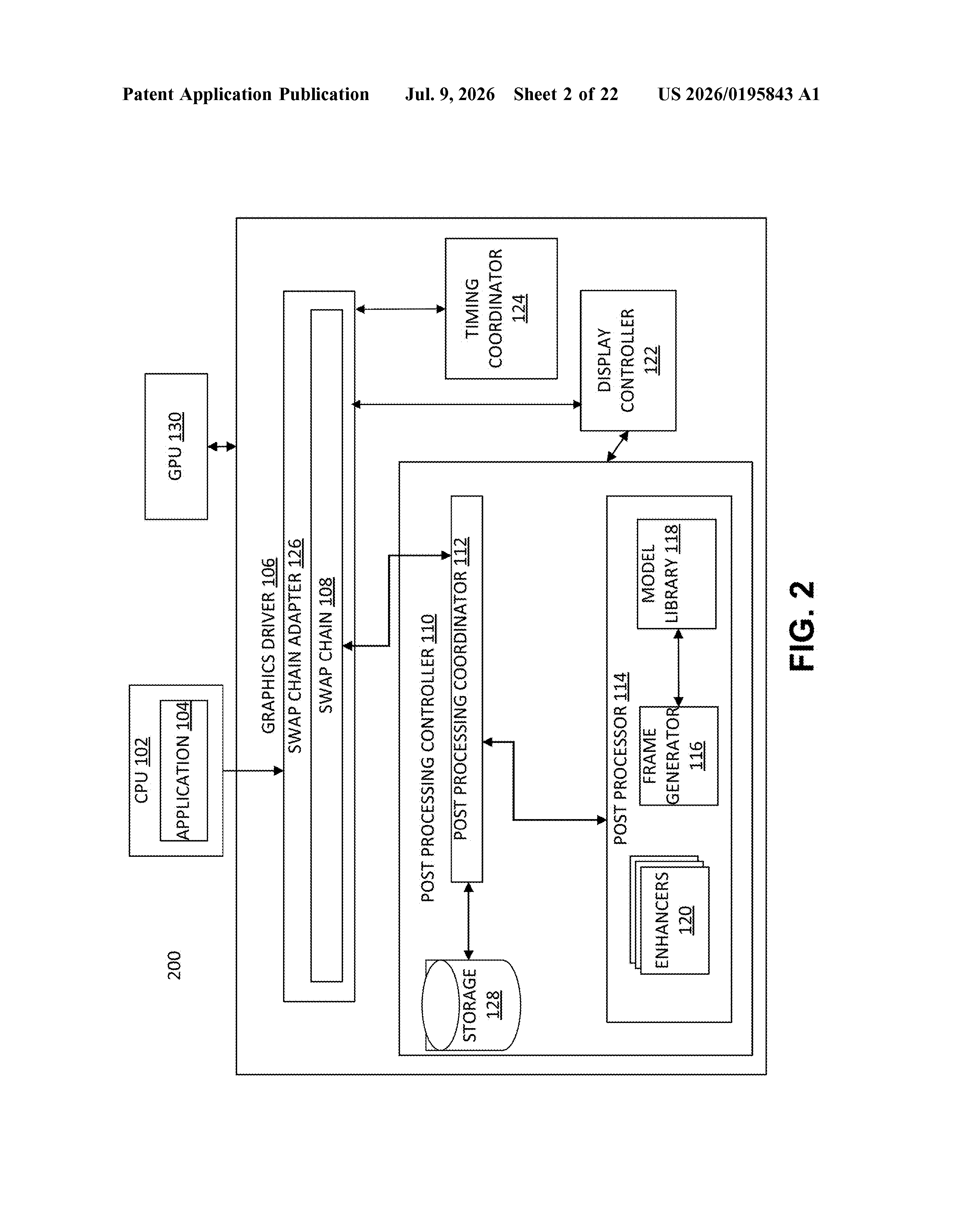
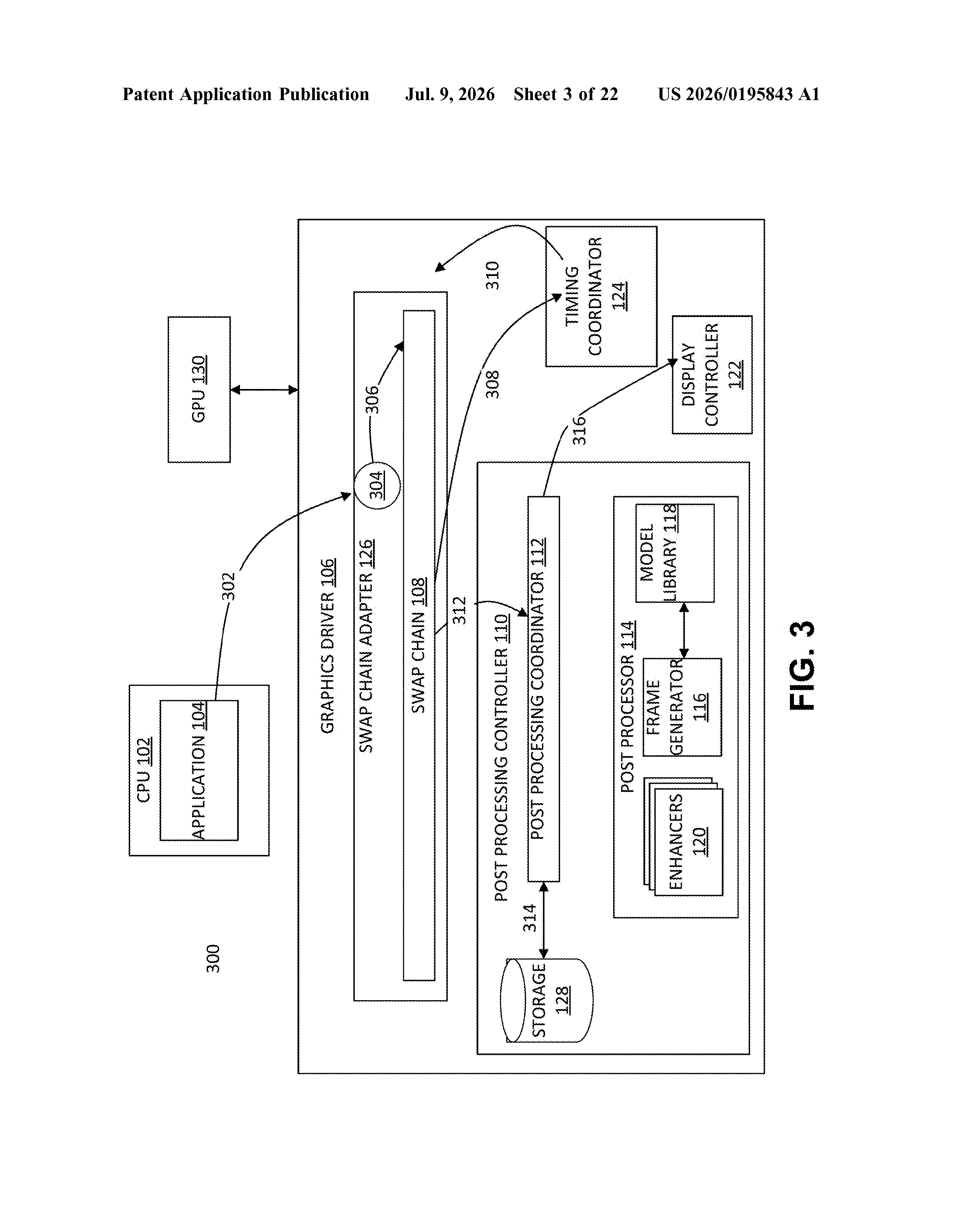
The patent centers on a component called a swap chain adapter, which sits inside the graphics driver between the application (say, a game) and the swap chain (the system that manages which frame gets sent to the display next).
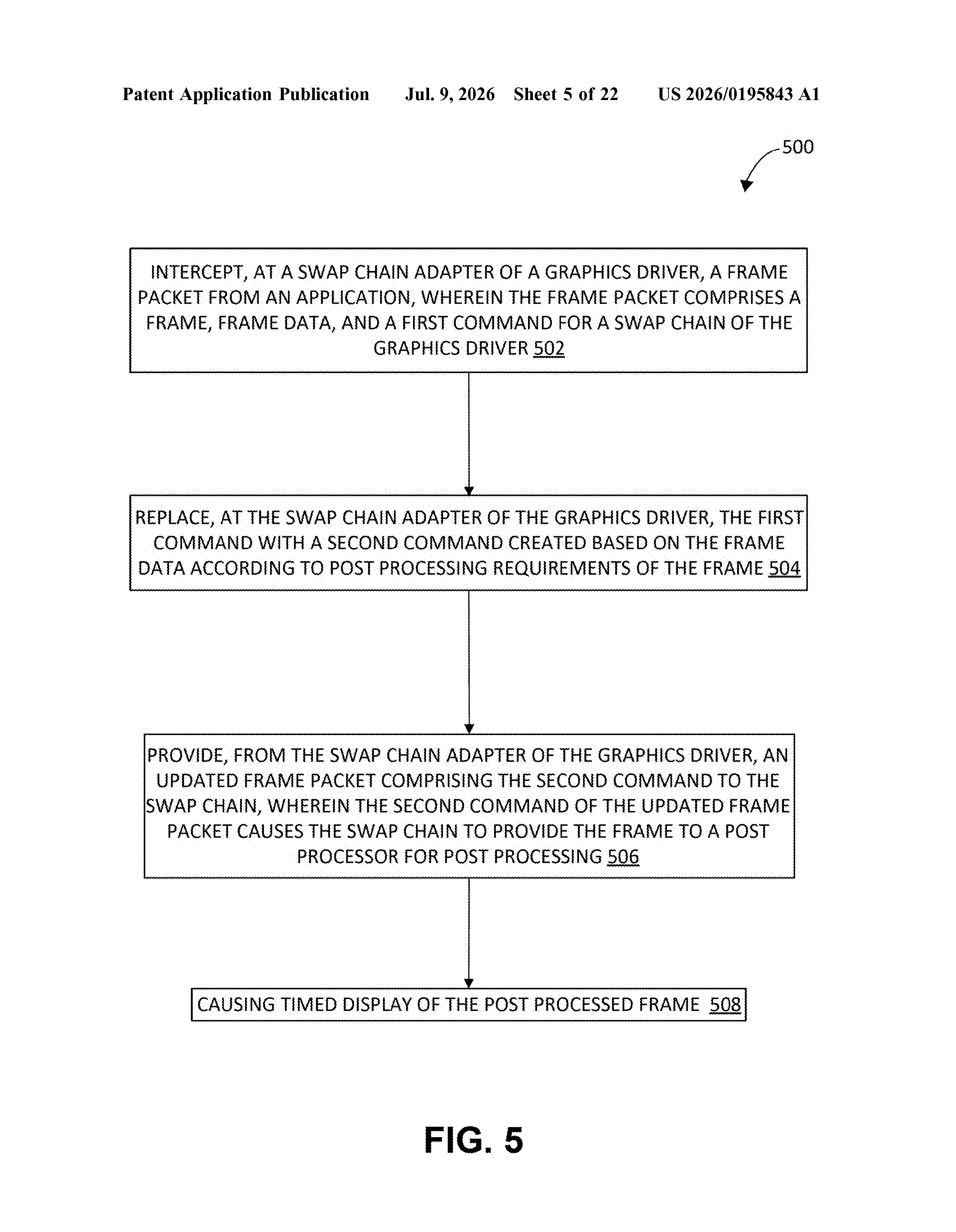
When the game sends a frame packet (a bundle containing the rendered image plus metadata the game attached to it), the swap chain adapter intercepts it. It reads the frame data (things like scene type, motion vectors, or rendering mode hints) and uses that information to replace the game's original display command with a new one that specifies exactly which post-processing operations should be applied to that specific frame.
The updated packet, now carrying the new command, gets handed to the swap chain. The swap chain then routes the frame to a post processor, which could handle tasks like:
- Upscaling (making a lower-resolution frame look sharper)
- Temporal smoothing (reducing flicker between frames)
- Color or tone mapping adjustments
After post-processing, the finished frame is displayed with timed precision to keep animation smooth. The whole process happens inside the driver, invisible to the application and user.
What this means for GPU image quality without touching the game
The practical value here is that Nvidia could push image-quality improvements to any application, not just games designed to support them. Because the interception happens at the driver level, an older game, a productivity app, or a video player could all benefit from frame-level post-processing without a single line of code being updated by the developer. For you as a user, that means better-looking output from software that may never be patched again.
For Nvidia, this is also a way to keep features like upscaling or AI-based sharpening active even when apps don't explicitly opt in. It fits neatly into the company's existing push to make GPU capabilities available at the driver layer, and it gives Nvidia more control over the final image quality its hardware produces regardless of what the software above it is doing.
This is the kind of patent that looks dry on paper but has real teeth. If Nvidia ships something like this, it means driver-level post-processing could improve the look of practically any software running on a GeForce GPU, not just titles with built-in DLSS support. That's a meaningful expansion of what a graphics driver can do.
Get our take in your Top Stories
Liked this breakdown? Add Patentlyze as a preferred source on Google, and our plain-English take shows up more often in your Top Stories the next time Nvidia patent news breaks.
There are more where this came from
We read every patent application Big Tech publishes and send you the ones worth knowing. Plain English, free, every week.
The drawings
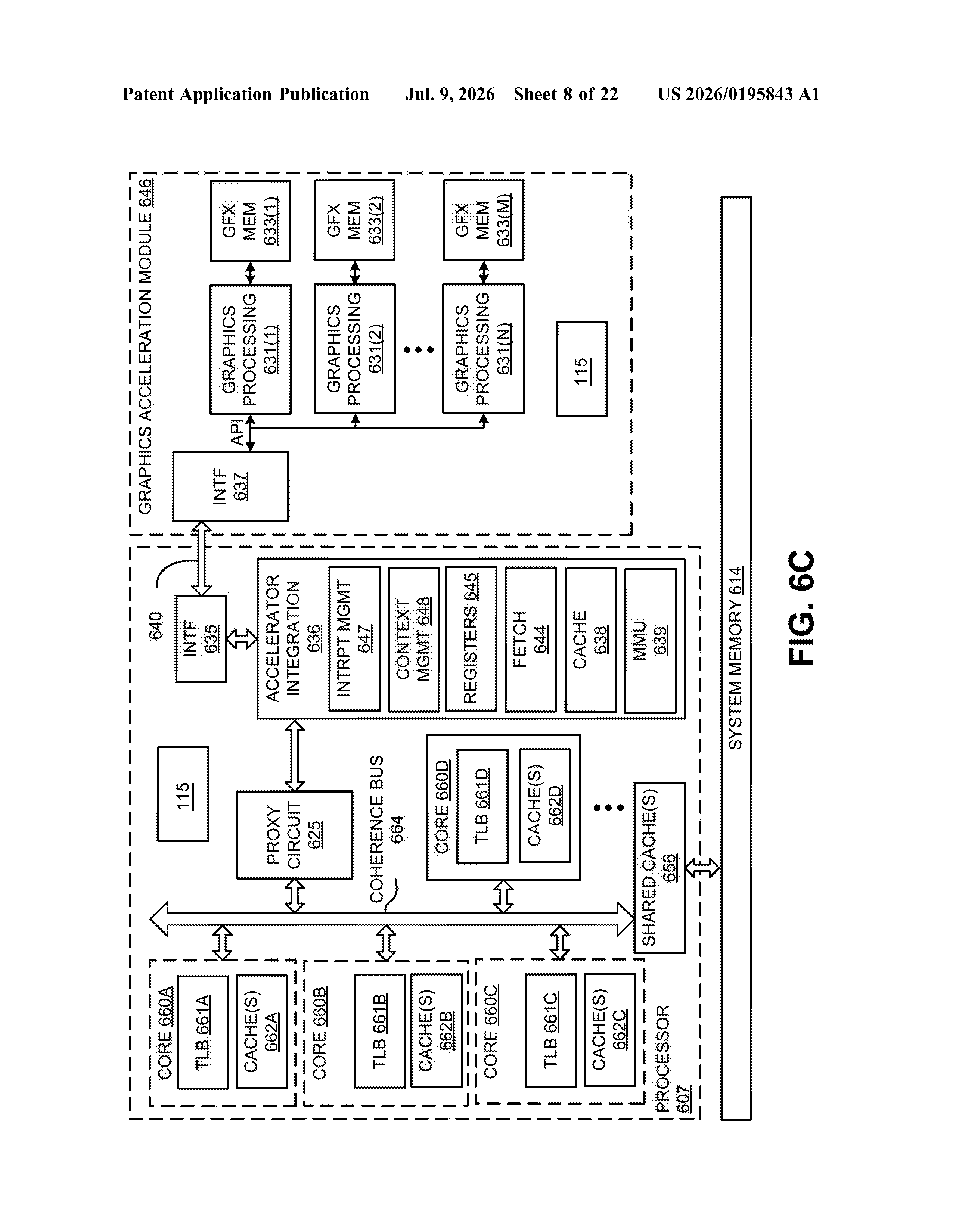
22 drawing sheets from US 2026/0195843 A1 · click any drawing to enlarge
Want this weekly breakdown for a company we don't cover? Patentlyze Pro →