
Intel Patents a Translator That Lets Computers Talk Directly to Microphones and Speakers
Inside most smartphones, audio chips talk to the processor over a specialized low-power bus called SoundWire. Intel's new patent describes a small bridge device that lets standard USB connections speak that same language.
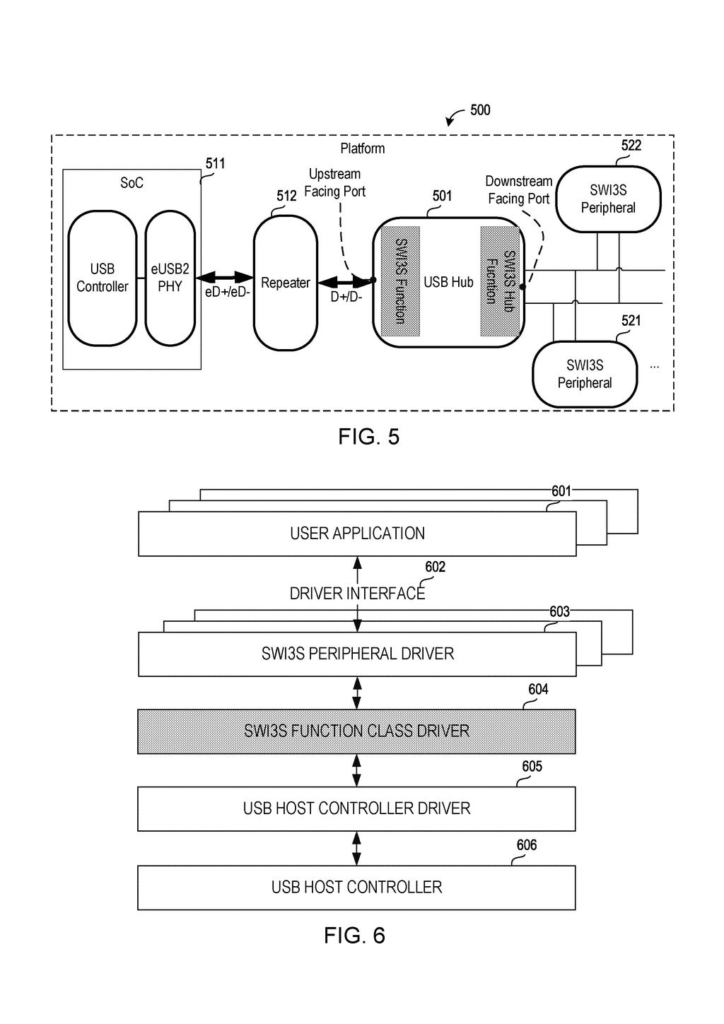
What Intel's USB-to-audio-bus bridge actually does
Imagine your laptop's USB port trying to talk to a microphone or speaker chip that only speaks a completely different language. Right now, those two sides usually need a processor in the middle that already understands both. Intel's patent describes a dedicated translator device that sits between the two.
On one side, your computer sends audio data over a regular USB connection. On the other side, the bridge converts that data into a format called SoundWire, a compact audio protocol designed for phones and mobile chips. The bridge works both ways: audio coming in from a microphone travels back through the bridge as USB data to the host computer.
The practical result is that PC makers and accessory designers could wire up mobile-style audio hardware, the kind typically found inside smartphones, to standard USB ports without redesigning the whole signal chain. It's a plumbing fix, not a feature.
How the bridge translates USB traffic to SoundWire signals
The patent describes a three-part device: an upstream-facing port (the USB side, talking to a host like a laptop or hub), at least one downstream-facing port (the audio bus side, talking to microphones, speakers, or codecs), and processing circuitry that shuffles data between them.
The audio bus protocol referenced is MIPI SoundWire, a low-power, low-pin-count serial bus developed by the MIPI Alliance and widely used in mobile chips. It is the standard way smartphone SoCs talk to audio codecs. USB, by contrast, is a much more general-purpose interface built for computers and peripherals.
The bridge handles traffic in both directions:
- Audio data arriving via USB transactions is unpacked and forwarded to SoundWire peripherals downstream.
- Audio data captured by those peripherals is received over SoundWire and repackaged as USB transactions heading upstream.
The claim is technology-agnostic enough to cover any audio bus protocol, but the patent title and classification make clear the target is SoundWire specifically. This kind of bridge is most useful when a PC platform wants to reuse mobile-ecosystem audio silicon without native SoundWire support on the host controller.
What this means for audio hardware on PCs and phones
SoundWire is already the dominant audio bus inside Intel's own mobile PC chips, so this patent likely targets external peripherals, docking stations, or USB audio adapters that need to chain additional SoundWire devices beyond what the host SoC directly supports. For everyday users, this is the kind of infrastructure work that makes a new headset or microphone array just work when you plug it in.
For hardware designers, a standardized USB-to-SoundWire bridge lowers the cost of adding high-quality, low-power audio to accessories that connect over USB. It also means audio codec vendors who already build for the mobile market could reach PC accessories without designing an entirely separate interface.
This is unglamorous plumbing work, but Intel's audio ecosystem strategy depends on it. SoundWire is already in nearly every Intel laptop chip, and extending it cleanly over USB to external peripherals is a logical next step. Don't expect a press release, but do expect this to show up in a future USB audio adapter spec.
There are more where this came from
We read every patent application Big Tech publishes and send you the ones worth knowing. Plain English, free, every week.
The drawings
4 drawing sheets from US 2026/0220075 A1 · click any drawing to enlarge


Want this weekly breakdown for a company we don't cover? Patentlyze Pro →