
Qualcomm Patents a Car Audio System That Changes What You Hear Based on Where You're Sitting
Imagine a car where the driver automatically gets navigation audio while rear-seat passengers hear a movie, all sorted out without anyone touching a menu. That's the core idea behind Qualcomm's latest in-vehicle media patent.
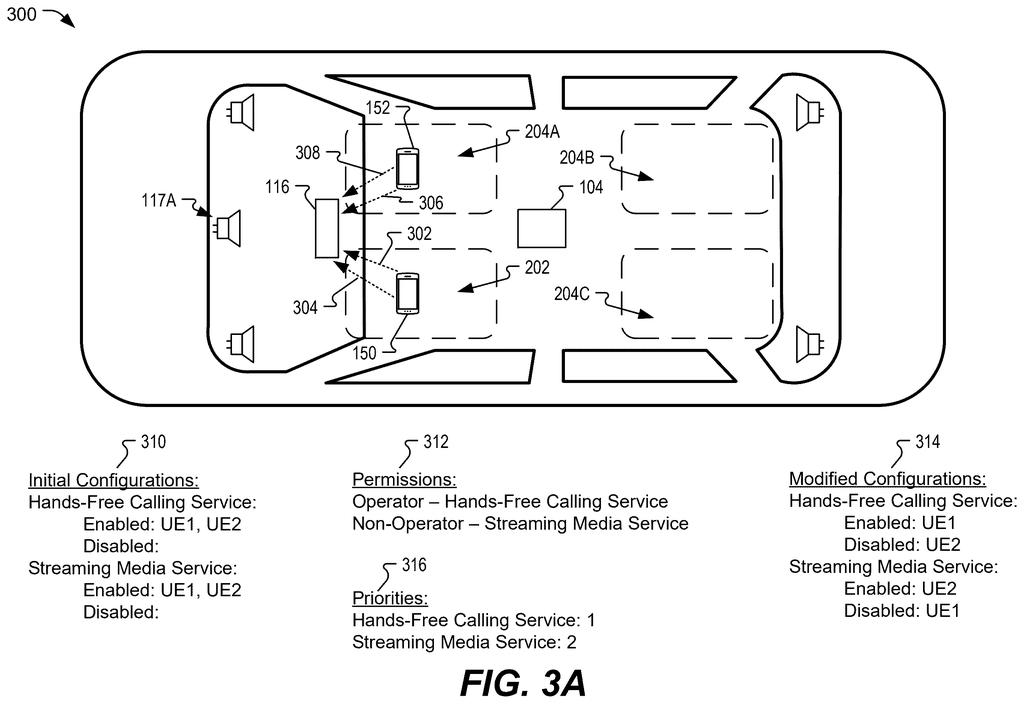
How Qualcomm's seat-position audio system works
Picture yourself in a car with multiple screens and speakers. Right now, sorting out who hears what usually requires someone to manually set up audio zones or fiddle with an app. Qualcomm wants to make that automatic.
The idea is straightforward: your phone constantly broadcasts a weak wireless signal. The car's onboard system picks up that signal and uses it to figure out exactly where you're sitting, whether that's the driver's seat, front passenger, or somewhere in the back row. Based on your seat, the system assigns you a "user class" that carries specific permissions, so a driver might get turn-by-turn directions while a child in the back gets a kids' movie soundtrack.
Once the system knows who's where, it automatically adjusts the audio settings for each zone and routes sound to the right speakers. No menus, no manual configuration. The car just figures it out.
How wireless positioning maps seats to audio permissions
The patent describes a device (likely an in-vehicle head unit or a dedicated media controller) that stores configuration profiles for multiple media services. Each profile is tied to specific "user equipment" (UE), which is Qualcomm's standard term for a phone or other wireless-connected device.
When a passenger gets into the vehicle, the system performs wireless positioning operations (think of it like the car doing a precise triangulation of your phone's location using signals similar to Bluetooth or Wi-Fi Fine Timing Measurement) to place your device within the vehicle's interior, down to a specific seat zone.
From that position, the system assigns a user class, which is essentially a permission tier. A driver-class user might be restricted from certain video content for safety reasons, while a rear-seat passenger gets full media access. A child seat zone could get filtered content automatically.
The processors then modify the configuration set for each UE and selectively route audio to the appropriate speakers. Key components include:
- In-vehicle wireless positioning (no GPS required)
- Per-seat permission profiles stored in memory
- Automatic audio routing to zone-specific speakers
- Per-device media service configurations that update in real time as passengers move
What this means for in-car entertainment systems
For car makers, this is the kind of feature that turns a vehicle cabin into something closer to a first-class airplane seat row, where each passenger gets a personalized audio experience without anyone having to configure it. As electric vehicles add more screens, speakers, and entertainment subscriptions, automatic zone management becomes a real selling point.
For Qualcomm specifically, this builds on its Snapdragon Digital Chassis platform, which already powers infotainment systems in dozens of car brands. A patent like this suggests Qualcomm is positioning itself not just as a chip supplier but as the brains behind the entire in-cabin media experience, including the rules that govern what you're allowed to hear based on where you sit.
This is a sensible, incremental patent that solves a real annoyance in premium vehicles. The tech involved, wireless positioning inside a car cabin, is mature enough that Qualcomm could ship this without a major research effort. Whether it actually lands in production cars depends on automaker partnerships, but the problem it addresses is genuine.
There are more where this came from
We read every patent application Big Tech publishes and send you the ones worth knowing. Plain English, free, every week.
The drawings
9 drawing sheets from US 2026/0222764 A1 · click any drawing to enlarge


Want this weekly breakdown for a company we don't cover? Patentlyze Pro →
Be the first to weigh in